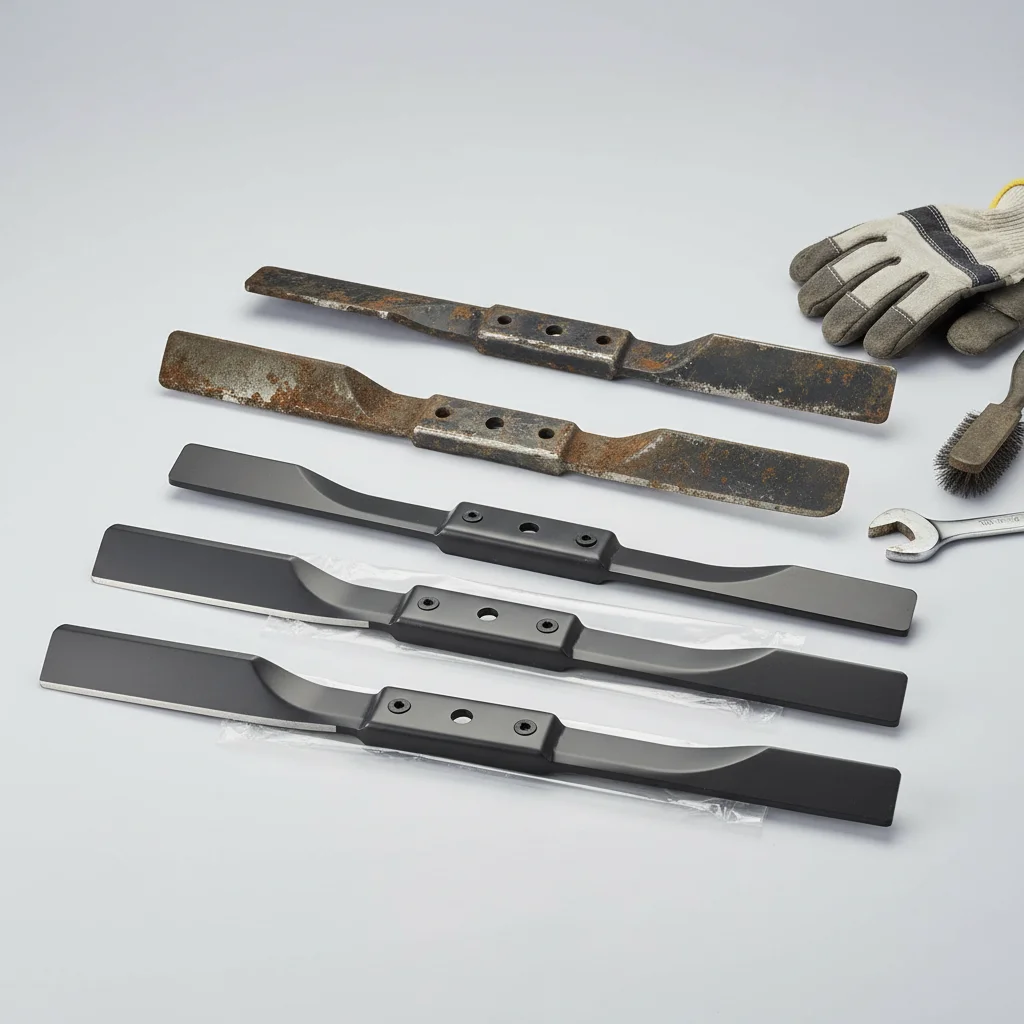
Knowing when to replace your lawn mower blades is crucial for maintaining a healthy lawn and efficient mowing. Generally, you should replace your lawn mower blades at least once a year, or every 100-200 hours of operation, whichever comes first. This ensures a clean cut, reduces strain on your mower, and prevents damage to your grass.
Signs Your Lawn Mower Blades Need Replacing
Several indicators suggest it’s time for new blades. The most obvious sign is a ragged or torn appearance of your grass after mowing, rather than a clean, even cut. This often means the blades are dull or damaged. You might also notice increased vibration from your mower, which can be caused by unbalanced or bent blades. Inspect your blades regularly for nicks, dents, or significant wear along the cutting edge. Even minor damage can impact performance and potentially lead to more serious issues.
- Ragged or torn grass after mowing
- Increased mower vibration
- Visible nicks, dents, or bends in the blade
- Excessive noise during operation
- Difficulty cutting through thicker grass
Factors Influencing Blade Lifespan
The lifespan of your lawn mower blades isn’t just about time; it’s also heavily influenced by how and where you mow. Mowing frequently over sandy or rocky terrain will dull blades much faster than cutting pristine, soft grass. If you often hit obstacles like roots, stones, or debris, your blades will suffer more wear and tear, necessitating more frequent replacement. The type of grass you cut also plays a role; tougher, thicker grass varieties can accelerate blade dulling. Regular cleaning and proper storage can help extend blade life, but eventually, all blades will need replacing.
Choosing the Right Replacement Blades
|
Our Picks for the Best Lawn Mower in 2026
As an Amazon Associate I earn from qualifying purchases.
|
||
| Num | Product | Action |
|---|---|---|
| 1 | Litheli 40V (2 x 20V) 16" Electric Lawn Mower Cordless, Brushless Lawnmower with 6-Height Adjust, Portable & Lightweight Push Battery Powered Lawn Mower (2 * 4.0AH Batteries Included) |

|
| 2 | LawnMaster MEB1114K Electric Corded Lawn Mower 15-Inch 11AMP |
|
| 3 | Litheli Electric Lawn Mower Cordless,Grass Cutter Machine for 1300 Sq.Ft.Lawnmower with Motor,13.2 in Cutting Width,8 Gallon Capacity,Cutting Height from 1 to 2.5 in with 4.0A Battery |
|
| 4 | VEVOR Push Lawn Sweeper, 21inch Leaf & Grass Collector, Heavy Duty Thickened Steel Durable to Use with Large Capacity 3.5 cu. ft. Mesh Collection Hopper Bag, 2 Spinning Brushes |
|
| 5 | LawnMaster MEB1216K Electric Lawn Mower 16-Inch 12AMP |
|
| 6 | American Lawn Mower Company 50514 14" 11-Amp Corded Electric Lawn Mower, Black |
|
| 7 | Litheli 13.4inch Electric Lawn Mower Cordless,Grass Cutter Machine for 2600 Sq.Ft.Lawnmower with Brushless Motor, 8 Gallon Capacity, Cutting Height from 1 to 2.5 in, Includes 2X4.0 Ah Battery. |
|
| 8 | CRAFTSMAN Electric Push Lawn Mower, 20-Inch Deck, Corded, Powerful 13-AMP Motor, 6 Setting Height Adjustment, Winged Blades, 3 in 1 Bagging, Mulching and Discharge (CMEMW213) |
|
| 9 | Greenworks 24V 13" Brushless (Push) Cordless Lawn Mower, 4.0Ah Battery and Charger |
|
| 10 | Litheli 20V 13" Cordless Lawn Mower, Electric Lawn Mowers for Garden, Yard and Farm, 5 Heights, with Brushless Motor, 4.0Ah Battery & Charger Included |
|
When selecting new blades, it’s essential to choose ones that are compatible with your specific lawn mower model. Consult your mower’s owner’s manual for the correct blade specifications, including length, width, and mounting hole configuration. There are different types of blades available, such as standard (2-in-1) blades for bagging and discharging, mulching (3-in-1) blades designed to finely cut clippings, and high-lift blades for improved bagging in dense grass. Consider your primary mowing needs to pick the most effective blade type. Always opt for high-quality, durable blades for better performance and longevity.
The Replacement Process: A Step-by-Step Guide
Replacing lawn mower blades is a task many homeowners can do themselves with the right tools and safety precautions. First, ensure your mower is turned off, the spark plug wire is disconnected (for gas mowers), or the battery is removed (for electric mowers) to prevent accidental starting. Tilt the mower onto its side, ensuring the carburetor and air filter are facing upwards to prevent fuel or oil leaks. Use a block of wood to secure the blade and prevent it from turning while you loosen the retaining nut with a wrench. Once the old blade is removed, clean the area thoroughly. Install the new blade, ensuring the cutting edge faces the correct direction (usually indicated by an arrow or curve). Tighten the retaining nut securely, following the manufacturer’s torque specifications.
Professional Blade Sharpening vs. Replacement
While sharpening can extend the life of your blades, there comes a point where replacement is the better option. Professional sharpening can restore a dull edge, but if blades are bent, severely nicked, or have lost too much metal from repeated sharpening, they become unbalanced and less effective. Unbalanced blades can cause excessive vibration, leading to premature wear on your mower’s engine and deck. For optimal performance and safety, it’s generally recommended to replace blades rather than over-sharpening them, especially if they show significant signs of damage or wear beyond a simple dull edge.
Get our weekly buyer guide
Practical specs, not advice. Unsubscribe anytime.
