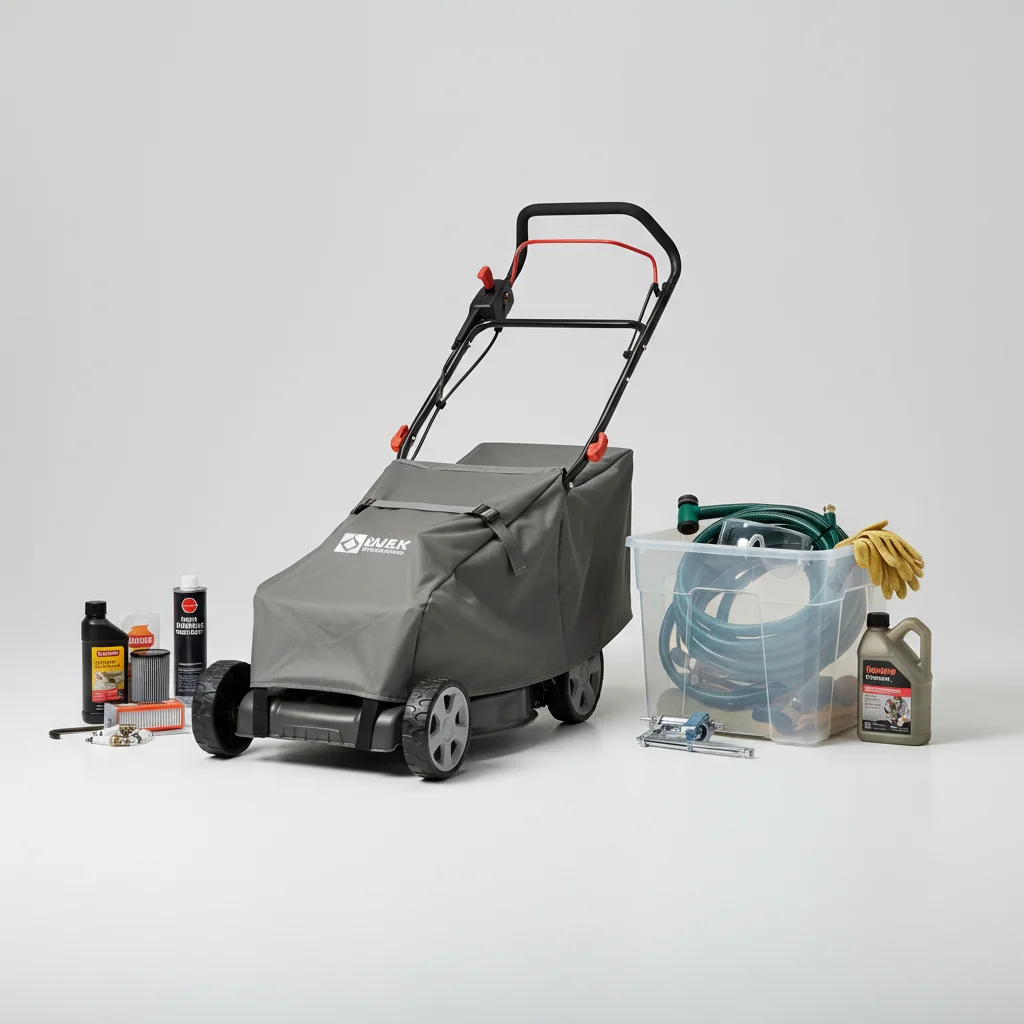
Proper lawn mower storage is crucial for extending the life of your equipment and ensuring it starts reliably next spring. There are seven essential steps to prepare your lawn mower for the off-season, whether you have a gas, electric, or battery-powered model. Neglecting these steps can lead to costly repairs and frustration when you’re ready to mow again.
Clean Your Lawn Mower Thoroughly
Before storing your lawn mower, a deep clean is paramount. Remove all grass clippings, dirt, and debris from the deck, engine, and wheels. Use a stiff brush, scraper, and even a pressure washer (for gas models, avoiding electrical components) to get into all the nooks and crannies. Accumulated grass can trap moisture, leading to rust and corrosion, especially on the underside of the deck. For electric and battery mowers, ensure all power sources are disconnected before cleaning.
Stabilize Fuel or Drain the Tank (Gas Mowers)
For gas lawn mowers, you have two main options for fuel management during storage. The first is to add a fuel stabilizer to a full tank of fresh gasoline, then run the engine for a few minutes to circulate the treated fuel. This prevents ethanol separation and fuel degradation. The second option is to completely drain the fuel tank and run the engine until it sputters and dies, ensuring no fuel remains in the carburetor. This prevents gumming and blockages. Never store a gas mower with old, untreated fuel in the tank.
Change the Oil and Filter (Gas Mowers)
|
Our Picks for the Best Lawn Mower in 2026
As an Amazon Associate I earn from qualifying purchases.
|
||
| Num | Product | Action |
|---|---|---|
| 1 | Litheli Electric Lawn Mower Cordless,Grass Cutter Machine for 1300 Sq.Ft.Lawnmower with Motor,13.2 in Cutting Width,8 Gallon Capacity,Cutting Height from 1 to 2.5 in with 4.0A Battery |

|
| 2 | Litheli 13.4inch Electric Lawn Mower Cordless,Grass Cutter Machine for 2600 Sq.Ft.Lawnmower with Brushless Motor, 8 Gallon Capacity, Cutting Height from 1 to 2.5 in, Includes 2X4.0 Ah Battery. |
|
| 3 | VEVOR Push Lawn Sweeper, 21inch Leaf & Grass Collector, Heavy Duty Thickened Steel Durable to Use with Large Capacity 3.5 cu. ft. Mesh Collection Hopper Bag, 2 Spinning Brushes |
|
| 4 | LawnMaster MEB1216K Electric Lawn Mower 16-Inch 12AMP |
|
| 5 | Litheli 20V 13" Cordless Lawn Mower, Electric Lawn Mowers for Garden, Yard and Farm, 5 Heights, with Brushless Motor, 4.0Ah Battery & Charger Included |
|
| 6 | CRAFTSMAN Electric Push Lawn Mower, 20-Inch Deck, Corded, Powerful 13-AMP Motor, 6 Setting Height Adjustment, Winged Blades, 3 in 1 Bagging, Mulching and Discharge (CMEMW213) |
|
| 7 | LawnMaster MEB1114K Electric Corded Lawn Mower 15-Inch 11AMP |
|
| 8 | American Lawn Mower Company 50514 14" 11-Amp Corded Electric Lawn Mower, Black |
|
| 9 | Litheli 40V (2 x 20V) 16" Electric Lawn Mower Cordless, Brushless Lawnmower with 6-Height Adjust, Portable & Lightweight Push Battery Powered Lawn Mower (2 * 4.0AH Batteries Included) |
|
| 10 | Greenworks 24V 13" Brushless (Push) Cordless Lawn Mower, 4.0Ah Battery and Charger |
|
Changing the oil before storage is a simple yet vital maintenance task for gas lawn mowers. Used oil contains contaminants and acids that can corrode engine components over time. Replace the old oil with fresh, manufacturer-recommended oil and change the oil filter if your model has one. This ensures your engine is protected during its dormant period and ready for a clean start next season.
Remove and Clean the Spark Plug (Gas Mowers)
For gas mowers, remove the spark plug and inspect it for wear or carbon buildup. Clean it with a wire brush or replace it if necessary. Before reinstalling, pour a small amount (about a teaspoon) of engine oil into the spark plug hole. Slowly pull the starter cord a few times to distribute the oil, which helps lubricate the cylinder walls and prevent rust. Reinstall the spark plug, but do not overtighten it.
Inspect and Sharpen Blades
The off-season is the perfect time to address your mower blades. Remove the blade(s) and inspect them for nicks, bends, or dullness. Sharpen them using a file or grinder, ensuring they are balanced to prevent vibration during operation. If the blades are severely damaged, replace them. Clean blades cut more efficiently and reduce strain on your mower’s engine.
Battery Care and Tire Pressure
For battery-powered mowers, remove the battery and store it in a cool, dry place, typically at a partial charge (around 50-60%) as recommended by the manufacturer. Avoid storing fully charged or fully depleted batteries for extended periods. For all mower types, check the tire pressure and inflate them to the recommended PSI. This prevents flat spots and ensures the tires are ready for use when spring arrives.
- Store in a dry, sheltered location to prevent rust.
- Cover with a breathable tarp to protect from dust and moisture.
- Disconnect the spark plug wire (gas) or remove the battery (electric).
- Elevate the mower slightly to prevent tire flat spots.
- Perform a final visual inspection for any loose parts or damage.
Get our weekly buyer guide
Practical specs, not advice. Unsubscribe anytime.

I always used to just park my gas mower in the shed and hope for the best, but after reading about the importance of fuel stabilization, I decided to try it this year. It made a huge difference! My mower started right up this spring without any sputtering. Definitely worth the extra step to avoid carburetor issues.
The tip about cleaning the underside of the deck was a game-changer for me. I never realized how much gunk could build up there, and it totally makes sense now why my old mower rusted out so fast. I spent some extra time with a scraper and brush this fall, and it looks so much better. Wish I’d known this years ago!
Good advice overall, especially for gas mowers. I have a battery-powered model, and while cleaning is still important, some of the steps like fuel draining obviously don’t apply. I was hoping for a bit more specific guidance on battery care during storage, like optimal charge levels or temperature ranges, but it was still helpful for the general cleaning.
I used to dread getting my mower ready in the spring because it was always a struggle to start. Following the steps for proper off-season prep, especially disconnecting the spark plug and cleaning the air filter, made a noticeable difference. My mower fired up on the first pull this year. So glad I took the time to do it right.