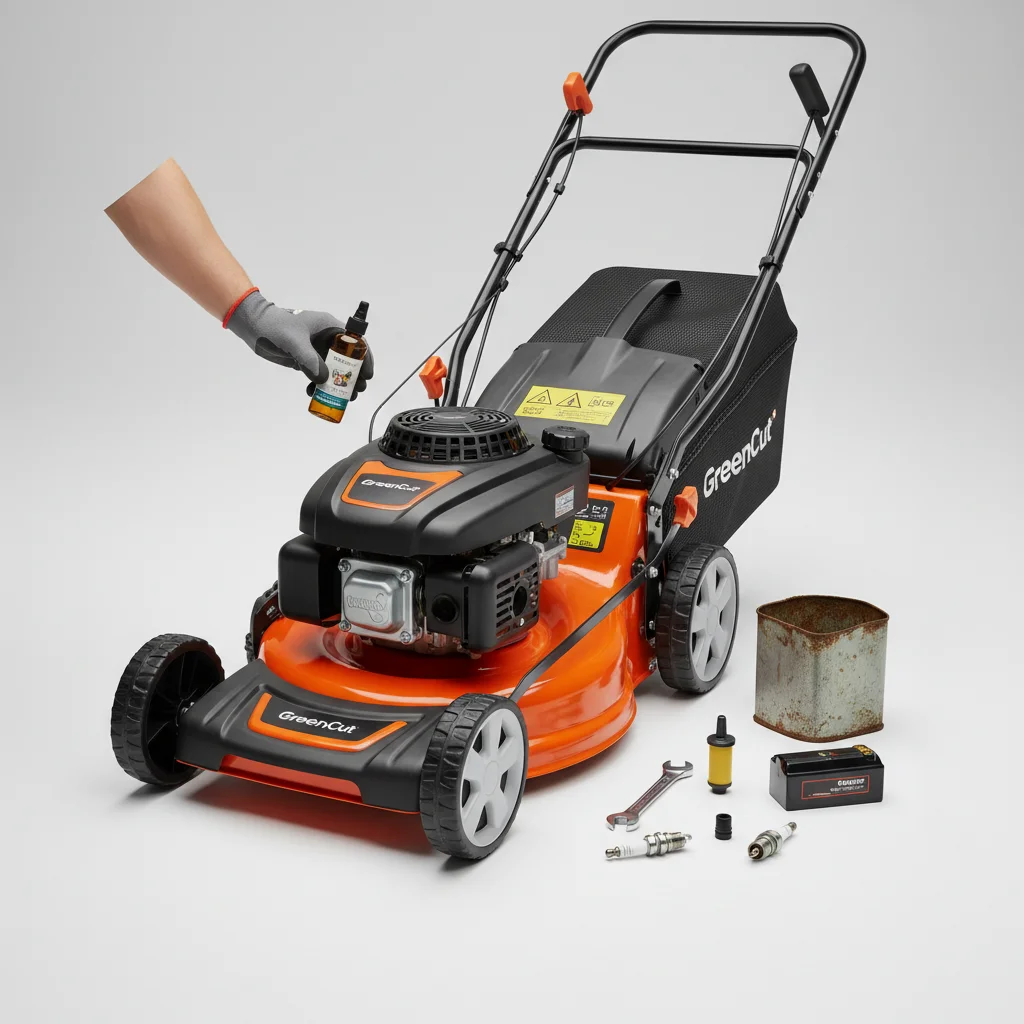
If your lawn mower won’t start after winter, the most common reasons include old fuel, a dead battery, a fouled spark plug, a clogged carburetor, a dirty air filter, or a faulty ignition coil. Addressing these six issues systematically can help you get your mower running smoothly for the spring season.
Old or Stale Fuel Issues
One of the most frequent culprits for a non-starting mower after winter storage is old or stale fuel. Gasoline can degrade over time, especially if it’s left in the tank for several months without a fuel stabilizer. As it breaks down, it can leave gummy deposits that clog fuel lines and carburetors. Always drain old fuel or use a fuel stabilizer before storing your mower for the winter. If you’re encountering starting problems, try draining the old fuel completely and refilling with fresh, high-octane gasoline.
Battery and Electrical System Checks
For electric start mowers, a dead or weak battery is a common reason for a no-start condition. Cold winter temperatures can significantly reduce battery charge and capacity. Before troubleshooting other components, check your battery’s voltage with a multimeter. If it’s below 12.4 volts for a 12V battery, it likely needs charging or replacement. Also, inspect battery terminals for corrosion and clean them if necessary to ensure a good electrical connection.
Spark Plug Condition and Replacement
A fouled or worn-out spark plug can prevent your engine from igniting the fuel-air mixture. During winter storage, moisture or carbon buildup can accumulate on the spark plug electrodes, hindering its ability to create a strong spark. Remove the spark plug and inspect it for signs of damage, excessive carbon buildup, or a wet appearance. If it looks dirty, try cleaning it with a wire brush. If it’s heavily fouled or worn, replacing it with a new one is often a quick and inexpensive fix that can resolve starting issues.
Clogged Carburetor and Fuel Delivery
|
Our Picks for the Best Lawn Mower in 2026
As an Amazon Associate I earn from qualifying purchases.
|
||
| Num | Product | Action |
|---|---|---|
| 1 | CRAFTSMAN Electric Push Lawn Mower, 20-Inch Deck, Corded, Powerful 13-AMP Motor, 6 Setting Height Adjustment, Winged Blades, 3 in 1 Bagging, Mulching and Discharge (CMEMW213) |

|
| 2 | Litheli 20V 13" Cordless Lawn Mower, Electric Lawn Mowers for Garden, Yard and Farm, 5 Heights, with Brushless Motor, 4.0Ah Battery & Charger Included |
|
| 3 | Greenworks 24V 13" Brushless (Push) Cordless Lawn Mower, 4.0Ah Battery and Charger |
|
| 4 | LawnMaster MEB1216K Electric Lawn Mower 16-Inch 12AMP |
|
| 5 | LawnMaster MEB1114K Electric Corded Lawn Mower 15-Inch 11AMP |
|
| 6 | VEVOR Push Lawn Sweeper, 21inch Leaf & Grass Collector, Heavy Duty Thickened Steel Durable to Use with Large Capacity 3.5 cu. ft. Mesh Collection Hopper Bag, 2 Spinning Brushes |
|
| 7 | Litheli 13.4inch Electric Lawn Mower Cordless,Grass Cutter Machine for 2600 Sq.Ft.Lawnmower with Brushless Motor, 8 Gallon Capacity, Cutting Height from 1 to 2.5 in, Includes 2X4.0 Ah Battery. |
|
| 8 | American Lawn Mower Company 50514 14" 11-Amp Corded Electric Lawn Mower, Black |
|
| 9 | Litheli Electric Lawn Mower Cordless,Grass Cutter Machine for 1300 Sq.Ft.Lawnmower with Motor,13.2 in Cutting Width,8 Gallon Capacity,Cutting Height from 1 to 2.5 in with 4.0A Battery |
|
| 10 | Litheli 40V (2 x 20V) 16" Electric Lawn Mower Cordless, Brushless Lawnmower with 6-Height Adjust, Portable & Lightweight Push Battery Powered Lawn Mower (2 * 4.0AH Batteries Included) |
|
The carburetor is responsible for mixing air and fuel in the correct proportions for combustion. If old fuel has left deposits, or if debris has entered the fuel system, the carburetor jets can become clogged. This prevents proper fuel delivery to the engine. Symptoms of a clogged carburetor include the engine cranking but not starting, or starting briefly and then dying. Cleaning the carburetor can be a complex task, but often involves disassembling it and using a carburetor cleaner. For persistent issues, professional cleaning or replacement might be necessary.
Air Filter and Airflow Restrictions
A dirty or clogged air filter can restrict the airflow to the engine, leading to an overly rich fuel mixture that prevents starting. Over the winter, dust, debris, or even rodent nests can accumulate in the air filter housing. Always check your air filter’s condition. If it’s visibly dirty, caked with grass clippings, or saturated with oil, it needs to be cleaned or replaced. A clean air filter ensures the engine gets the proper amount of air for efficient combustion.
Ignition System Integrity
The ignition system, including the ignition coil, is crucial for generating the high voltage needed for the spark plug. While less common than fuel or battery issues, a faulty ignition coil can prevent any spark from reaching the plug. If you’ve checked the spark plug and confirmed it’s in good condition, and there’s no spark when cranking the engine, the ignition coil might be the problem. Testing an ignition coil usually requires specialized tools or a visit to a service center. However, it’s a critical component to consider if all other troubleshooting steps fail.
- Drain and replace old fuel with fresh gasoline.
- Charge or replace a weak battery.
- Inspect and clean or replace the spark plug.
- Clean or service a clogged carburetor.
- Replace a dirty air filter.
Get our weekly buyer guide
Practical specs, not advice. Unsubscribe anytime.
