Commercial-grade zero-turn mowers are essential for maintaining large properties and professional landscaping, offering superior maneuverability and speed compared to traditional lawn mowers. These powerful machines are designed with a zero-degree turning radius, allowing them to pivot in place for efficient navigation around obstacles and tight corners. The market features various types, including gas, diesel, electric, stand-on, and ride-on models, each suited for different operational needs and property characteristics.
Overview of Zero Turn Lawn Mowers for Commercial Use
A zero-turn lawn mower is characterized by its ability to turn in place, boasting a zero-degree turning radius. This feature is achieved through independent wheel motors controlled by lap bars or a joystick, allowing each drive wheel to move at a different speed or even in opposite directions. For commercial applications, this translates to significant time savings and increased efficiency, as operators can navigate around obstacles and tight corners without missing a blade of grass or needing to make wide, sweeping turns.
The evolution of commercial zero-turn mowers has been driven by the need for speed, durability, and operator comfort. Early models were robust but often lacked ergonomic refinements. Today, manufacturers integrate powerful engines, heavy-duty frames, advanced cutting decks, and sophisticated suspension systems to meet the rigorous demands of daily professional use. These machines are engineered to withstand prolonged operation, diverse terrain, and heavy-duty cutting tasks, making them indispensable for commercial landscapers, property managers, and municipalities.
The market offers various zero-turn models, from compact units suitable for intricate landscapes to large, powerful machines designed for vast open fields. Commercial zero-turn mowers stand apart with their industrial-grade components, larger fuel tanks, higher horsepower engines, wider cutting decks, and enhanced comfort features that cater to operators who spend hours behind the controls.
Classification of Commercial Zero Turn Mowers
Commercial zero-turn mowers can be classified based on various factors, including their power source, deck size, and specific design for different tasks. Understanding these distinctions is crucial for selecting the right machine for your operational needs.
Gas-Powered Zero Turn Mowers
Gas-powered zero-turn mowers are the most common type in commercial landscaping, known for their raw power and extended run times. These machines typically feature robust internal combustion engines, often V-twin designs, offering significant horsepower to handle dense grass and tough terrain. They are highly mobile and can be refueled quickly, making them ideal for long workdays and properties far from power sources. However, they require regular maintenance like oil changes and spark plug replacements, produce exhaust emissions, and operate with considerable noise.
Diesel-Powered Zero Turn Mowers
|
Our Picks for the Best Lawn Mower in 2026
As an Amazon Associate I earn from qualifying purchases.
|
||
| Num | Product | Action |
|---|---|---|
| 1 | VEVOR Push Lawn Sweeper, 21inch Leaf & Grass Collector, Heavy Duty Thickened Steel Durable to Use with Large Capacity 3.5 cu. ft. Mesh Collection Hopper Bag, 2 Spinning Brushes |

|
| 2 | Litheli Electric Lawn Mower Cordless,Grass Cutter Machine for 1300 Sq.Ft.Lawnmower with Motor,13.2 in Cutting Width,8 Gallon Capacity,Cutting Height from 1 to 2.5 in with 4.0A Battery |
|
| 3 | LawnMaster MEB1114K Electric Corded Lawn Mower 15-Inch 11AMP |
|
| 4 | Litheli 20V 13" Cordless Lawn Mower, Electric Lawn Mowers for Garden, Yard and Farm, 5 Heights, with Brushless Motor, 4.0Ah Battery & Charger Included |
|
| 5 | CRAFTSMAN Electric Push Lawn Mower, 20-Inch Deck, Corded, Powerful 13-AMP Motor, 6 Setting Height Adjustment, Winged Blades, 3 in 1 Bagging, Mulching and Discharge (CMEMW213) |
|
| 6 | Litheli 40V (2 x 20V) 16" Electric Lawn Mower Cordless, Brushless Lawnmower with 6-Height Adjust, Portable & Lightweight Push Battery Powered Lawn Mower (2 * 4.0AH Batteries Included) |
|
| 7 | LawnMaster MEB1216K Electric Lawn Mower 16-Inch 12AMP |
|
| 8 | American Lawn Mower Company 50514 14" 11-Amp Corded Electric Lawn Mower, Black |
|
| 9 | Greenworks 24V 13" Brushless (Push) Cordless Lawn Mower, 4.0Ah Battery and Charger |
|
| 10 | Litheli 13.4inch Electric Lawn Mower Cordless,Grass Cutter Machine for 2600 Sq.Ft.Lawnmower with Brushless Motor, 8 Gallon Capacity, Cutting Height from 1 to 2.5 in, Includes 2X4.0 Ah Battery. |
|
Diesel zero-turn mowers are the pinnacle of commercial-grade power and fuel efficiency, often found on the largest properties and demanding municipal contracts. Diesel engines offer superior torque, making them exceptionally good at tackling very thick grass and steep inclines without bogging down. They are renowned for their longevity and lower fuel consumption compared to gasoline engines, which can lead to significant savings over time. However, diesel mowers typically come with a higher initial purchase price and can be more complex to maintain, though their overall durability often justifies the investment.
Electric/Battery-Powered Zero Turn Mowers
The emergence of electric zero-turn mowers represents a growing trend towards sustainability and quieter operation in commercial landscaping. These mowers are powered by large battery packs, offering emission-free operation and significantly reduced noise levels, making them ideal for noise-sensitive environments like residential areas, hospitals, or schools. While they eliminate the need for fuel and engine maintenance, their run time is limited by battery capacity, and they require charging time. Initial costs can be higher, but lower operating and maintenance expenses often balance this over the machine’s lifespan.
Stand-On Zero Turn Mowers
Stand-on zero-turn mowers offer a unique blend of maneuverability and productivity, providing excellent visibility and a compact footprint. Operators stand on a platform at the rear of the machine, allowing for quick on-and-off access, which is beneficial for properties with many gates or obstacles. This design also improves weight distribution, leading to better traction on slopes and less turf damage. While they may offer less comfort than a traditional sit-on mower for extremely long periods, their agility and efficiency make them a favorite for precise trimming and navigating challenging landscapes.
Ride-On Zero Turn Mowers
Traditional ride-on zero-turn mowers are designed for maximum operator comfort and productivity over extensive areas. These machines typically feature a comfortable seat, often with suspension, and ergonomic controls, reducing operator fatigue during long hours of operation. They usually have larger fuel tanks and wider cutting decks, making them suitable for mowing vast open spaces efficiently. While they may not offer the same quick on-and-off convenience as stand-on models, their stability and comfortable ride make them ideal for operators spending full days in the field.
Comparison Table of Commercial Zero Turn Mowers
Choosing the best commercial zero-turn mower requires a careful evaluation of various factors. Here’s a comparison to help you understand the trade-offs.
| Feature | Gas-Powered | Diesel-Powered | Electric/Battery-Powered | Stand-On | Ride-On |
|---|---|---|---|---|---|
| Engine Power | High, V-twin engines | Very High, superior torque | Moderate to High, instant torque | High, typically gas or diesel | High, gas or diesel engines |
| Fuel/Power | Gasoline | Diesel | Batteries | Gasoline/Diesel | Gasoline/Diesel |
| Run Time | Long (limited by fuel tank) | Very Long (excellent fuel efficiency) | Limited (by battery charge) | Long (due to gas/diesel power) | Very Long (large fuel tanks) |
| Emissions | High | Moderate (lower CO2 than gas) | Zero | High (gas/diesel dependent) | High (gas/diesel dependent) |
| Noise Level | High | Moderate to High | Very Low | High (gas/diesel dependent) | Moderate to High (gas/diesel dependent) |
| Maintenance | Regular engine maintenance (oil, filters) | Regular engine maintenance (filters, fuel sys) | Minimal (no engine oil, spark plugs) | Standard engine maintenance | Standard engine maintenance |
| Initial Cost | Medium | High | High | Medium to High | Medium to High |
| Operating Cost | Medium (fuel + maintenance) | Low (fuel efficiency) | Very Low (electricity + minimal maintenance) | Medium to High | Medium to High |
| Maneuverability | Excellent | Excellent | Excellent | Superior (quick on/off, compact) | Excellent (comfortable for long periods) |
| Visibility | Good | Good | Good | Excellent (unobstructed view) | Good |
| Best Use | General commercial landscaping, varied properties | Large estates, tough terrain, long hours | Noise-sensitive areas, urban landscapes, eco-friendly | Tight spaces, frequent obstacles, stop-and-go | Large open areas, long mowing sessions, operator comfort |
“For large commercial operations, especially those managing multiple sprawling properties, the investment in a high-torque diesel zero-turn mower often pays for itself through increased efficiency and reduced downtime. These machines are built to endure, ensuring consistent performance day in and day out.” – John Davis, Commercial Landscaping Consultant
Top 5 Best Zero Turn Lawn Mowers for Commercial Use
When it comes to commercial zero-turn mowers, certain brands consistently stand out for their reliability, power, and innovative features. Here are five of the best options widely favored by professionals.
-
Scag Cheetah II: Known for its exceptional speed and robust construction, the Scag Cheetah II is a top performer for large, open areas. It features a coil-over-damper suspension system that provides an incredibly smooth ride, reducing operator fatigue. With powerful Kawasaki or Kohler engines and cutting decks up to 72 inches, it combines speed with a high-quality cut, making it ideal for contractors who need to cover significant ground quickly. Its heavy-duty frame and durable components ensure a long service life under rigorous commercial conditions.
-
Ferris ISX 3300: Ferris mowers are synonymous with superior suspension technology, and the ISX 3300 is no exception. Its patented ForeFront™ Suspension System and adjustable rear coil-over shocks provide an unmatched ride quality, dramatically reducing vibrations and bumps. This comfort feature allows operators to work longer hours more productively. Equipped with powerful commercial-grade engines and various deck sizes, the ISX 3300 delivers an excellent cut quality while minimizing stress on the operator and the machine itself. It’s a favorite for those prioritizing operator comfort and long-term durability.
-
Exmark Lazer Z X-Series: The Exmark Lazer Z X-Series is a powerhouse designed for the most demanding commercial applications. These mowers are engineered with heavy-duty frames, robust engines from Kawasaki or Kohler, and highly efficient cutting decks, often featuring Exmark’s UltraCut Series 6 deck. The X-Series models are known for their precision cutting, exceptional durability, and high productivity. They offer a range of advanced features, including ergonomic control systems and comfortable seating, making them a go-to choice for professionals who demand uncompromising performance and reliability.
-
John Deere Z900 Series: John Deere is a trusted name in outdoor power equipment, and their Z900 Series commercial zero-turn mowers uphold that reputation. These machines are built for performance, reliability, and ease of maintenance. They come with a variety of engine options, including gas and diesel, and cutting decks up to 72 inches. The Z900 series prioritizes operator comfort with features like adjustable seats and intuitive controls, designed to reduce fatigue during extended use. John Deere’s extensive dealer network also ensures readily available parts and service, a crucial factor for commercial operators.
-
Husqvarna V500 Series Stand-On: For versatility and agility, the Husqvarna V500 Series stand-on mowers are an excellent choice. These mowers offer the best of both worlds: the speed and power of a commercial zero-turn with the compact footprint and superior visibility of a stand-on unit. They are highly maneuverable in tight spaces and around obstacles, making them perfect for complex landscapes with many trees, garden beds, and gates. With powerful Kawasaki engines and robust cutting decks, the V500 series delivers a professional cut while allowing operators to quickly get on and off the machine, boosting efficiency on multi-task jobs.
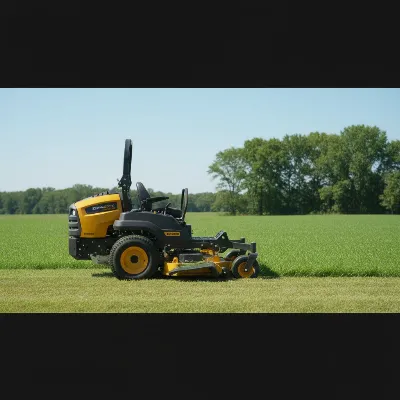 A commercial zero-turn mower with a wide deck cutting grass in a large open field under a clear sky.
Buying Guide: How to Choose a Commercial Zero Turn Lawn Mower
Selecting the right commercial zero-turn mower involves a thoughtful assessment of your specific needs, budget, and the characteristics of the properties you maintain. Making an informed decision ensures you invest in a machine that enhances your productivity and profitability.
Determine Usage Needs and Property Characteristics
Before anything else, evaluate the properties you’ll be mowing.
- Area Size: For properties under 5 acres, a 48-52 inch deck might suffice. For 5-10 acres, consider 52-60 inches, and for over 10 acres, a 60-72 inch deck will drastically reduce mowing time.
- Grass Type and Density: Thicker, tougher grass requires more horsepower and a robust cutting deck.
- Terrain: Hilly or uneven terrain demands mowers with good traction, powerful engines, and potentially suspension systems for operator comfort. Flat, open fields prioritize speed and wider decks.
- Obstacles: Properties with many trees, flowerbeds, or other obstacles will benefit from highly maneuverable mowers, potentially stand-on models.
Establish Your Budget
Commercial zero-turn mowers represent a significant investment, with prices ranging from $8,000 to over $20,000, depending on features, engine size, and deck width. Consider not just the initial purchase price but also long-term operating costs, including fuel, maintenance, and potential repair parts. Sometimes, a slightly higher upfront cost for a more durable or fuel-efficient model can lead to greater savings over its lifespan. Factor in financing options or leasing if that aligns better with your business model.
Essential Features to Look For
- Engine Type and Horsepower: Look for commercial-grade engines (Kawasaki, Kohler Command Pro, Vanguard, Kubota diesel) with sufficient horsepower (20-30+ HP) for your deck size and typical cutting conditions.
- Cutting Deck Construction: A fabricated steel deck (welded, not stamped) is more durable and resistant to impact. Look for deck thickness (e.g., 7-gauge steel) and spindle quality.
- Hydrostatic Transmissions: Commercial mowers use heavy-duty, serviceable hydrostatic transmissions (e.g., Hydro-Gear ZT-3400, ZT-5400) for smooth power delivery and longevity.
- Fuel Capacity: Larger fuel tanks mean fewer refueling stops, increasing productivity, especially on extensive jobs.
- Operator Comfort: Adjustable seats with armrests, suspension systems, ergonomic controls, and vibration isolation are crucial for reducing fatigue during long hours.
- Ease of Maintenance: Features like easily accessible service points, clear engine access, and simple deck height adjustments can save time and money on maintenance.
Brand Reputation and User Reviews
Investigate brands with a strong reputation for producing reliable and durable commercial equipment, such as Scag, Ferris, Exmark, John Deere, and Husqvarna. Read reviews from other commercial landscapers and professionals, as their real-world experiences can provide invaluable insights into a mower’s performance, durability, and common issues. A brand with a robust dealer network also ensures you have access to prompt service and parts.
Safety Considerations
Always prioritize safety. Look for mowers with features like rollover protection systems (ROPS), emergency shut-off switches, seatbelts, and clear warning labels. Ensure you and your team are properly trained on safe operation procedures, including handling slopes, avoiding obstacles, and general machine awareness.
Usage and Maintenance Guide for Commercial Zero Turn Mowers
Proper usage and diligent maintenance are paramount to extending the life of your commercial zero-turn mower and ensuring consistent, high-quality performance. These machines are significant investments, and caring for them correctly will maximize their return.
Safe Operation Practices
Operating a commercial zero-turn mower safely protects both the operator and the equipment.
- Read the Operator’s Manual: Familiarize yourself with all controls, safety features, and specific operating instructions for your model.
- Pre-Operation Checklist: Before starting, check fuel and oil levels, tire pressure, blade sharpness, and ensure all guards and safety devices are in place. Clear the mowing area of debris that could be thrown by the blades.
- Personal Protective Equipment (PPE): Always wear sturdy shoes, eye protection, hearing protection, and appropriate clothing.
- Slope Operation: Exercise extreme caution on slopes. Mow across slopes rather than up and down when possible, or use a stand-on mower which often provides better stability on inclines. If a slope feels unsafe, use an alternative method.
- Awareness: Be constantly aware of your surroundings, especially children, pets, and bystanders. Maintain a safe distance from obstacles.
- Disengagement: Always disengage the cutting blades and set the parking brake before dismounting or performing any adjustments.
Routine Maintenance Steps
Regular maintenance prevents breakdowns and keeps your mower running efficiently.
- Daily Checks:
- Inspect blades for sharpness and damage. Replace or sharpen as needed.
- Clean grass clippings from the deck, engine, and cooling fins to prevent overheating.
- Check engine oil and hydraulic fluid levels.
- Inspect tires for proper inflation and wear.
- Weekly/Every 25 Hours:
- Grease all zerks (grease points) according to the manual.
- Check air filter; clean or replace if dirty.
- Inspect belts for wear and tension.
- Clean battery terminals and check fluid levels if applicable.
- Monthly/Every 50-100 Hours:
- Change engine oil and oil filter.
- Replace fuel filter.
- Check spark plugs; clean or replace.
- Inspect and adjust hydrostatic transmission linkages.
- Seasonal/Annually:
- Perform a thorough inspection of all components.
- Replace blades if heavily worn.
- Flush and replace hydraulic fluid (as per manufacturer’s recommendation).
- Service the air filter and pre-cleaner.
- Inspect electrical system and connections.
Troubleshooting Common Issues
- Engine Won’t Start: Check fuel level, spark plugs, battery charge, and air filter. Ensure the safety interlocks (seat switch, PTO disengaged) are properly engaged.
- Poor Cut Quality: Inspect blades for sharpness, damage, or imbalance. Ensure tire pressure is even across all tires. Check for bent spindles or deck leveling issues.
- Loss of Power: Could be a dirty air filter, clogged fuel filter, or old spark plugs. Check engine oil level.
- Uneven Mowing: Most commonly due to dull or bent blades, uneven tire pressure, or an improperly leveled deck.
- Overheating: Clean grass and debris from engine cooling fins and around the engine. Check oil levels and ensure the cooling fan is functioning.
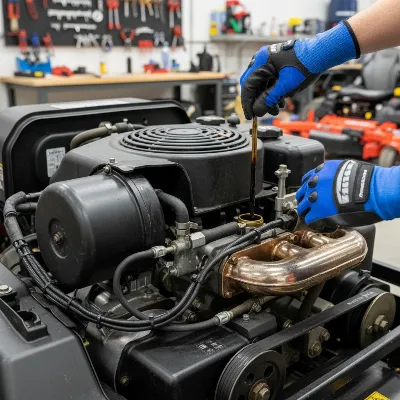 Hands performing routine maintenance on a commercial zero-turn mower's engine compartment, checking fluid levels.
Conclusion
Choosing the best zero-turn lawn mower for commercial use is a critical decision that impacts productivity, efficiency, and ultimately, your business’s success. By carefully considering your specific needs, property types, budget, and the features offered by top brands like Scag, Ferris, Exmark, John Deere, and Husqvarna, you can make an informed investment. The initial purchase is just the beginning; diligent maintenance and safe operating practices are key to ensuring your commercial zero-turn mower delivers reliable, high-performance results for years to come. Investing in a quality machine and maintaining it properly will not only improve your landscaping services but also provide a smoother, more comfortable experience for your operators.
What are the most challenging terrain types your current zero-turn mower struggles with, and what features do you wish it had to overcome them?
Frequently Asked Questions
What makes a zero-turn mower “commercial grade”?
Commercial-grade zero-turn mowers are distinguished by their heavy-duty components, robust engines, durable fabricated steel decks, and strong hydrostatic transmissions designed for prolonged, daily use. They often include advanced suspension systems and ergonomic features to enhance operator comfort and withstand the rigors of professional landscaping work.
How often should I service my commercial zero-turn mower?
Routine maintenance for commercial zero-turn mowers typically involves daily checks, weekly or every 25-hour inspections, and more comprehensive servicing every 50-100 hours for oil changes and filter replacements. Annual overhauls are also recommended to ensure all components are in optimal condition, following the manufacturer’s specific guidelines.
Can zero-turn mowers handle slopes effectively?
While zero-turn mowers offer excellent maneuverability, their stability on steep slopes can be limited due to their weight distribution and steering mechanism. Stand-on zero-turns often perform better on moderate slopes due to a lower center of gravity. Always consult the operator’s manual for recommended maximum slope angles and exercise extreme caution.
Is a gas or diesel zero-turn mower better for commercial use?
The choice between gas and diesel depends on your specific needs. Gas-powered mowers are generally more affordable upfront and suitable for most commercial applications. Diesel mowers, while more expensive, offer superior torque, better fuel efficiency, and longer engine life, making them ideal for very large properties, extremely thick grass, or operations requiring maximum durability and lower long-term operating costs.
What deck size is best for commercial landscaping?
The ideal deck size depends on the acreage and complexity of the properties you maintain. For general commercial use, decks ranging from 48 to 72 inches are common. Wider decks (60-72 inches) are highly efficient for large, open areas, while smaller decks (48-52 inches) offer better maneuverability for properties with more obstacles and tighter spaces.
How to Choose a Commercial Zero Turn Lawn Mower
Selecting the right commercial zero-turn mower involves assessing your specific needs, budget, and property characteristics to ensure a productive and profitable investment.
Evaluate the properties you'll be mowing, considering area size (e.g., 48-52 inch deck for under 5 acres, 60-72 inches for over 10 acres), grass type, terrain, and obstacles. This helps identify the required horsepower, deck size, and maneuverability.
Commercial zero-turn mowers range from $8,000 to over $20,000. Factor in not just the initial purchase price but also long-term operating costs like fuel, maintenance, and potential repairs. A higher upfront cost for durability or fuel efficiency can lead to greater savings over the machine's lifespan.
Prioritize commercial-grade engines (20-30+ HP), fabricated steel cutting decks (e.g., 7-gauge steel), heavy-duty hydrostatic transmissions (e.g., Hydro-Gear ZT-3400), and large fuel capacity. Operator comfort features like adjustable seats and suspension systems are also crucial for long work hours.
Research brands known for reliability and durability, such as Scag, Ferris, Exmark, John Deere, and Husqvarna. Read reviews from other commercial landscapers for insights into performance and common issues. A robust dealer network is vital for service and parts availability.
Look for mowers with rollover protection systems (ROPS), emergency shut-off switches, and seatbelts. Ensure proper training for all operators on safe procedures, including handling slopes and avoiding obstacles, to protect both personnel and equipment.
Get our weekly buyer guide
Practical specs, not advice. Unsubscribe anytime.

Good info on the zero-degree turning radius, which is definitely why we use these. I was hoping for a bit more detail on specific electric models for commercial applications, as we’re trying to go greener. The gas and diesel options are well covered, but the electric section felt a little light. Still, a solid resource for anyone looking into these powerful machines.
Great overview of zero-turn mowers for commercial use. I appreciate the breakdown of different types like stand-on versus ride-on. We manage several large properties, and the speed these machines offer is crucial for staying on schedule. I’ve always stuck with ride-on models, but the benefits of a stand-on for quick on-and-off access are making me rethink my next purchase.
I’ve been using zero-turn mowers for years in my landscaping business, and the maneuverability around tight corners is a game-changer. This guide really highlighted some of the best commercial-grade options out there. My current gas model has been a workhorse, but I’m seriously considering an upgrade to a diesel for even more power and longevity after reading this.
As a property manager, efficiency is key, and zero-turn mowers are essential for our large estates. The independent wheel motors make such a difference when navigating around trees and garden beds. It’s good to see a focus on commercial-grade machines, as the residential ones just don’t hold up to the daily grind we put them through.