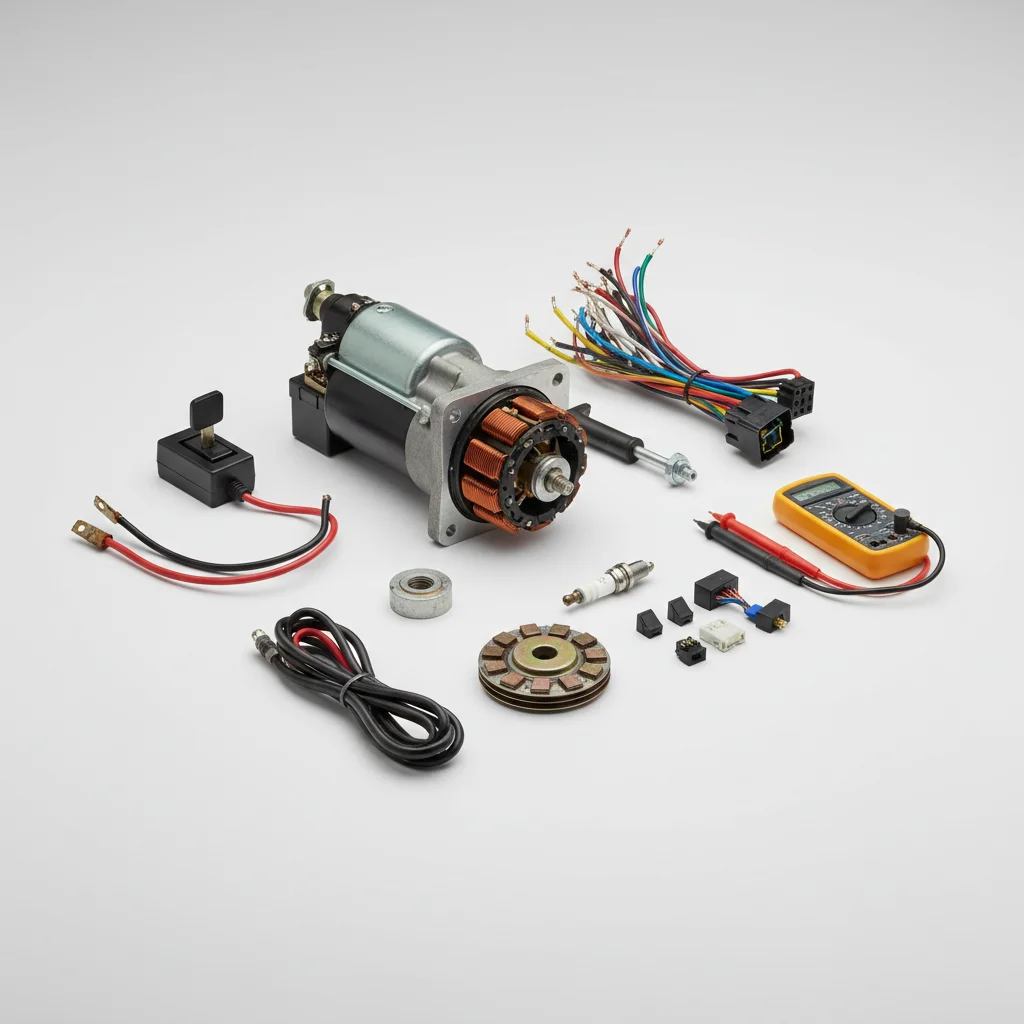
When your lawn mower refuses to start, the issue often lies within its electrical system. There are six common electrical problems that can prevent a lawn mower from firing up, ranging from a dead battery to a faulty ignition switch. Understanding these potential culprits is the first step in diagnosing and resolving the problem, saving you time and frustration.
Dead or Weak Battery
A dead or weak battery is perhaps the most straightforward electrical problem. If your mower has an electric start, a depleted battery won’t provide enough power to crank the engine. This is especially common after a long period of storage, such as over winter. You can test the battery voltage with a multimeter; a reading below 12.4 volts typically indicates a need for charging or replacement. For riding mowers, ensure the battery terminals are clean and free of corrosion, as this can impede current flow.
Faulty Spark Plug
The spark plug is crucial for ignition, creating the spark that ignites the fuel-air mixture. If the spark plug is fouled with carbon deposits, damaged, or simply worn out, it won’t produce a strong enough spark, or any spark at all. To check, remove the spark plug and inspect its condition. A healthy spark plug should have clean electrodes. You can also test for spark by grounding the plug against the engine block while attempting to start the mower (use insulated pliers for safety). If there’s no spark, replace the plug. This is a relatively inexpensive and easy fix.
Damaged or Loose Wires
The electrical system of a lawn mower relies on a network of wires to transmit power and signals. Over time, these wires can become frayed, cut, or disconnected due to vibration, rodent damage, or general wear and tear. A loose connection to the starter solenoid, ignition coil, or safety switches can prevent the mower from starting. Carefully inspect all visible wiring for any signs of damage or loose connections. Pay particular attention to the wires leading to the battery, starter, and ignition switch. Securing loose connections or repairing damaged wires can often resolve the issue.
Malfunctioning Ignition Switch
|
Our Picks for the Best Lawn Mower in 2026
As an Amazon Associate I earn from qualifying purchases.
|
||
| Num | Product | Action |
|---|---|---|
| 1 | Litheli 13.4inch Electric Lawn Mower Cordless,Grass Cutter Machine for 2600 Sq.Ft.Lawnmower with Brushless Motor, 8 Gallon Capacity, Cutting Height from 1 to 2.5 in, Includes 2X4.0 Ah Battery. |

|
| 2 | Litheli 40V (2 x 20V) 16" Electric Lawn Mower Cordless, Brushless Lawnmower with 6-Height Adjust, Portable & Lightweight Push Battery Powered Lawn Mower (2 * 4.0AH Batteries Included) |
|
| 3 | Litheli 20V 13" Cordless Lawn Mower, Electric Lawn Mowers for Garden, Yard and Farm, 5 Heights, with Brushless Motor, 4.0Ah Battery & Charger Included |
|
| 4 | Greenworks 24V 13" Brushless (Push) Cordless Lawn Mower, 4.0Ah Battery and Charger |
|
| 5 | CRAFTSMAN Electric Push Lawn Mower, 20-Inch Deck, Corded, Powerful 13-AMP Motor, 6 Setting Height Adjustment, Winged Blades, 3 in 1 Bagging, Mulching and Discharge (CMEMW213) |
|
| 6 | LawnMaster MEB1216K Electric Lawn Mower 16-Inch 12AMP |
|
| 7 | American Lawn Mower Company 50514 14" 11-Amp Corded Electric Lawn Mower, Black |
|
| 8 | VEVOR Push Lawn Sweeper, 21inch Leaf & Grass Collector, Heavy Duty Thickened Steel Durable to Use with Large Capacity 3.5 cu. ft. Mesh Collection Hopper Bag, 2 Spinning Brushes |
|
| 9 | Litheli Electric Lawn Mower Cordless,Grass Cutter Machine for 1300 Sq.Ft.Lawnmower with Motor,13.2 in Cutting Width,8 Gallon Capacity,Cutting Height from 1 to 2.5 in with 4.0A Battery |
|
| 10 | LawnMaster MEB1114K Electric Corded Lawn Mower 15-Inch 11AMP |
|
The ignition switch acts as the master control for the mower’s electrical system. If the switch is faulty, it may not be sending power to the starter or ignition system, even when turned to the ‘start’ position. Symptoms of a bad ignition switch include no response when turning the key, or intermittent starting problems. Testing an ignition switch usually requires a multimeter to check for continuity in different switch positions. If it fails to show continuity where expected, replacement is necessary.
Defective Starter Solenoid
The starter solenoid is an electromagnetic switch that receives power from the battery and sends it to the starter motor when the ignition key is turned. If the solenoid is defective, it won’t engage the starter motor, resulting in a click but no crank, or no sound at all. You can often test a solenoid by jumping its terminals with a screwdriver (with extreme caution and proper safety measures) to see if the starter motor engages directly. If the starter motor spins when jumped but not with the key, the solenoid is likely the problem. Replacing a starter solenoid is a common repair for many riding mowers.
Safety Switch Issues
Modern lawn mowers are equipped with several safety switches designed to prevent accidental starting or operation. These include switches on the seat (for riding mowers), the blade engagement lever, and the clutch/brake pedal. If any of these safety switches are faulty, or if the conditions for starting (e.g., operator in seat, blades disengaged, brake applied) are not met, the mower’s electrical system will prevent it from starting. Check your owner’s manual for the location of all safety switches and ensure they are functioning correctly. Sometimes, simply adjusting a seat or ensuring the brake is fully depressed can resolve the issue.
- Inspect battery terminals for corrosion and tightness.
- Test spark plug for proper gap and carbon buildup.
- Trace all visible wires for cuts, frays, or loose connections.
- Verify the functionality of all safety switches.
- Listen for a click from the starter solenoid when attempting to start.
Get our weekly buyer guide
Practical specs, not advice. Unsubscribe anytime.

My riding mower wouldn’t even click, and I was dreading a huge repair bill. Turns out, it was just a dead battery like mentioned here. I tested it with my multimeter and sure enough, it was way below 12.4 volts. A quick charge and it fired right up. Saved me a ton of hassle and money!
My mower still isn’t starting, even after checking the battery. I charged it up and the voltage is good, but it’s still just cranking without catching. I was hoping it would be a simple fix like the battery, but I guess I’ll have to dig deeper into the ignition switch next. It’s a bit frustrating when the obvious solution doesn’t work.
I’ve had issues with my push mower not starting intermittently. I cleaned the battery terminals as suggested, even though it’s a smaller battery, and it seems to have made a difference. It’s been starting much more reliably since then. Good to know these tips apply to different types of mowers.