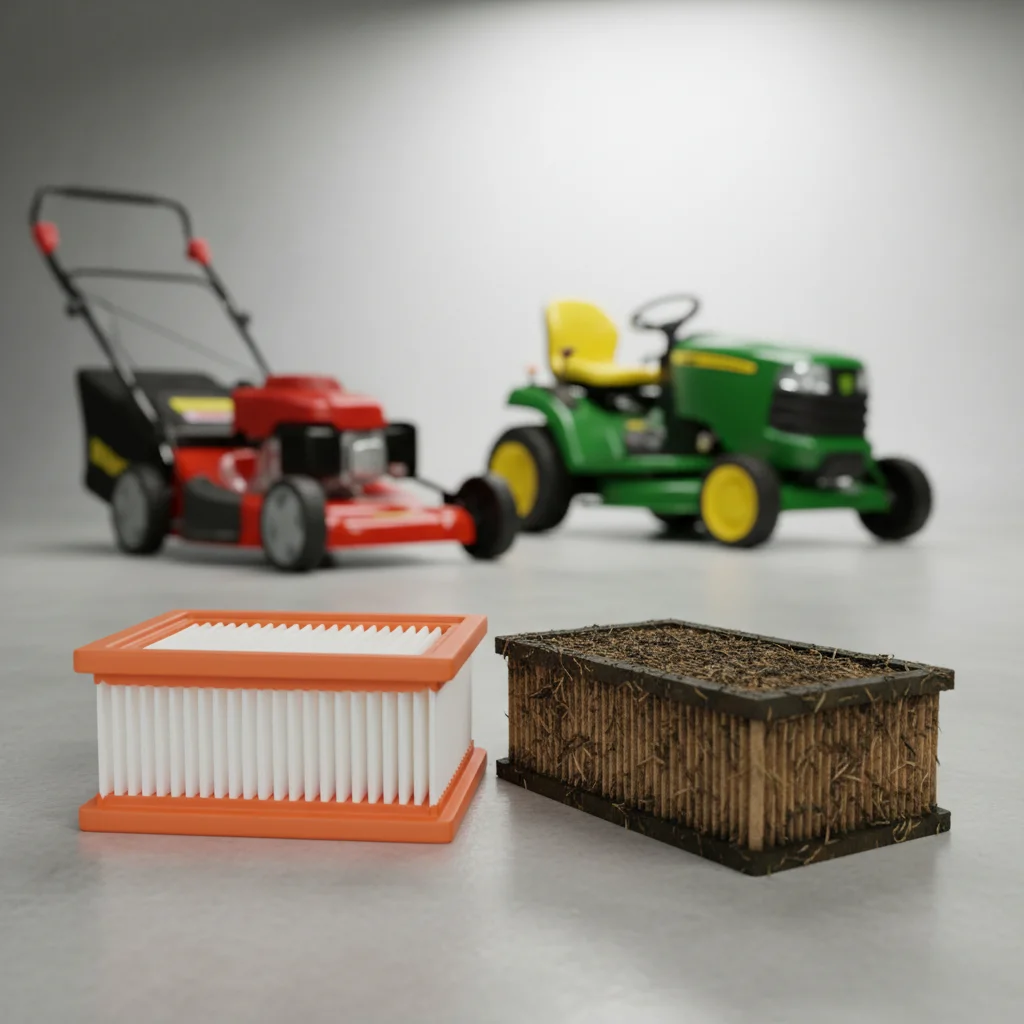
Replacing your lawn mower’s air filter is crucial for its performance and longevity. You should aim to replace your lawn mower air filter at least once per mowing season, or every 25 hours of operation, whichever comes first. For those who mow in dusty conditions or for extended periods, more frequent checks and replacements may be necessary to prevent engine damage and maintain optimal fuel efficiency.
Why a Clean Air Filter Matters for Your Lawn Mower
A clean air filter is the first line of defense for your lawn mower’s engine. It prevents dirt, dust, grass clippings, and other debris from entering the carburetor and engine cylinders. When the air filter becomes clogged, it restricts airflow, forcing the engine to work harder and consume more fuel. This can lead to a noticeable decrease in power, rough idling, and even engine misfires. Over time, a consistently dirty air filter can cause permanent damage to internal engine components, leading to costly repairs.
Signs It’s Time to Replace Your Air Filter
Recognizing the signs of a dirty air filter can save you a lot of hassle and expense. One of the most common indicators is a noticeable drop in engine power, especially when cutting through thicker grass. You might also observe increased fuel consumption, as the engine struggles to get enough clean air. Visible dirt or discoloration on the filter element itself is a clear sign. If your mower is emitting black smoke from the exhaust, it could be running too rich due to insufficient air, another symptom of a clogged filter. Regular visual inspections are key.
- Reduced engine power or sluggish performance
- Increased fuel consumption
- Visible dirt, dust, or discoloration on the filter
- Engine running rough or stalling frequently
- Black smoke from the exhaust
Choosing the Right Replacement Air Filter
|
Our Picks for the Best Lawn Mower in 2026
As an Amazon Associate I earn from qualifying purchases.
|
||
| Num | Product | Action |
|---|---|---|
| 1 | VEVOR Push Lawn Sweeper, 21inch Leaf & Grass Collector, Heavy Duty Thickened Steel Durable to Use with Large Capacity 3.5 cu. ft. Mesh Collection Hopper Bag, 2 Spinning Brushes |

|
| 2 | Greenworks 24V 13" Brushless (Push) Cordless Lawn Mower, 4.0Ah Battery and Charger |
|
| 3 | Litheli Electric Lawn Mower Cordless,Grass Cutter Machine for 1300 Sq.Ft.Lawnmower with Motor,13.2 in Cutting Width,8 Gallon Capacity,Cutting Height from 1 to 2.5 in with 4.0A Battery |
|
| 4 | Litheli 20V 13" Cordless Lawn Mower, Electric Lawn Mowers for Garden, Yard and Farm, 5 Heights, with Brushless Motor, 4.0Ah Battery & Charger Included |
|
| 5 | Litheli 40V (2 x 20V) 16" Electric Lawn Mower Cordless, Brushless Lawnmower with 6-Height Adjust, Portable & Lightweight Push Battery Powered Lawn Mower (2 * 4.0AH Batteries Included) |
|
| 6 | LawnMaster MEB1216K Electric Lawn Mower 16-Inch 12AMP |
|
| 7 | Litheli 13.4inch Electric Lawn Mower Cordless,Grass Cutter Machine for 2600 Sq.Ft.Lawnmower with Brushless Motor, 8 Gallon Capacity, Cutting Height from 1 to 2.5 in, Includes 2X4.0 Ah Battery. |
|
| 8 | CRAFTSMAN Electric Push Lawn Mower, 20-Inch Deck, Corded, Powerful 13-AMP Motor, 6 Setting Height Adjustment, Winged Blades, 3 in 1 Bagging, Mulching and Discharge (CMEMW213) |
|
| 9 | American Lawn Mower Company 50514 14" 11-Amp Corded Electric Lawn Mower, Black |
|
| 10 | LawnMaster MEB1114K Electric Corded Lawn Mower 15-Inch 11AMP |
|
When it comes to replacing your lawn mower air filter, selecting the correct type is essential. Always refer to your mower’s owner’s manual for the exact part number and specifications. There are generally two main types: paper filters and foam filters. Paper filters are common in many push mowers and riding mowers, while foam filters are often found in older models or specific engine types. Some filters may be a combination of both. Using an incorrect filter can compromise engine protection and performance. Consider purchasing an OEM (Original Equipment Manufacturer) filter for the best fit and performance, or a high-quality aftermarket equivalent.
You can often find replacement air filters at local hardware stores, lawn and garden centers, or online retailers. Make sure to double-check compatibility with your specific mower model and engine.Investing in a quality air filter is a small cost that yields significant benefits in terms of engine health and operational efficiency.
Step-by-Step Guide to Replacing Your Lawn Mower Air Filter
Replacing an air filter is a straightforward maintenance task that most homeowners can perform. First, ensure your mower is turned off and the spark plug wire is disconnected for safety. Locate the air filter housing, usually a plastic or metal cover held by clips or screws. Open the housing and carefully remove the old, dirty filter. Note its orientation before removal. Clean any debris from inside the housing with a damp cloth, being careful not to let anything fall into the carburetor. Insert the new filter, ensuring it fits snugly and is oriented correctly. Close the housing securely. Reconnect the spark plug wire, and your mower is ready to go.This simple procedure can significantly extend the life of your lawn mower and keep it running smoothly.
Get our weekly buyer guide
Practical specs, not advice. Unsubscribe anytime.

This was a good reminder. I usually replace my air filter once a season, but I do mow in pretty dusty conditions, so the tip about checking it more frequently makes a lot of sense. I’ve noticed a slight dip in fuel efficiency lately, so I’m going to swap it out this weekend and see if that helps.
I appreciate the info on replacing the air filter every 25 hours or once a season. My only minor complaint is that finding the exact filter for my older model can sometimes be a pain. It’s not always as straightforward as just grabbing one off the shelf, but I know it’s important to keep the engine running smoothly.
I never really thought about how much a clean air filter impacts fuel efficiency until now. My mower has been guzzling gas lately, and I bet this is why. It’s great to know that preventing dirt and debris from getting into the engine can make such a big difference. Definitely adding this to my regular maintenance routine.
I used to just clean my air filter, but after reading about how crucial it is for engine longevity, I’m definitely replacing it more often. My mower was starting to sound a bit rough, and I bet a clogged filter was the culprit. It’s a small investment for better performance and to avoid bigger problems down the line.