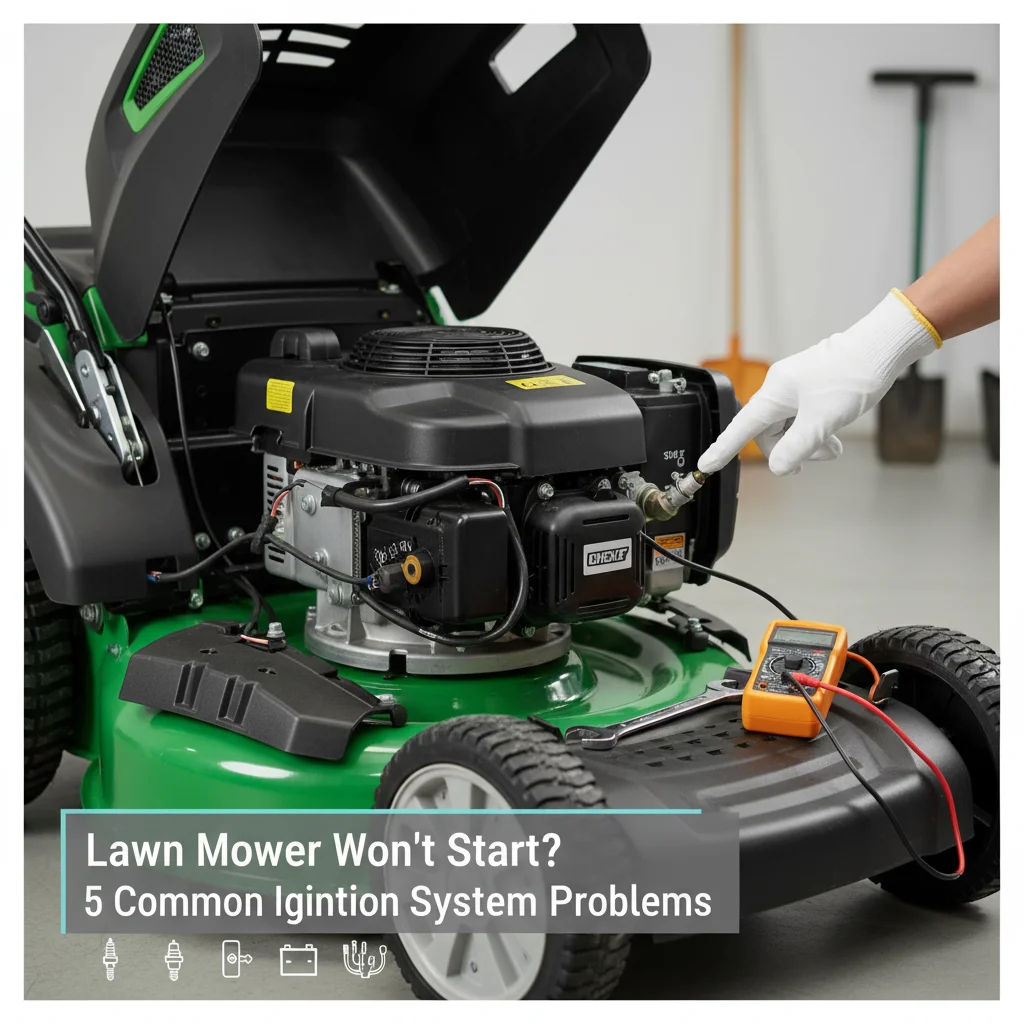
When your lawn mower refuses to start, the ignition system is often a primary culprit. There are five common ignition system problems that can prevent your mower from firing up: a faulty spark plug, a damaged spark plug wire, a malfunctioning ignition coil, a problematic kill switch, or issues with the flywheel key. Addressing these specific components can often resolve starting issues quickly and efficiently.
Faulty Spark Plug
A spark plug is essential for igniting the fuel-air mixture in your engine. Over time, spark plugs can become fouled with carbon deposits, corroded, or simply wear out, leading to a weak or absent spark. If your mower cranks but doesn’t catch, removing and inspecting the spark plug is a good first step. Look for signs of damage, excessive oil, or heavy carbon buildup. A simple cleaning might suffice, but often, replacement is the most reliable solution for a consistently strong spark.
Damaged Spark Plug Wire
The spark plug wire transmits the high voltage from the ignition coil to the spark plug. This wire can suffer from wear and tear, especially if it’s exposed to heat, vibrations, or physical damage. Cracks, fraying, or loose connections can interrupt the electrical flow, preventing the spark plug from firing. Visually inspect the entire length of the wire for any signs of damage. If you suspect an issue, testing the wire for continuity with a multimeter can confirm if it needs to be replaced.
Malfunctioning Ignition Coil
|
Our Picks for the Best Lawn Mower in 2026
As an Amazon Associate I earn from qualifying purchases.
|
||
| Num | Product | Action |
|---|---|---|
| 1 | CRAFTSMAN Electric Push Lawn Mower, 20-Inch Deck, Corded, Powerful 13-AMP Motor, 6 Setting Height Adjustment, Winged Blades, 3 in 1 Bagging, Mulching and Discharge (CMEMW213) |

|
| 2 | Greenworks 24V 13" Brushless (Push) Cordless Lawn Mower, 4.0Ah Battery and Charger |
|
| 3 | American Lawn Mower Company 50514 14" 11-Amp Corded Electric Lawn Mower, Black |
|
| 4 | Litheli 13.4inch Electric Lawn Mower Cordless,Grass Cutter Machine for 2600 Sq.Ft.Lawnmower with Brushless Motor, 8 Gallon Capacity, Cutting Height from 1 to 2.5 in, Includes 2X4.0 Ah Battery. |
|
| 5 | VEVOR Push Lawn Sweeper, 21inch Leaf & Grass Collector, Heavy Duty Thickened Steel Durable to Use with Large Capacity 3.5 cu. ft. Mesh Collection Hopper Bag, 2 Spinning Brushes |
|
| 6 | LawnMaster MEB1114K Electric Corded Lawn Mower 15-Inch 11AMP |
|
| 7 | LawnMaster MEB1216K Electric Lawn Mower 16-Inch 12AMP |
|
| 8 | Litheli 40V (2 x 20V) 16" Electric Lawn Mower Cordless, Brushless Lawnmower with 6-Height Adjust, Portable & Lightweight Push Battery Powered Lawn Mower (2 * 4.0AH Batteries Included) |
|
| 9 | Litheli Electric Lawn Mower Cordless,Grass Cutter Machine for 1300 Sq.Ft.Lawnmower with Motor,13.2 in Cutting Width,8 Gallon Capacity,Cutting Height from 1 to 2.5 in with 4.0A Battery |
|
| 10 | Litheli 20V 13" Cordless Lawn Mower, Electric Lawn Mowers for Garden, Yard and Farm, 5 Heights, with Brushless Motor, 4.0Ah Battery & Charger Included |
|
The ignition coil is responsible for transforming the low voltage from the battery into the high voltage needed to create a spark at the plug. If the ignition coil fails, it won’t be able to generate enough voltage, and your engine won’t start. Symptoms of a bad ignition coil include no spark at the plug even with a new plug and wire, or intermittent starting problems. Testing an ignition coil typically requires a multimeter and knowledge of your mower’s specifications, but it’s a critical component to check if other ignition parts seem fine.
Problematic Kill Switch
Most lawn mowers have a kill switch or safety interlock system designed to prevent accidental starts or operation when safety conditions aren’t met. If this switch is stuck in the ‘off’ position, or if there’s a wiring issue within the safety system, your mower will not start, even if all other components are functioning correctly. Check the kill switch for proper movement and ensure all safety levers (like the bail bar on push mowers or seat switch on riding mowers) are engaged correctly. Sometimes, simply wiggling the switch or cleaning its contacts can resolve the issue.
Issues with the Flywheel Key
While not directly part of the electrical circuit, the flywheel key plays a crucial role in the ignition timing. This small, soft metal key aligns the flywheel with the crankshaft, ensuring the ignition coil fires at the precise moment. If the mower blade hits a hard object, the flywheel key is designed to shear, protecting the crankshaft from damage. A sheared key will throw off the ignition timing, causing the engine to either not start at all or run very poorly. Replacing a sheared flywheel key is a relatively straightforward repair, but it requires removing the flywheel.
- Always disconnect the spark plug wire before performing any inspections or repairs on the ignition system.
- Refer to your lawn mower’s owner’s manual for specific diagnostic and repair procedures.
- Consider wearing gloves and safety glasses when working with engine components.
- If you’re unsure about any repair, consult a qualified small engine mechanic.
- Regularly clean your mower to prevent debris from interfering with electrical connections.
Get our weekly buyer guide
Practical specs, not advice. Unsubscribe anytime.
