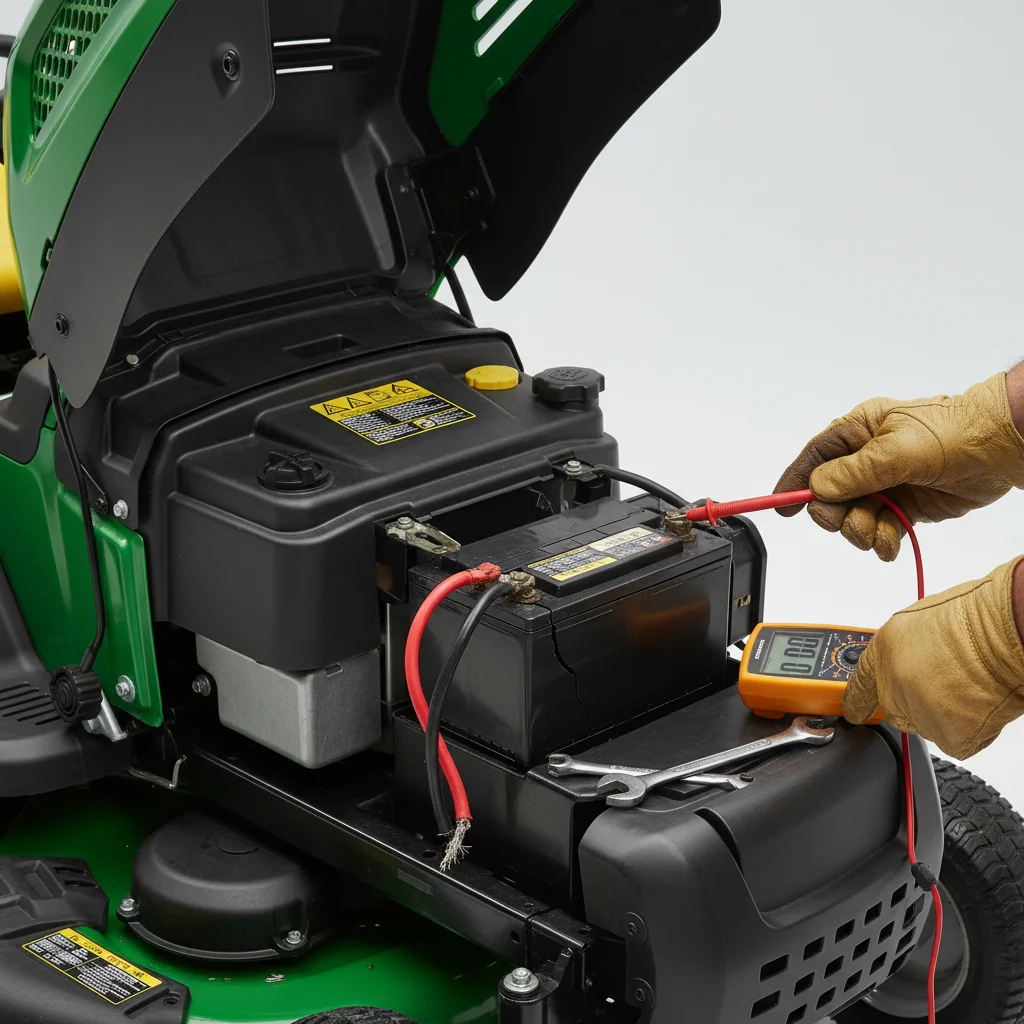
When your lawn mower refuses to start, a dead or faulty battery is a frequent culprit. There are typically five common battery-related issues that prevent a lawn mower from firing up: a discharged battery, corroded terminals, a loose connection, an old or failing battery, or a faulty charging system. Addressing these problems can often get your mower running again without professional help.
Discharged Battery: The Most Common Culprit
A discharged battery is perhaps the most common reason a lawn mower won’t start. This can happen if the mower has been sitting unused for an extended period, especially over winter, or if the charging system isn’t functioning correctly. Before assuming the battery is dead, check its voltage with a multimeter. A fully charged 12-volt lawn mower battery should read around 12.6 volts or higher. If it’s significantly lower, a simple recharge might be all that’s needed. Use a trickle charger or a smart charger designed for small engine batteries to slowly bring it back to full capacity.
Corroded Battery Terminals: A Hidden Power Drain
Corrosion on battery terminals can create a significant barrier to electrical flow, preventing your mower from starting. This white or bluish-green powdery substance is a common issue, especially in humid environments. To clean corroded terminals, first disconnect the battery, always removing the negative terminal first. Then, use a wire brush and a mixture of baking soda and water to scrub away the corrosion. Rinse with clean water and dry thoroughly before reconnecting. Ensuring clean, tight connections is crucial for proper power delivery.
Loose Battery Connections: Simple Fix, Big Impact
|
Our Picks for the Best Lawn Mower in 2026
As an Amazon Associate I earn from qualifying purchases.
|
||
| Num | Product | Action |
|---|---|---|
| 1 | Litheli 20V 13" Cordless Lawn Mower, Electric Lawn Mowers for Garden, Yard and Farm, 5 Heights, with Brushless Motor, 4.0Ah Battery & Charger Included |

|
| 2 | VEVOR Push Lawn Sweeper, 21inch Leaf & Grass Collector, Heavy Duty Thickened Steel Durable to Use with Large Capacity 3.5 cu. ft. Mesh Collection Hopper Bag, 2 Spinning Brushes |
|
| 3 | Litheli 13.4inch Electric Lawn Mower Cordless,Grass Cutter Machine for 2600 Sq.Ft.Lawnmower with Brushless Motor, 8 Gallon Capacity, Cutting Height from 1 to 2.5 in, Includes 2X4.0 Ah Battery. |
|
| 4 | CRAFTSMAN Electric Push Lawn Mower, 20-Inch Deck, Corded, Powerful 13-AMP Motor, 6 Setting Height Adjustment, Winged Blades, 3 in 1 Bagging, Mulching and Discharge (CMEMW213) |
|
| 5 | American Lawn Mower Company 50514 14" 11-Amp Corded Electric Lawn Mower, Black |
|
| 6 | Litheli Electric Lawn Mower Cordless,Grass Cutter Machine for 1300 Sq.Ft.Lawnmower with Motor,13.2 in Cutting Width,8 Gallon Capacity,Cutting Height from 1 to 2.5 in with 4.0A Battery |
|
| 7 | Litheli 40V (2 x 20V) 16" Electric Lawn Mower Cordless, Brushless Lawnmower with 6-Height Adjust, Portable & Lightweight Push Battery Powered Lawn Mower (2 * 4.0AH Batteries Included) |
|
| 8 | LawnMaster MEB1114K Electric Corded Lawn Mower 15-Inch 11AMP |
|
| 9 | Greenworks 24V 13" Brushless (Push) Cordless Lawn Mower, 4.0Ah Battery and Charger |
|
| 10 | LawnMaster MEB1216K Electric Lawn Mower 16-Inch 12AMP |
|
Even a fully charged battery with clean terminals can fail to start your mower if the connections are loose. Vibrations from mowing can cause the terminal bolts to loosen over time, leading to an intermittent or complete loss of electrical contact. Regularly check that both the positive and negative cables are securely fastened to the battery terminals. A simple turn of a wrench can often resolve this issue. Always ensure the connections are snug but avoid over-tightening, which can damage the battery posts.
Old or Failing Battery: When Replacement is Necessary
Lawn mower batteries, like all batteries, have a finite lifespan, typically ranging from three to five years. Over time, their ability to hold a charge diminishes, and internal components can degrade. If your battery consistently loses charge quickly, struggles to hold a charge after recharging, or shows signs of physical damage like bulging or leaks, it’s likely time for a replacement. A load test performed by an auto parts store or a small engine mechanic can confirm if the battery is no longer capable of delivering sufficient cranking amps.
Faulty Charging System: Beyond the Battery Itself
Sometimes, the battery itself isn’t the problem, but rather the mower’s charging system. If your battery keeps dying even after being fully charged, the alternator or stator might not be recharging it while the engine is running. This is a more complex issue that often requires professional diagnosis. However, you can perform a basic check by measuring the voltage across the battery terminals while the engine is running. It should read slightly higher than the battery’s static voltage (e.g., 13-14 volts for a 12-volt system). If it doesn’t, the charging system is likely at fault.
- Inspect battery terminals for any visible corrosion or damage.
- Test battery voltage with a multimeter to confirm charge level.
- Ensure all battery cable connections are tight and secure.
- Consider battery age; replace if it’s over 3-5 years old.
- Check the mower’s charging system if battery issues persist after replacement.
By systematically checking these five common battery issues, you can often diagnose and resolve why your lawn mower won’t start. Regular maintenance, including keeping terminals clean and connections tight, can extend your battery’s life and prevent unexpected starting problems.
Get our weekly buyer guide
Practical specs, not advice. Unsubscribe anytime.
