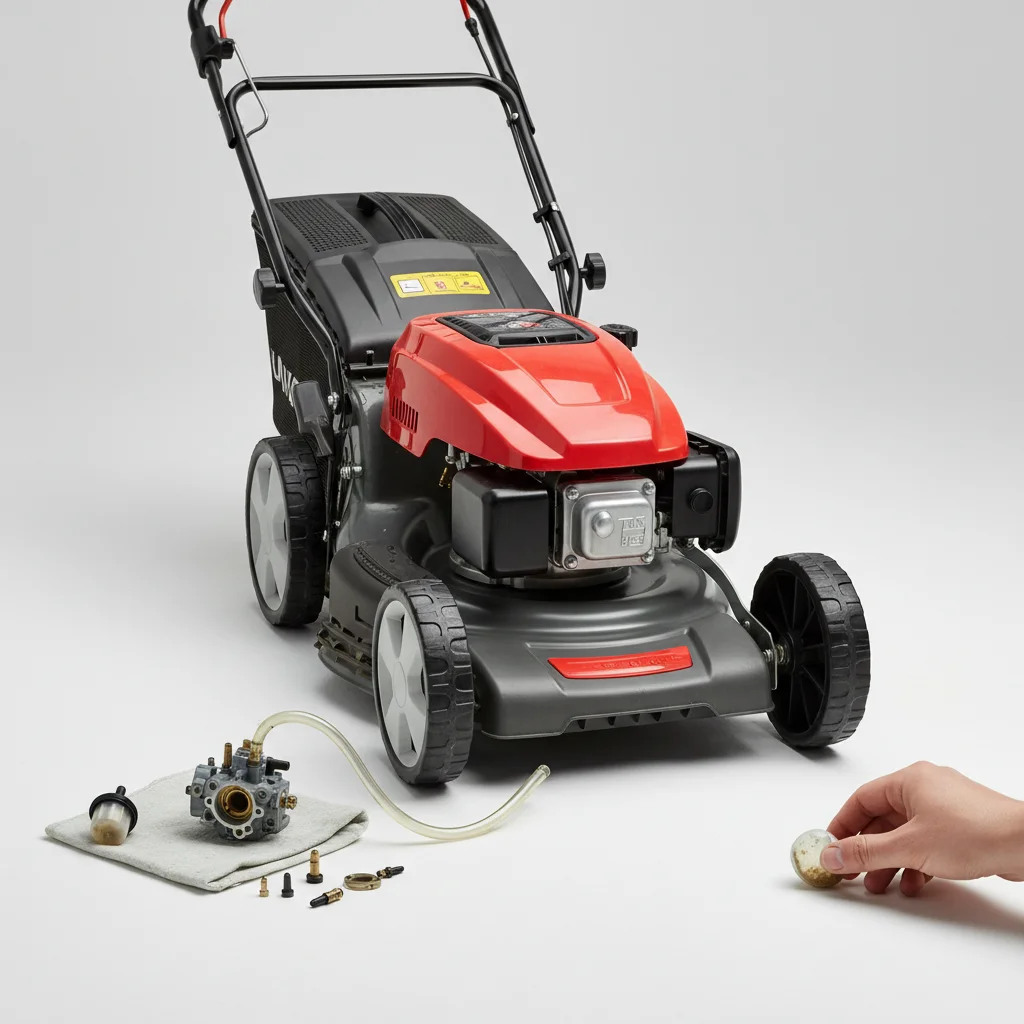
If your lawn mower won’t start, the issue often lies within its fuel system. There are typically 7 common fuel system problems that can prevent your mower from firing up, ranging from stale fuel to a clogged carburetor. Addressing these issues systematically can help diagnose and resolve the problem efficiently, getting your mower back in action.
Stale or Contaminated Fuel
One of the most frequent culprits for a non-starting lawn mower is stale or contaminated fuel. Gasoline can degrade over time, especially when left in the tank for several months. Ethanol in modern fuels can also attract water, leading to phase separation and corrosion. Always use fresh gasoline, ideally within 30 days of purchase, and consider a fuel stabilizer if storing the mower for extended periods.
Contaminated fuel, perhaps from a dirty fuel can or debris entering the tank, can also cause starting problems. Visually inspect the fuel for any cloudiness, particles, or unusual odors. If the fuel appears compromised, drain the tank completely and refill with fresh, clean gasoline.
Clogged Fuel Filter
The fuel filter is designed to prevent impurities from reaching the carburetor. Over time, this filter can become clogged with dirt, rust, or other debris, restricting fuel flow to the engine. A partially or fully clogged fuel filter will starve the engine of fuel, making it difficult or impossible to start.
Locate your fuel filter, which is typically a small inline component between the fuel tank and the carburetor. If it appears dirty or discolored, or if you suspect a blockage, it’s best to replace it. This is a relatively inexpensive and straightforward maintenance task that can resolve many starting issues.
Blocked Fuel Line
Similar to a clogged fuel filter, the fuel line itself can become blocked. This can happen due to debris, gumming from old fuel, or even kinks in the line. A restricted fuel line prevents the necessary amount of fuel from reaching the carburetor, leading to starting difficulties.
Inspect the entire length of the fuel line for any visible blockages, cracks, or kinks. You can try disconnecting the fuel line from the carburetor and checking for fuel flow into a container. If the flow is weak or nonexistent, the line may need to be cleared or replaced. Use compressed air to try and clear minor blockages, or replace the line if it’s severely compromised.
Faulty Fuel Pump
|
Our Picks for the Best Lawn Mower in 2026
As an Amazon Associate I earn from qualifying purchases.
|
||
| Num | Product | Action |
|---|---|---|
| 1 | VEVOR Push Lawn Sweeper, 21inch Leaf & Grass Collector, Heavy Duty Thickened Steel Durable to Use with Large Capacity 3.5 cu. ft. Mesh Collection Hopper Bag, 2 Spinning Brushes |

|
| 2 | Litheli Electric Lawn Mower Cordless,Grass Cutter Machine for 1300 Sq.Ft.Lawnmower with Motor,13.2 in Cutting Width,8 Gallon Capacity,Cutting Height from 1 to 2.5 in with 4.0A Battery |
|
| 3 | Litheli 40V (2 x 20V) 16" Electric Lawn Mower Cordless, Brushless Lawnmower with 6-Height Adjust, Portable & Lightweight Push Battery Powered Lawn Mower (2 * 4.0AH Batteries Included) |
|
| 4 | Litheli 13.4inch Electric Lawn Mower Cordless,Grass Cutter Machine for 2600 Sq.Ft.Lawnmower with Brushless Motor, 8 Gallon Capacity, Cutting Height from 1 to 2.5 in, Includes 2X4.0 Ah Battery. |
|
| 5 | CRAFTSMAN Electric Push Lawn Mower, 20-Inch Deck, Corded, Powerful 13-AMP Motor, 6 Setting Height Adjustment, Winged Blades, 3 in 1 Bagging, Mulching and Discharge (CMEMW213) |
|
| 6 | Greenworks 24V 13" Brushless (Push) Cordless Lawn Mower, 4.0Ah Battery and Charger |
|
| 7 | Litheli 20V 13" Cordless Lawn Mower, Electric Lawn Mowers for Garden, Yard and Farm, 5 Heights, with Brushless Motor, 4.0Ah Battery & Charger Included |
|
| 8 | American Lawn Mower Company 50514 14" 11-Amp Corded Electric Lawn Mower, Black |
|
| 9 | LawnMaster MEB1216K Electric Lawn Mower 16-Inch 12AMP |
|
| 10 | LawnMaster MEB1114K Electric Corded Lawn Mower 15-Inch 11AMP |
|
Some lawn mowers, particularly riding mowers or those with larger engines, utilize a fuel pump to deliver fuel from the tank to the carburetor. If this pump is malfunctioning, it won’t be able to supply the engine with adequate fuel pressure, preventing it from starting.
To test a fuel pump, you’ll typically need to disconnect the fuel line leading to the carburetor and crank the engine. If no fuel or only a trickle comes out, the pump may be faulty. Consult your mower’s service manual for specific testing procedures and replacement instructions.
Clogged Carburetor
The carburetor mixes air and fuel in the correct proportions for combustion. Old, stale fuel can leave behind sticky deposits and varnish that clog the tiny passages and jets within the carburetor. This is a very common reason for a mower not starting or running poorly.
A clogged carburetor often requires cleaning or rebuilding. For minor clogs, a carburetor cleaner spray might suffice. For more severe blockages, the carburetor may need to be disassembled, cleaned thoroughly with a specialized cleaner, and then reassembled with new gaskets. If the carburetor is heavily corroded or damaged, replacement might be the most practical option.
Vent Hole Blockage in Fuel Cap
The fuel cap on your lawn mower isn’t just a lid; it also contains a small vent hole that allows air to enter the fuel tank as fuel is consumed. If this vent hole becomes clogged with dirt or debris, a vacuum can form in the tank, preventing fuel from flowing to the carburetor.
- Inspect the fuel cap for any visible blockages in the vent hole.
- Use a small pin or wire to gently clear any debris.
- Ensure the cap seals properly but allows air exchange.
- Test the mower with the cap slightly loosened to see if it starts.
- Replace the fuel cap if the vent cannot be cleared or is damaged.
A simple check of the fuel cap can often resolve a perplexing starting issue without needing to delve into more complex repairs.
Incorrect Choke Operation
While not strictly a fuel system component, incorrect choke usage directly impacts the fuel-air mixture during starting. The choke enriches the fuel mixture for cold starts. If the choke is not engaged properly, or if it’s left on too long after the engine warms up, it can either starve the engine of fuel or flood it.
Ensure you are following the correct starting procedure for your specific mower, which typically involves engaging the choke for a cold start and then gradually disengaging it as the engine warms. If the choke mechanism itself is sticking or not moving freely, it may need lubrication or repair.
Get our weekly buyer guide
Practical specs, not advice. Unsubscribe anytime.
