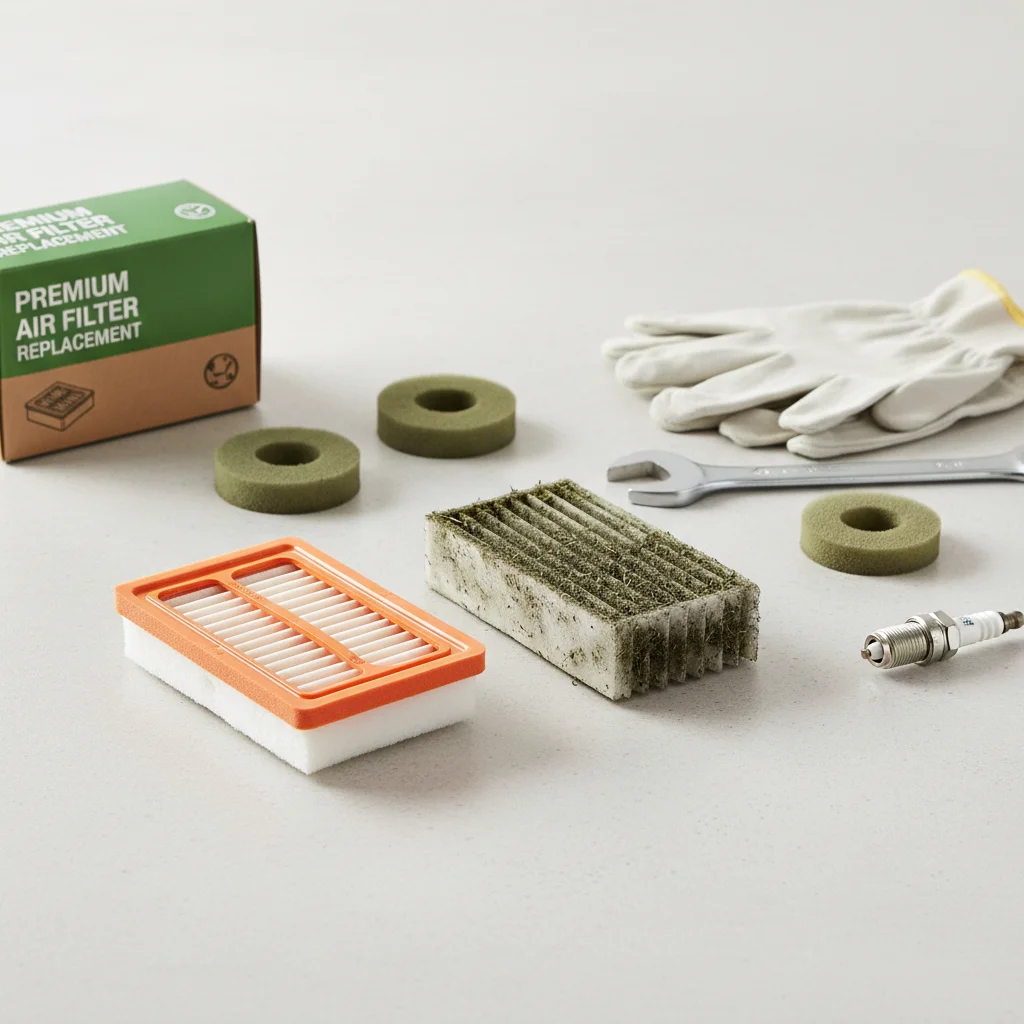
Replacing your lawn mower’s air filter is crucial for maintaining engine health and peak performance, and it should typically be done at least once per mowing season or every 25 hours of operation, whichever comes first. A clean air filter ensures a proper air-fuel mixture, preventing dirt and debris from entering the engine and causing premature wear. Neglecting this simple maintenance task can lead to reduced power, increased fuel consumption, and even costly engine damage over time.
Why a Clean Air Filter Matters for Your Mower
The air filter is your lawn mower’s first line of defense against harmful contaminants. As your mower operates, it draws in air, and this air often contains dust, grass clippings, pollen, and other small particles. The air filter traps these particles, preventing them from reaching the carburetor and engine cylinders. When the filter becomes clogged, it restricts airflow, forcing the engine to work harder and potentially run rich, leading to inefficient combustion and a noticeable drop in power. This restriction can also cause the engine to overheat and shorten its lifespan. For see our lawn mower recommendations on this site.
Signs It’s Time for a New Air Filter
Beyond the recommended seasonal replacement, several signs indicate that your lawn mower’s air filter needs attention. If you notice a significant decrease in engine power, especially when cutting thicker grass, a clogged filter is a likely culprit. Other indicators include increased fuel consumption, difficulty starting the mower, or the engine running rough and sputtering. Visually inspecting the filter is also key; if it appears dirty, discolored, or caked with debris, it’s time for a change. Don’t wait until performance severely degrades; proactive replacement saves you headaches and money.
Choosing the Right Air Filter for Your Mower
|
Our Picks for the Best Lawn Mower in 2026
As an Amazon Associate I earn from qualifying purchases.
|
||
| Num | Product | Action |
|---|---|---|
| 1 | American Lawn Mower Company 50514 14" 11-Amp Corded Electric Lawn Mower, Black |

|
| 2 | LawnMaster MEB1216K Electric Lawn Mower 16-Inch 12AMP |
|
| 3 | VEVOR Push Lawn Sweeper, 21inch Leaf & Grass Collector, Heavy Duty Thickened Steel Durable to Use with Large Capacity 3.5 cu. ft. Mesh Collection Hopper Bag, 2 Spinning Brushes |
|
| 4 | LawnMaster MEB1114K Electric Corded Lawn Mower 15-Inch 11AMP |
|
| 5 | Litheli 20V 13" Cordless Lawn Mower, Electric Lawn Mowers for Garden, Yard and Farm, 5 Heights, with Brushless Motor, 4.0Ah Battery & Charger Included |
|
| 6 | CRAFTSMAN Electric Push Lawn Mower, 20-Inch Deck, Corded, Powerful 13-AMP Motor, 6 Setting Height Adjustment, Winged Blades, 3 in 1 Bagging, Mulching and Discharge (CMEMW213) |
|
| 7 | Litheli 40V (2 x 20V) 16" Electric Lawn Mower Cordless, Brushless Lawnmower with 6-Height Adjust, Portable & Lightweight Push Battery Powered Lawn Mower (2 * 4.0AH Batteries Included) |
|
| 8 | Greenworks 24V 13" Brushless (Push) Cordless Lawn Mower, 4.0Ah Battery and Charger |
|
| 9 | Litheli 13.4inch Electric Lawn Mower Cordless,Grass Cutter Machine for 2600 Sq.Ft.Lawnmower with Brushless Motor, 8 Gallon Capacity, Cutting Height from 1 to 2.5 in, Includes 2X4.0 Ah Battery. |
|
| 10 | Litheli Electric Lawn Mower Cordless,Grass Cutter Machine for 1300 Sq.Ft.Lawnmower with Motor,13.2 in Cutting Width,8 Gallon Capacity,Cutting Height from 1 to 2.5 in with 4.0A Battery |
|
Selecting the correct air filter is essential for proper fit and function. Always refer to your lawn mower’s owner’s manual for the specific part number and type of filter required. There are generally two main types: paper filters and foam filters. Paper filters are common in many push mowers and riding mowers, while foam filters are often found in older models or specific engine designs. Some filters may be a combination of both. Using an incorrect filter can compromise its effectiveness and potentially damage your engine. Always opt for an OEM (Original Equipment Manufacturer) filter or a high-quality aftermarket equivalent to ensure optimal performance and protection.
- Check your owner’s manual for the exact part number.
- Identify if your mower uses a paper, foam, or combination filter.
- Consider OEM filters for guaranteed fit and quality.
- Ensure the new filter matches the dimensions of the old one.
- Purchase from reputable suppliers to avoid counterfeit parts.
Step-by-Step Air Filter Replacement Guide
Replacing your lawn mower’s air filter is a straightforward task that most homeowners can perform. First, ensure the mower is turned off and the spark plug wire is disconnected for safety. Locate the air filter housing, usually a plastic or metal cover near the carburetor. Unclip or unscrew the cover to expose the old filter. Carefully remove the old filter, taking care not to let any trapped debris fall into the carburetor. Clean any loose dirt from the housing with a cloth. Insert the new filter, ensuring it’s seated correctly, and then reattach the cover securely. Reconnect the spark plug wire, and your mower is ready to go with improved airflow and performance.
Extending the Life of Your Air Filter
While regular replacement is necessary, you can extend the effective life of your air filter with a few simple practices. For paper filters, gently tapping them against a hard surface can dislodge loose debris, but avoid using compressed air as it can damage the filter’s fibers. Foam filters can often be washed with warm, soapy water, rinsed thoroughly, and allowed to air dry completely before reinstallation. Always check your owner’s manual for specific cleaning instructions for your filter type. Operating your mower in less dusty conditions and regularly clearing grass clippings from around the engine can also help keep your filter cleaner for longer.
Get our weekly buyer guide
Practical specs, not advice. Unsubscribe anytime.
