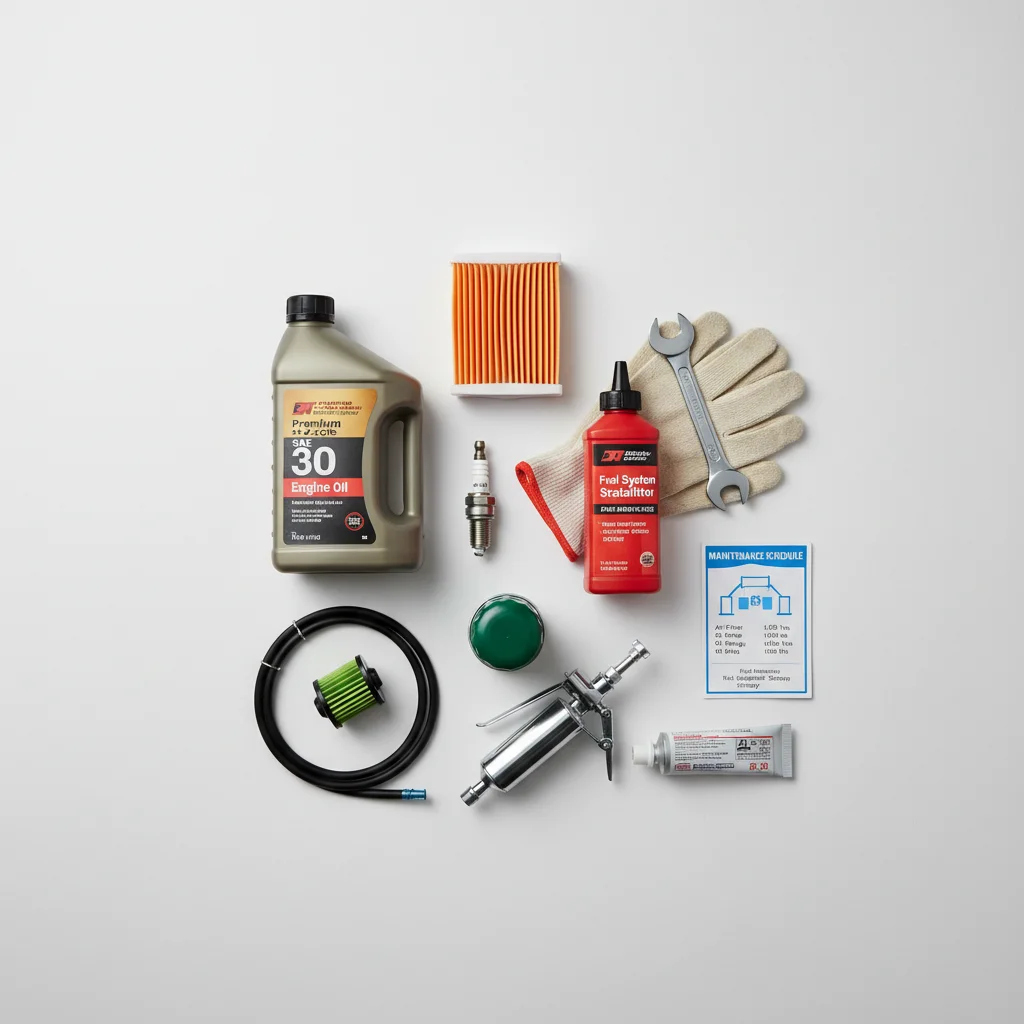
Maintaining your lawn mower on a regular schedule is crucial for its longevity and optimal performance. Generally, you should service your lawn mower at least once per mowing season, with more frequent checks on specific components. Adhering to a consistent maintenance routine prevents costly repairs and ensures a clean, efficient cut every time you mow.
Understanding Your Mower’s Maintenance Needs
Different types of lawn mowers, such as gas, electric, and riding mowers, have varying maintenance requirements. Gas mowers typically demand more attention due to their engines, fuel systems, and spark plugs. Electric and battery-powered models, while simpler, still require blade care and battery health monitoring. Consulting your owner’s manual provides the most accurate maintenance schedule for your specific model.
Key Maintenance Tasks and Frequencies
Several critical tasks should be performed at specific intervals. Changing the oil in a gas mower is recommended every 25-50 hours of operation or at least once per season. Air filters should be checked and cleaned every 10-25 hours, and replaced annually or more often in dusty conditions. Spark plugs typically need inspection and cleaning every 50 hours and replacement every 100 hours or annually. Blades should be sharpened every 20-25 hours or at least twice per season, and balanced to prevent vibration.
- Check and clean air filter: Every 10-25 hours or before each use in dusty conditions.
- Change engine oil (gas mowers): Every 25-50 hours or once per season.
- Inspect and clean spark plug (gas mowers): Every 50 hours.
- Sharpen and balance blades: Every 20-25 hours or twice per season.
- Inspect and clean under-deck: After every use.
Seasonal Maintenance for Optimal Performance
|
Our Picks for the Best Lawn Mower in 2026
As an Amazon Associate I earn from qualifying purchases.
|
||
| Num | Product | Action |
|---|---|---|
| 1 | Litheli 20V 13" Cordless Lawn Mower, Electric Lawn Mowers for Garden, Yard and Farm, 5 Heights, with Brushless Motor, 4.0Ah Battery & Charger Included |

|
| 2 | VEVOR Push Lawn Sweeper, 21inch Leaf & Grass Collector, Heavy Duty Thickened Steel Durable to Use with Large Capacity 3.5 cu. ft. Mesh Collection Hopper Bag, 2 Spinning Brushes |
|
| 3 | LawnMaster MEB1216K Electric Lawn Mower 16-Inch 12AMP |
|
| 4 | Litheli 13.4inch Electric Lawn Mower Cordless,Grass Cutter Machine for 2600 Sq.Ft.Lawnmower with Brushless Motor, 8 Gallon Capacity, Cutting Height from 1 to 2.5 in, Includes 2X4.0 Ah Battery. |
|
| 5 | Litheli Electric Lawn Mower Cordless,Grass Cutter Machine for 1300 Sq.Ft.Lawnmower with Motor,13.2 in Cutting Width,8 Gallon Capacity,Cutting Height from 1 to 2.5 in with 4.0A Battery |
|
| 6 | American Lawn Mower Company 50514 14" 11-Amp Corded Electric Lawn Mower, Black |
|
| 7 | LawnMaster MEB1114K Electric Corded Lawn Mower 15-Inch 11AMP |
|
| 8 | Greenworks 24V 13" Brushless (Push) Cordless Lawn Mower, 4.0Ah Battery and Charger |
|
| 9 | CRAFTSMAN Electric Push Lawn Mower, 20-Inch Deck, Corded, Powerful 13-AMP Motor, 6 Setting Height Adjustment, Winged Blades, 3 in 1 Bagging, Mulching and Discharge (CMEMW213) |
|
| 10 | Litheli 40V (2 x 20V) 16" Electric Lawn Mower Cordless, Brushless Lawnmower with 6-Height Adjust, Portable & Lightweight Push Battery Powered Lawn Mower (2 * 4.0AH Batteries Included) |
|
Beyond regular checks, seasonal maintenance ensures your mower is ready for the challenges of different times of the year. Before the start of the mowing season, perform a comprehensive tune-up, including oil change, spark plug replacement, air filter replacement, and blade sharpening. This prepares your mower for heavy use. At the end of the season, proper winterization for gas mowers involves stabilizing fuel, cleaning the deck, and disconnecting the spark plug wire.
Troubleshooting Common Maintenance Issues
Even with a strict schedule, issues can arise. If your mower is cutting unevenly, it’s often a sign of dull or unbalanced blades. Excessive smoke from a gas mower can indicate an overfilled oil reservoir or a clogged air filter. A mower that won’t start might have a fouled spark plug, stale fuel, or a dead battery. Addressing these problems promptly can prevent further damage and extend the life of your equipment. Regular cleaning of the mower deck after each use prevents grass buildup, which can hinder performance and lead to rust.
By following a consistent maintenance schedule and addressing minor issues as they arise, you can ensure your lawn mower remains a reliable tool for a beautifully manicured lawn. Investing a little time in maintenance will save you significant time and money in the long run.
Get our weekly buyer guide
Practical specs, not advice. Unsubscribe anytime.
