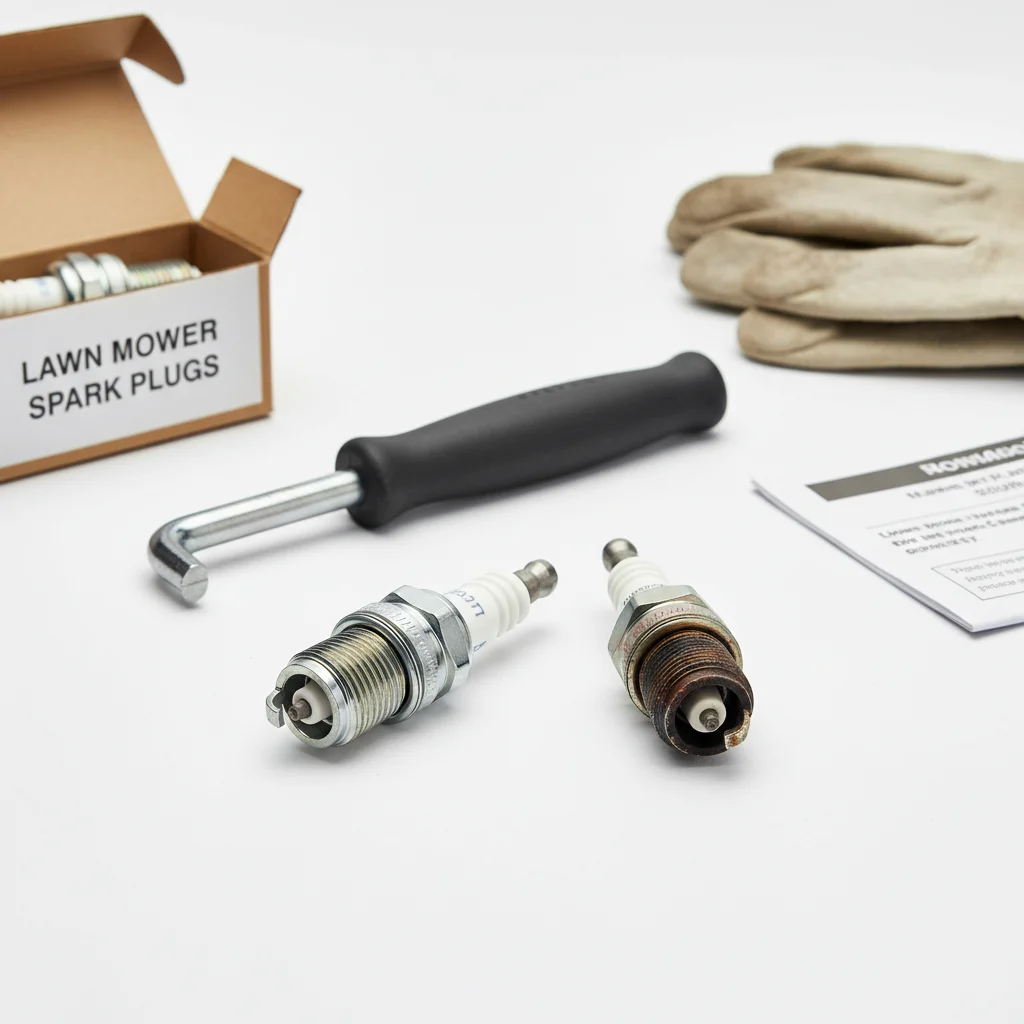
Knowing when to perform a lawn mower spark plug replacement is crucial for maintaining engine health and ensuring easy starts. Generally, you should replace your lawn mower’s spark plug every 25 hours of operation or at least once per mowing season, whichever comes first. This proactive approach prevents common starting issues and ensures optimal fuel efficiency throughout the year.
Why Regular Spark Plug Replacement Matters
The spark plug is a small but vital component in your lawn mower’s engine, responsible for igniting the air-fuel mixture. Over time, carbon deposits can build up on the electrodes, or the gap between them can widen, leading to a weaker spark. This can manifest as difficulty starting, rough idling, reduced power, and increased fuel consumption. A fresh spark plug ensures a strong, consistent spark, promoting efficient combustion and extending the life of your engine.
Ignoring a worn-out spark plug can lead to more significant engine problems down the line, including misfires that put stress on other components. Regular replacement is a simple, inexpensive maintenance task that can save you from costly repairs and frustrating breakdowns during peak mowing season.
Signs Your Spark Plug Needs Replacing
While a seasonal replacement schedule is ideal, your lawn mower might show signs that its spark plug needs attention sooner. Common indicators include the engine cranking but not starting, or starting with great difficulty. If your mower runs rough, sputters, or loses power during operation, a failing spark plug could be the culprit. Excessive black smoke from the exhaust can also point to an inefficient burn caused by a faulty plug. Always check the spark plug first when troubleshooting these issues.
- Engine cranks but won’t start
- Difficulty starting, requiring multiple pulls
- Rough idling or sputtering during operation
- Noticeable loss of engine power
- Increased fuel consumption
Choosing the Right Spark Plug for Your Mower
|
Our Picks for the Best Lawn Mower in 2026
As an Amazon Associate I earn from qualifying purchases.
|
||
| Num | Product | Action |
|---|---|---|
| 1 | Greenworks 24V 13" Brushless (Push) Cordless Lawn Mower, 4.0Ah Battery and Charger |

|
| 2 | LawnMaster MEB1114K Electric Corded Lawn Mower 15-Inch 11AMP |
|
| 3 | VEVOR Push Lawn Sweeper, 21inch Leaf & Grass Collector, Heavy Duty Thickened Steel Durable to Use with Large Capacity 3.5 cu. ft. Mesh Collection Hopper Bag, 2 Spinning Brushes |
|
| 4 | Litheli 40V (2 x 20V) 16" Electric Lawn Mower Cordless, Brushless Lawnmower with 6-Height Adjust, Portable & Lightweight Push Battery Powered Lawn Mower (2 * 4.0AH Batteries Included) |
|
| 5 | Litheli 20V 13" Cordless Lawn Mower, Electric Lawn Mowers for Garden, Yard and Farm, 5 Heights, with Brushless Motor, 4.0Ah Battery & Charger Included |
|
| 6 | Litheli 13.4inch Electric Lawn Mower Cordless,Grass Cutter Machine for 2600 Sq.Ft.Lawnmower with Brushless Motor, 8 Gallon Capacity, Cutting Height from 1 to 2.5 in, Includes 2X4.0 Ah Battery. |
|
| 7 | CRAFTSMAN Electric Push Lawn Mower, 20-Inch Deck, Corded, Powerful 13-AMP Motor, 6 Setting Height Adjustment, Winged Blades, 3 in 1 Bagging, Mulching and Discharge (CMEMW213) |
|
| 8 | Litheli Electric Lawn Mower Cordless,Grass Cutter Machine for 1300 Sq.Ft.Lawnmower with Motor,13.2 in Cutting Width,8 Gallon Capacity,Cutting Height from 1 to 2.5 in with 4.0A Battery |
|
| 9 | LawnMaster MEB1216K Electric Lawn Mower 16-Inch 12AMP |
|
| 10 | American Lawn Mower Company 50514 14" 11-Amp Corded Electric Lawn Mower, Black |
|
Selecting the correct spark plug is essential for proper engine function. Always refer to your lawn mower’s owner’s manual for the recommended spark plug type and gap setting. Using the wrong plug can lead to poor performance or even engine damage. Spark plugs are typically categorized by their heat range, thread size, and reach. Most lawn mowers use a standard resistor-type spark plug. If you’re unsure, take your old spark plug to a hardware store or an authorized dealer for an exact match.
Step-by-Step Guide to Replacing Your Spark Plug
Replacing a spark plug is a straightforward process that most homeowners can do with basic tools. First, ensure your lawn mower is turned off and the spark plug wire is disconnected to prevent accidental starting. Locate the spark plug, usually on the side or top of the engine. Use a spark plug wrench to carefully loosen and remove the old plug. Inspect the old plug for signs of wear, such as heavy carbon buildup or a melted electrode, which can indicate other engine issues. Before installing the new plug, check the gap with a feeler gauge and adjust if necessary according to your mower’s specifications. Hand-thread the new plug into the engine to avoid cross-threading, then tighten it with the wrench until snug, but do not overtighten. Reconnect the spark plug wire, and you’re ready to go.
Post-Replacement Tips for Optimal Performance
After replacing your spark plug, start your lawn mower to ensure it runs smoothly. You should notice easier starting and a more consistent engine idle. To maximize the life of your new spark plug and maintain overall engine health, consider these additional tips: always use fresh, clean fuel, as stale fuel can lead to carbon deposits. Regularly clean or replace your air filter to ensure proper air intake, which is vital for efficient combustion. Finally, adhere to your mower’s recommended maintenance schedule for oil changes and other routine checks to keep your engine in top condition.
Get our weekly buyer guide
Practical specs, not advice. Unsubscribe anytime.

I tried replacing my spark plug after my mower started having difficulty starting, and while it helped, it wasn’t a complete fix. I think my issue might be a bit more complex than just the plug. The guide was clear on how to do it, but I still had some trouble getting the old one out. Maybe I need a different wrench.
I always forget about replacing my spark plug until my mower starts acting up. The tip about doing it every 25 hours of operation or once a season is a game-changer for me. My old mower was really struggling to start, and after putting in a new plug, it fired right up. Definitely makes a difference in how smoothly it runs too.
Good reminder on the importance of a fresh spark plug. I’ve definitely noticed the reduced power and increased fuel consumption when I let it go too long. I usually just eyeball it, but the advice on checking for carbon deposits on the electrodes is super helpful. It’s a small part but makes a huge impact on engine performance.
This is exactly what I needed! My lawn mower has been idling really rough lately, and I suspected it was the spark plug. The explanation about the gap between the electrodes widening makes perfect sense. I’m going to grab a new one this weekend and follow the steps. Hoping for those easy starts again!