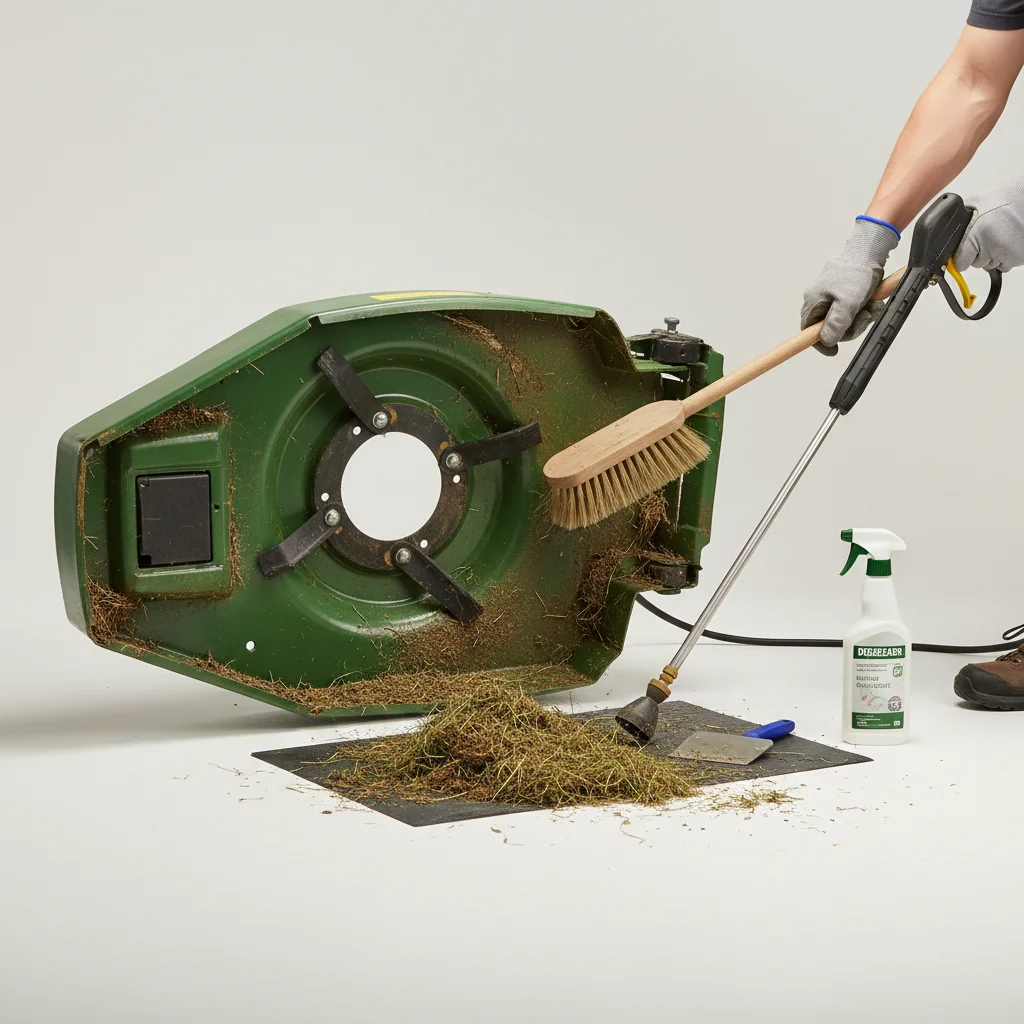
Regular lawn mower deck cleaning is crucial for maintaining your machine’s performance and extending its lifespan. You should aim to clean your lawn mower deck after every two to three uses, or at least once a month during peak mowing season. This frequency prevents the buildup of grass clippings, which can lead to rust, reduced cutting efficiency, and even engine strain.
Why Regular Deck Cleaning Matters for Mower Performance
A clean mower deck ensures that your blades can spin freely and cut grass evenly. When clippings accumulate, they can create an uneven surface that interferes with the airflow necessary for proper mulching or bagging. This buildup also adds extra weight and drag, forcing your engine to work harder, which can decrease fuel efficiency and accelerate wear and tear on components.
Furthermore, damp grass clippings left on the deck can trap moisture against the metal, leading to corrosion and rust. Over time, this can weaken the deck’s structure, potentially causing costly repairs or premature replacement of the entire mower. A quick clean after each use can save you significant time and money in the long run.
Essential Tools for Effective Deck Cleaning
To effectively clean your lawn mower deck, you’ll need a few basic tools. A stiff-bristled brush or scraper is ideal for removing caked-on grass and debris. A garden hose with a spray nozzle will help rinse away loose clippings. For tougher grime, a pressure washer can be used, but with caution to avoid damaging seals or electrical components. Always wear gloves and eye protection to ensure safety during the cleaning process.
- Stiff-bristled brush or plastic scraper
- Garden hose with spray nozzle
- Safety gloves and eye protection
- Optional: Pressure washer (use with care)
- Optional: Biodegradable degreaser for stubborn grime
Step-by-Step Guide to Cleaning Your Mower Deck
|
Our Picks for the Best Lawn Mower in 2026
As an Amazon Associate I earn from qualifying purchases.
|
||
| Num | Product | Action |
|---|---|---|
| 1 | Litheli 40V (2 x 20V) 16" Electric Lawn Mower Cordless, Brushless Lawnmower with 6-Height Adjust, Portable & Lightweight Push Battery Powered Lawn Mower (2 * 4.0AH Batteries Included) |

|
| 2 | LawnMaster MEB1216K Electric Lawn Mower 16-Inch 12AMP |
|
| 3 | LawnMaster MEB1114K Electric Corded Lawn Mower 15-Inch 11AMP |
|
| 4 | American Lawn Mower Company 50514 14" 11-Amp Corded Electric Lawn Mower, Black |
|
| 5 | Litheli 20V 13" Cordless Lawn Mower, Electric Lawn Mowers for Garden, Yard and Farm, 5 Heights, with Brushless Motor, 4.0Ah Battery & Charger Included |
|
| 6 | CRAFTSMAN Electric Push Lawn Mower, 20-Inch Deck, Corded, Powerful 13-AMP Motor, 6 Setting Height Adjustment, Winged Blades, 3 in 1 Bagging, Mulching and Discharge (CMEMW213) |
|
| 7 | Litheli 13.4inch Electric Lawn Mower Cordless,Grass Cutter Machine for 2600 Sq.Ft.Lawnmower with Brushless Motor, 8 Gallon Capacity, Cutting Height from 1 to 2.5 in, Includes 2X4.0 Ah Battery. |
|
| 8 | Greenworks 24V 13" Brushless (Push) Cordless Lawn Mower, 4.0Ah Battery and Charger |
|
| 9 | VEVOR Push Lawn Sweeper, 21inch Leaf & Grass Collector, Heavy Duty Thickened Steel Durable to Use with Large Capacity 3.5 cu. ft. Mesh Collection Hopper Bag, 2 Spinning Brushes |
|
| 10 | Litheli Electric Lawn Mower Cordless,Grass Cutter Machine for 1300 Sq.Ft.Lawnmower with Motor,13.2 in Cutting Width,8 Gallon Capacity,Cutting Height from 1 to 2.5 in with 4.0A Battery |
|
Before you begin, always ensure your lawn mower is turned off, the spark plug wire is disconnected (for gas mowers), or the battery is removed (for electric mowers) to prevent accidental starting. Tilt the mower onto its side, ensuring the air filter and carburetor are facing upwards to prevent oil or fuel leaks. Use your scraper or brush to remove large clumps of grass and dirt from the underside of the deck and around the blades. Pay close attention to the discharge chute and any areas where grass tends to accumulate.
Once the heavy debris is removed, use your garden hose to thoroughly rinse the underside of the deck. For stubborn areas, a biodegradable degreaser can be applied and allowed to sit for a few minutes before scrubbing and rinsing. After cleaning, allow the deck to air dry completely before returning the mower to its upright position and reconnecting the spark plug or battery. This prevents rust formation and ensures your mower is ready for its next use.
Preventative Measures to Keep Your Deck Cleaner Longer
Beyond regular cleaning, there are several preventative measures you can take to minimize grass buildup. Consider applying a non-stick spray or a thin coat of automotive wax to the underside of your deck. This creates a slick surface that makes it harder for grass clippings to adhere, simplifying future cleanings. Additionally, avoid mowing wet grass whenever possible, as wet clippings are much more prone to sticking and clumping than dry ones. If you must mow wet grass, plan for a more immediate deck cleaning afterward.
Another effective strategy is to ensure your lawn mower blades are always sharp. Dull blades tear grass rather than cutting it cleanly, which can create more finely shredded clippings that are more likely to stick to the deck. Regularly sharpening your blades not only improves cutting quality but also contributes to a cleaner deck. For top-rated deck cleaning tools, check out. For durable non-stick sprays, consider options like.
Get our weekly buyer guide
Practical specs, not advice. Unsubscribe anytime.

I agree that cleaning the deck is important, but cleaning it after every two or three uses feels a bit excessive for my small yard. I usually just do it once a month and haven’t had major issues with reduced cutting efficiency. Maybe for commercial use or really large properties, but for a typical homeowner, it’s a lot of extra work.
I never really thought about how damp grass clippings could trap moisture and lead to rust, but it makes perfect sense. I’ve had to replace my deck once before due to rust, and I’m sure this was a contributing factor. I’m going to be much more diligent about cleaning it now to extend the lifespan of my current machine.
I used to just hose off my deck whenever I remembered, but after reading about how often to clean it, I’m definitely stepping up my game. The part about preventing rust and engine strain really hit home. My old mower always seemed to struggle by the end of the season, and I bet this was a big reason why. Great advice!
This was a good reminder. I usually clean my deck a few times a season, but the recommendation to do it after every two to three uses makes a lot of sense, especially during peak mowing season. I’ve noticed my bagging performance drops when there’s a lot of buildup, so I’m hoping a more regular schedule will help with that airflow issue.