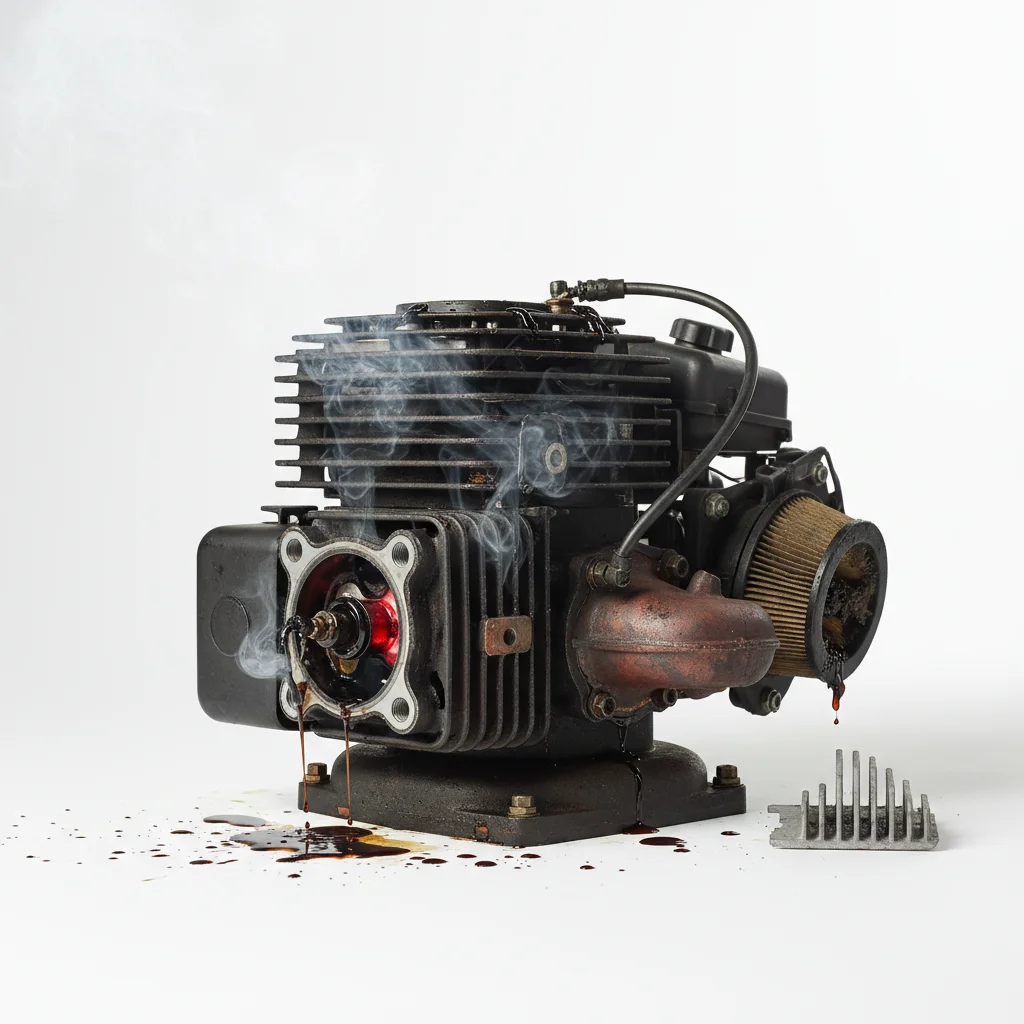
If your lawn mower engine is overheating, there are typically six common reasons for this issue, ranging from simple maintenance oversights to more serious mechanical problems. Addressing these promptly can prevent significant damage and extend the life of your mower. Understanding the root cause is crucial for an effective repair.
Insufficient Oil Levels or Quality
One of the most frequent culprits behind an overheating lawn mower engine is inadequate oil. Low oil levels mean there isn’t enough lubricant to reduce friction between moving parts, leading to increased heat generation. Similarly, using the wrong type of oil or old, degraded oil can fail to provide proper lubrication and cooling. Always check your oil dipstick before each use and ensure you’re using the manufacturer-recommended oil viscosity. Regular oil changes are also vital for maintaining engine health.
Clogged Cooling Fins or Air Intake
Lawn mower engines rely on air circulation to dissipate heat. Over time, grass clippings, dirt, and debris can accumulate around the engine’s cooling fins and block the air intake vents. This acts like a blanket, trapping heat and preventing the engine from cooling down effectively. Regularly cleaning these areas with a brush or compressed air is a simple yet critical maintenance task. Neglecting this can quickly lead to severe overheating, especially during extended use in warm weather.
Dirty or Damaged Spark Plug
While not a direct cause of overheating, a dirty or damaged spark plug can lead to inefficient combustion, causing the engine to work harder and generate more heat. A fouled spark plug can result in misfires and incomplete fuel burning, which puts extra strain on the engine components. Inspect your spark plug periodically for signs of wear or carbon buildup and replace it as needed. This small component plays a significant role in overall engine efficiency and temperature regulation.
Overworking the Engine
|
Our Picks for the Best Lawn Mower in 2026
As an Amazon Associate I earn from qualifying purchases.
|
||
| Num | Product | Action |
|---|---|---|
| 1 | American Lawn Mower Company 50514 14" 11-Amp Corded Electric Lawn Mower, Black |

|
| 2 | Litheli 40V (2 x 20V) 16" Electric Lawn Mower Cordless, Brushless Lawnmower with 6-Height Adjust, Portable & Lightweight Push Battery Powered Lawn Mower (2 * 4.0AH Batteries Included) |
|
| 3 | Greenworks 24V 13" Brushless (Push) Cordless Lawn Mower, 4.0Ah Battery and Charger |
|
| 4 | CRAFTSMAN Electric Push Lawn Mower, 20-Inch Deck, Corded, Powerful 13-AMP Motor, 6 Setting Height Adjustment, Winged Blades, 3 in 1 Bagging, Mulching and Discharge (CMEMW213) |
|
| 5 | Litheli 13.4inch Electric Lawn Mower Cordless,Grass Cutter Machine for 2600 Sq.Ft.Lawnmower with Brushless Motor, 8 Gallon Capacity, Cutting Height from 1 to 2.5 in, Includes 2X4.0 Ah Battery. |
|
| 6 | VEVOR Push Lawn Sweeper, 21inch Leaf & Grass Collector, Heavy Duty Thickened Steel Durable to Use with Large Capacity 3.5 cu. ft. Mesh Collection Hopper Bag, 2 Spinning Brushes |
|
| 7 | LawnMaster MEB1114K Electric Corded Lawn Mower 15-Inch 11AMP |
|
| 8 | Litheli Electric Lawn Mower Cordless,Grass Cutter Machine for 1300 Sq.Ft.Lawnmower with Motor,13.2 in Cutting Width,8 Gallon Capacity,Cutting Height from 1 to 2.5 in with 4.0A Battery |
|
| 9 | Litheli 20V 13" Cordless Lawn Mower, Electric Lawn Mowers for Garden, Yard and Farm, 5 Heights, with Brushless Motor, 4.0Ah Battery & Charger Included |
|
| 10 | LawnMaster MEB1216K Electric Lawn Mower 16-Inch 12AMP |
|
Pushing your lawn mower beyond its capabilities can cause it to overheat. This often happens when attempting to cut very tall, thick, or wet grass, or when trying to mow too quickly. The engine has to exert more effort, leading to increased friction and heat. If you notice your mower struggling, raise the cutting deck, slow down your pace, or consider mowing in smaller sections. For particularly challenging conditions, a more powerful mower might be necessary.
Faulty Thermostat or Cooling System Issues
Some liquid-cooled lawn mower engines, particularly those found in larger riding mowers, have a thermostat that regulates engine temperature. If this thermostat becomes stuck closed, it prevents coolant from circulating, leading to rapid overheating. Other cooling system issues, such as a low coolant level or a leak in the system, can also cause the engine to run too hot. For these more complex problems, professional diagnosis and repair may be required.
Carburetor Issues or Lean Fuel Mixture
A carburetor that is not properly adjusted or is partially clogged can lead to a lean fuel mixture, meaning there isn’t enough fuel relative to air. A lean mixture burns hotter than an ideal one, which can cause the engine to overheat. Symptoms of a lean mixture include the engine running rough, lacking power, or surging. Cleaning the carburetor or adjusting its settings can often resolve this. If you’re unsure, it’s best to consult a service manual or a qualified technician.
- Check oil levels and quality regularly.
- Clean cooling fins and air intake vents before each use.
- Inspect and replace spark plugs as needed.
- Avoid overworking the engine in dense or wet grass.
- Ensure proper carburetor adjustment for an optimal fuel mixture.
Get our weekly buyer guide
Practical specs, not advice. Unsubscribe anytime.
