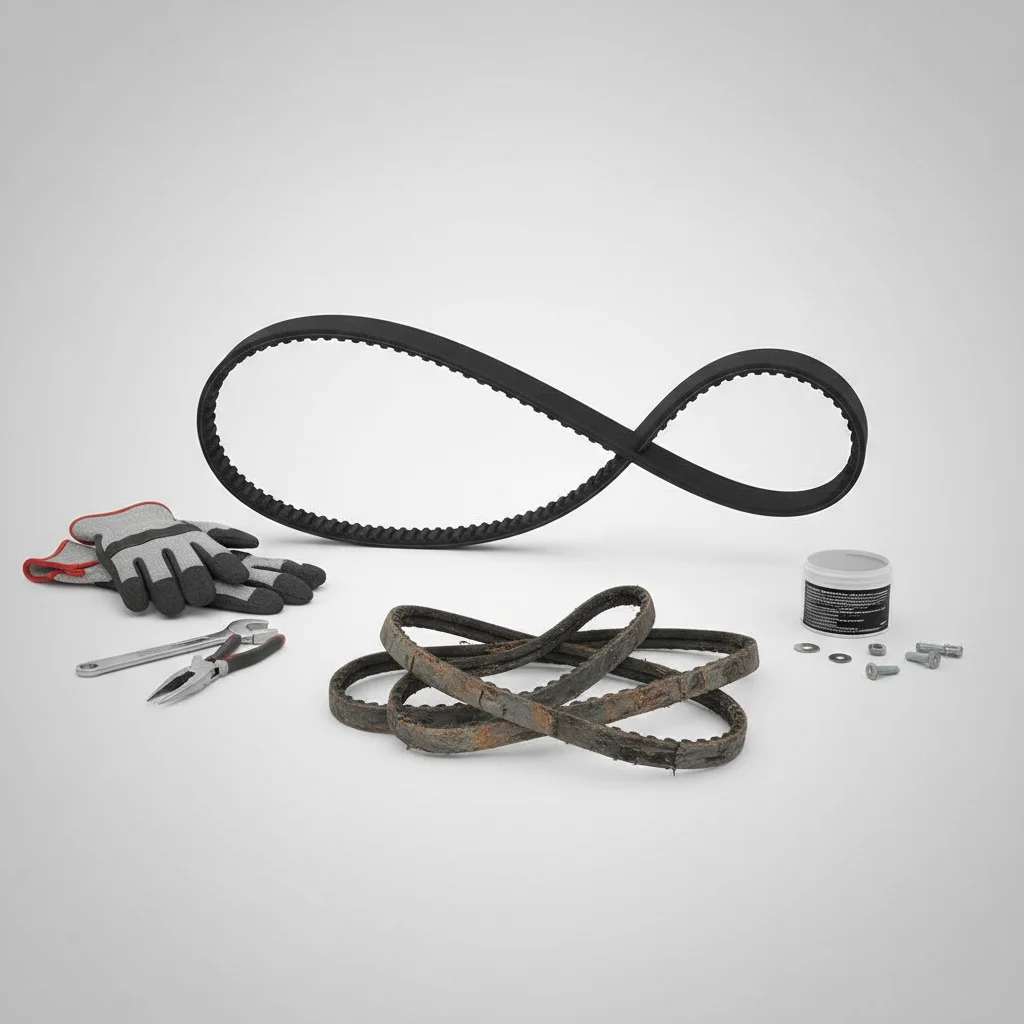
Replacing a lawn mower belt is a common maintenance task that can significantly extend the life and performance of your machine. You should consider replacing your lawn mower belt every 50 to 100 hours of operation, or at least once a year, depending on usage and visible wear. This guide will walk you through the process, which typically takes about 30-60 minutes for most residential models.
When to Replace Your Lawn Mower Belt
Recognizing the signs of a worn or damaged belt is crucial for timely replacement. Common indicators include a noticeable loss of power, unusual squealing or grinding noises during operation, or visible cracks, fraying, or glazing on the belt itself. If your mower struggles to engage the blades or move forward (for self-propelled models), a failing belt is often the culprit. Ignoring these signs can lead to more extensive damage to other components, such as pulleys or the engine.
Gathering the Right Tools and Parts
Before you begin, ensure you have the correct replacement belt for your specific lawn mower model. Consult your owner’s manual or the manufacturer’s website for the exact part number. You’ll also need a few basic tools: a socket wrench set, a pair of pliers, work gloves, and possibly a pry bar or screwdriver to help with tension. Always disconnect the spark plug wire before starting any maintenance to prevent accidental starting.
- Replacement belt (correct size and type for your mower)
- Socket wrench set (various sizes)
- Pliers
- Work gloves
- Safety glasses
Step-by-Step Belt Replacement Process
|
Our Picks for the Best Lawn Mower in 2026
As an Amazon Associate I earn from qualifying purchases.
|
||
| Num | Product | Action |
|---|---|---|
| 1 | VEVOR Push Lawn Sweeper, 21inch Leaf & Grass Collector, Heavy Duty Thickened Steel Durable to Use with Large Capacity 3.5 cu. ft. Mesh Collection Hopper Bag, 2 Spinning Brushes |

|
| 2 | CRAFTSMAN Electric Push Lawn Mower, 20-Inch Deck, Corded, Powerful 13-AMP Motor, 6 Setting Height Adjustment, Winged Blades, 3 in 1 Bagging, Mulching and Discharge (CMEMW213) |
|
| 3 | Litheli 40V (2 x 20V) 16" Electric Lawn Mower Cordless, Brushless Lawnmower with 6-Height Adjust, Portable & Lightweight Push Battery Powered Lawn Mower (2 * 4.0AH Batteries Included) |
|
| 4 | Litheli 20V 13" Cordless Lawn Mower, Electric Lawn Mowers for Garden, Yard and Farm, 5 Heights, with Brushless Motor, 4.0Ah Battery & Charger Included |
|
| 5 | LawnMaster MEB1216K Electric Lawn Mower 16-Inch 12AMP |
|
| 6 | Litheli 13.4inch Electric Lawn Mower Cordless,Grass Cutter Machine for 2600 Sq.Ft.Lawnmower with Brushless Motor, 8 Gallon Capacity, Cutting Height from 1 to 2.5 in, Includes 2X4.0 Ah Battery. |
|
| 7 | American Lawn Mower Company 50514 14" 11-Amp Corded Electric Lawn Mower, Black |
|
| 8 | LawnMaster MEB1114K Electric Corded Lawn Mower 15-Inch 11AMP |
|
| 9 | Litheli Electric Lawn Mower Cordless,Grass Cutter Machine for 1300 Sq.Ft.Lawnmower with Motor,13.2 in Cutting Width,8 Gallon Capacity,Cutting Height from 1 to 2.5 in with 4.0A Battery |
|
| 10 | Greenworks 24V 13" Brushless (Push) Cordless Lawn Mower, 4.0Ah Battery and Charger |
|
First, tilt your mower onto its side, ensuring the carburetor and air filter are facing upwards to prevent fuel or oil leaks. Locate the deck belt, which typically runs around the engine pulley and the blade spindle pulleys. You may need to remove a belt cover or guard, usually held in place by a few bolts. Carefully observe how the old belt is routed before removing it; taking a photo can be helpful for reassembly. Use your socket wrench to loosen any tensioning pulleys or idler arms that are holding the belt taut. Once loosened, you can gently pry the old belt off the pulleys.
With the old belt removed, clean any debris or grass clippings from the pulleys and surrounding areas. This ensures the new belt will run smoothly and without obstruction. Now, carefully route the new belt around the pulleys, following the exact path of the old one. Start with the engine pulley and then work your way around the blade spindle pulleys and any idler pulleys. Make sure the belt is seated correctly in all the grooves. Once the belt is in place, re-tension any idler arms or pulleys you loosened earlier. Double-check that the belt is snug but not overly tight, allowing for a small amount of play.
Testing Your New Belt and Final Tips
After the new belt is installed and all covers are reattached, reconnect the spark plug wire. Start your lawn mower and engage the blades (if applicable) to ensure the new belt is functioning correctly. Listen for any unusual noises and observe the blade rotation. If everything sounds and looks normal, you’re good to go. Remember to always refer to your specific lawn mower’s owner’s manual for detailed instructions and safety precautions, as procedures can vary slightly between models. Regular inspection of your belt can prevent unexpected breakdowns and keep your lawn mower running efficiently for years to come. For high-quality replacement belts and tools, consider checking outorfor a wide selection of parts.
Get our weekly buyer guide
Practical specs, not advice. Unsubscribe anytime.

I’ve been putting off replacing my mower belt for ages, thinking it would be a huge hassle. This guide made it so straightforward! My self-propelled mower was really struggling to move forward, and now it’s like new. Took me about 45 minutes, just like it said it would for residential models. Definitely recommend tackling this DIY.
My lawn mower was definitely losing power, and I suspected the belt. This guide was a lifesaver! It walked me through each step, and I was able to get the job done in under an hour. It’s great to know I can extend the life of my machine with simple maintenance like this. My mower is cutting like a champ again.
My old belt was making a terrible squealing noise, and I was worried about damaging the pulleys. Following these steps, I got the new belt on without too much trouble. The only tricky part was getting the tension just right, but after a little adjustment, it’s running much quieter. Glad I didn’t have to pay for a repair shop.
I tried replacing my belt after noticing some visible cracks, but it was a bit harder than I expected. The guide was helpful for the most part, but my particular mower model had a few extra guards that made accessing the belt a real pain. It still took me closer to an hour and a half, not the 30-60 minutes mentioned. Still, it’s working better now.