There’s nothing quite like the start of mowing season – the smell of fresh-cut grass, the satisfying roar of your engine, and the promise of a tidy lawn. But when that satisfying roar turns into a sputtering cough, and an unwelcome cloud of smoke billows from your trusty machine, it’s enough to make any homeowner’s heart sink. A smoking lawn mower can be alarming, but more often than not, the culprit is a common issue with a straightforward solution you can handle right in your garage. This guide will help you decipher the smoke signals your mower is sending, pinpoint the problem, and apply five quick, at-home fixes to get you back to enjoying your lawn.
Understanding Lawn Mower Smoke
Before diving into fixes, it’s crucial to understand what the color of the smoke tells you. Just like a car, a lawn mower’s smoke color is a key diagnostic indicator, pointing to different underlying issues within the engine. When your mower starts puffing, immediately turn it off and let it cool down before attempting any inspection or repairs. This ensures your safety and prevents further damage.
White or Bluish-White Smoke: Burning Oil or Moisture
If you see white or bluish-white smoke, your mower is likely burning oil or, less commonly, moisture. This is often the most frequently encountered smoke type.
- Overfilled Oil: One of the simplest and most frequent reasons for this smoke is an overfilled oil reservoir. When you add too much oil, the excess can overflow into the cylinder or onto hot engine components, burning off and producing smoke.
- Spilled Oil: During an oil change or when topping off, it’s easy to spill oil onto the engine block or exhaust. As the engine heats up, this external oil will burn, creating white or bluish smoke and a distinct burning smell.
- Improper Tipping: If you’ve recently tilted your mower on its side to clean the deck or change a blade, and you didn’t ensure the carburetor was facing upwards, oil can seep into the muffler or combustion chamber, leading to smoke upon startup.
- Moisture in the Engine: Sometimes, especially after mowing wet grass or if the mower has been left uncovered in damp conditions, moisture can enter the engine. When the engine heats up, this moisture turns into steam, appearing as white smoke. This is usually temporary and resolves itself as the engine runs.
Black Smoke: Too Much Fuel, Not Enough Air
Black smoke signals that your engine is running “rich”—meaning there’s too much fuel and not enough air in the combustion mixture. This indicates incomplete combustion.
- Clogged Air Filter: A dirty or clogged air filter restricts the airflow into the engine. With reduced air, the fuel mixture becomes excessively rich, resulting in black smoke. This is a very common cause and often one of the easiest to fix.
- Carburetor Issues: A faulty or improperly adjusted carburetor can send too much fuel to the engine, leading to a rich mixture and black smoke.
- Choke Engaged Too Long: If your mower has a manual choke and you leave it on for too long after the engine has warmed up, it will continue to provide a rich fuel mixture, producing black smoke.
Blue Smoke: Internal Engine Wear
Blue smoke is generally more concerning as it almost always indicates that engine oil is burning within the combustion chamber due to internal wear.
- Worn Piston Rings or Valve Seals: Over time and with extensive use, components like piston rings and valve seals can wear down. When this happens, they lose their ability to create a proper seal, allowing oil to seep past them and burn alongside the fuel. This typically happens after many hours of use.
- Wrong Oil Type: Using an oil with the incorrect viscosity for your mower’s engine can also lead to oil burning. If the oil is too thin when hot, it might bypass seals and get into the combustion chamber.
> “White or bluish smoke coming from your engine usually indicates burning oil,” confirms Briggs & Stratton, a leading engine manufacturer.
5 Quick Fixes for a Smoking Lawn Mower at Home
When your lawn mower starts smoking, the good news is that many common causes can be addressed with simple at-home repairs. Here are five quick fixes to help you troubleshoot and resolve the issue.
1. Check and Correct Oil Level
An overfilled oil reservoir is a prime suspect for white or bluish-white smoke. It’s an easy mistake to make, but equally easy to rectify.
- How to fix: First, ensure your mower is on a level surface. Remove the dipstick, wipe it clean, reinsert it completely, and then remove it again to get an accurate reading. The oil level should be between the “add” and “full” marks. If it’s above the “full” mark, you’ve overfilled it. Carefully drain the excess oil until it reaches the correct level. Refer to your owner’s manual for specific instructions on draining oil, as procedures can vary by model. Sometimes, just letting the engine run for 5-10 minutes can burn off a minor excess of oil without needing to drain it.
2. Clean Up Spilled Oil or Fuel
Accidental spills of oil or fuel onto hot engine parts are another common cause of smoke and a burning smell. This is typically a temporary issue.
- How to fix: With the engine cooled and the spark plug wire disconnected for safety, thoroughly inspect the engine area for any visible oil or fuel spills. Use a clean rag to wipe up any residue from the engine block, exhaust, or other hot components. Once cleaned, reconnect the spark plug wire and start the mower. The remaining minor residue should burn off quickly, and the smoke should subside. If you notice a burning smell even without visible smoke, this cleanup step is still crucial.
3. Inspect and Clean/Replace the Air Filter
A dirty or clogged air filter is a frequent cause of black smoke, as it prevents proper airflow, leading to a rich fuel mixture.
- How to fix: The air filter is usually housed in a plastic or metal case on the side of the engine. Unclip or unscrew the cover to access the filter. Inspect it for dirt, debris, or saturation with oil. If it’s a foam filter, you might be able to clean it with warm, soapy water, rinse thoroughly, and let it air dry completely before lightly oiling and reinstalling it. Paper filters are generally not cleanable and should be replaced if dirty or damaged. After cleaning or replacing, secure the cover and restart the mower. You should see the black smoke diminish or disappear.
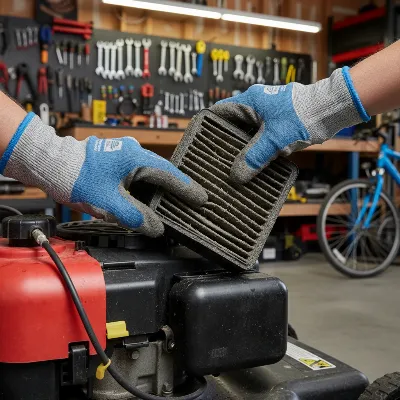 Technician inspecting and cleaning a dirty air filter on a lawn mower engine to prevent smoking issues
4. Ensure Proper Mower Tipping
If you’ve recently performed maintenance that required tilting your mower, incorrect tipping can lead to oil migration and subsequent smoking.
- How to fix: When tipping a walk-behind lawn mower, always do so with the carburetor and air filter side facing upwards. This prevents oil from flowing into the carburetor, air filter, or muffler, where it can cause significant smoking upon startup. If you’ve tipped it incorrectly, allow the mower to sit level for 20-30 minutes before starting, letting any migrated oil settle back into the crankcase. You may still experience some initial smoke as residual oil burns off, but it should clear.
5. Use Fresh, Correct Fuel and Oil
Stale fuel or using the wrong type of oil can lead to poor combustion or burning, resulting in smoke.
- How to fix: Always use fresh gasoline (preferably less than 30 days old) and the specific oil type recommended in your owner’s manual. Old or contaminated fuel can cause incomplete combustion and black smoke. If you suspect old fuel, drain the fuel tank completely and refill it with fresh gasoline. Similarly, ensure you’re using the correct SAE viscosity oil; using a multi-grade oil when single-grade is specified, or vice versa, can cause burning issues. Check your manual for the precise recommendations.
When to Call a Professional
While many smoking issues can be resolved with at-home fixes, there are situations where professional help is necessary. If you’ve tried the quick fixes and your mower continues to smoke persistently, or if you notice any of these more serious symptoms, it’s time to consult a qualified technician:
- Persistent Smoke: If the smoke doesn’t clear after a few minutes of running following your troubleshooting, it indicates a more serious underlying problem.
- Burning Coolant Smell: A sweet smell accompanying white smoke could indicate your engine is burning coolant, a sign of a blown head gasket, which requires immediate professional attention.
- Loss of Power or Rough Running: If your mower starts to stall, run roughly, or loses significant power in conjunction with smoking, internal engine damage might be present.
- Visible Oil Leaks: Beyond minor spills, if you observe significant oil leaks from gaskets or seals that don’t stop, these components may need replacement.
- Excessive Blue Smoke: While minor blue smoke can sometimes clear, continuous, heavy blue smoke often points to worn internal engine components like piston rings or valve seals, which typically require extensive repair.
Preventative Maintenance to Avoid Smoking Issues
The best way to deal with a smoking lawn mower is to prevent it from happening in the first place. Regular maintenance can significantly extend the life of your mower and keep it running smoothly.
- Regular Oil Changes: Follow your manufacturer’s recommendations for oil change intervals. Typically, this is once per season or after a certain number of operating hours.
- Check Oil Level Before Each Use: Make it a habit to check the oil level before every mowing session to ensure it’s at the correct level, but be careful not to overfill.
- Keep Air Filter Clean: Inspect and clean or replace the air filter regularly, especially if you mow in dusty conditions. A clean air filter is essential for proper engine function and fuel-air mixture.
- Proper Fuel Storage: Use fresh, clean gasoline and consider a fuel stabilizer if you store fuel for extended periods. Avoid using old or contaminated fuel.
- Correct Tipping: Always remember to tilt your mower with the carburetor side facing upwards if you need to access the underside for cleaning or blade maintenance.
> “Regular maintenance is the best way to prevent your lawnmower from smoking, and can help you find small issues before they get more serious,” advises Shawn Carothers, a manager at Toro.
Conclusion
A smoking lawn mower can be a frustrating sight, but armed with the knowledge of what different smoke colors indicate and these five quick at-home fixes, you can often diagnose and resolve the problem yourself. By checking and correcting oil levels, cleaning up spills, maintaining a clean air filter, ensuring proper tipping, and using fresh, correct fuel and oil, you address the most common culprits. Regular maintenance is your best defense against unexpected smoke and ensures your mower remains a reliable partner in maintaining a beautiful lawn. Don’t let a puff of smoke derail your weekend—take action and enjoy the satisfaction of a well-groomed yard.
Frequently Asked Questions
Is white smoke from a lawn mower dangerous?
White smoke from a lawn mower is often less concerning than other colors, especially if it’s due to moisture or a minor oil spill. It can be harmless and temporary, usually clearing up as the engine runs and burns off excess. However, if it’s persistent or accompanied by a sweet smell (burning coolant), it can indicate a more serious issue requiring attention.
Can I use my lawn mower if it’s smoking?
It’s generally not advisable to continue using your lawn mower if it’s smoking, especially if the smoke is blue or black, or if white smoke persists. While a small amount of white smoke from moisture might be temporary, any other type of smoke signals a problem that needs to be addressed. Continuing to operate a smoking mower can lead to further damage.
How long should I let my mower run to burn off excess oil?
If you suspect overfilled oil or a small spill as the cause of white or blue smoke, you can often let the mower run for 5-15 minutes on a level surface. This allows the excess oil to burn off naturally. If the smoke doesn’t dissipate within this timeframe, or if it’s heavy and continuous, it indicates a more significant issue that requires further investigation.
Get our weekly buyer guide
Practical specs, not advice. Unsubscribe anytime.
