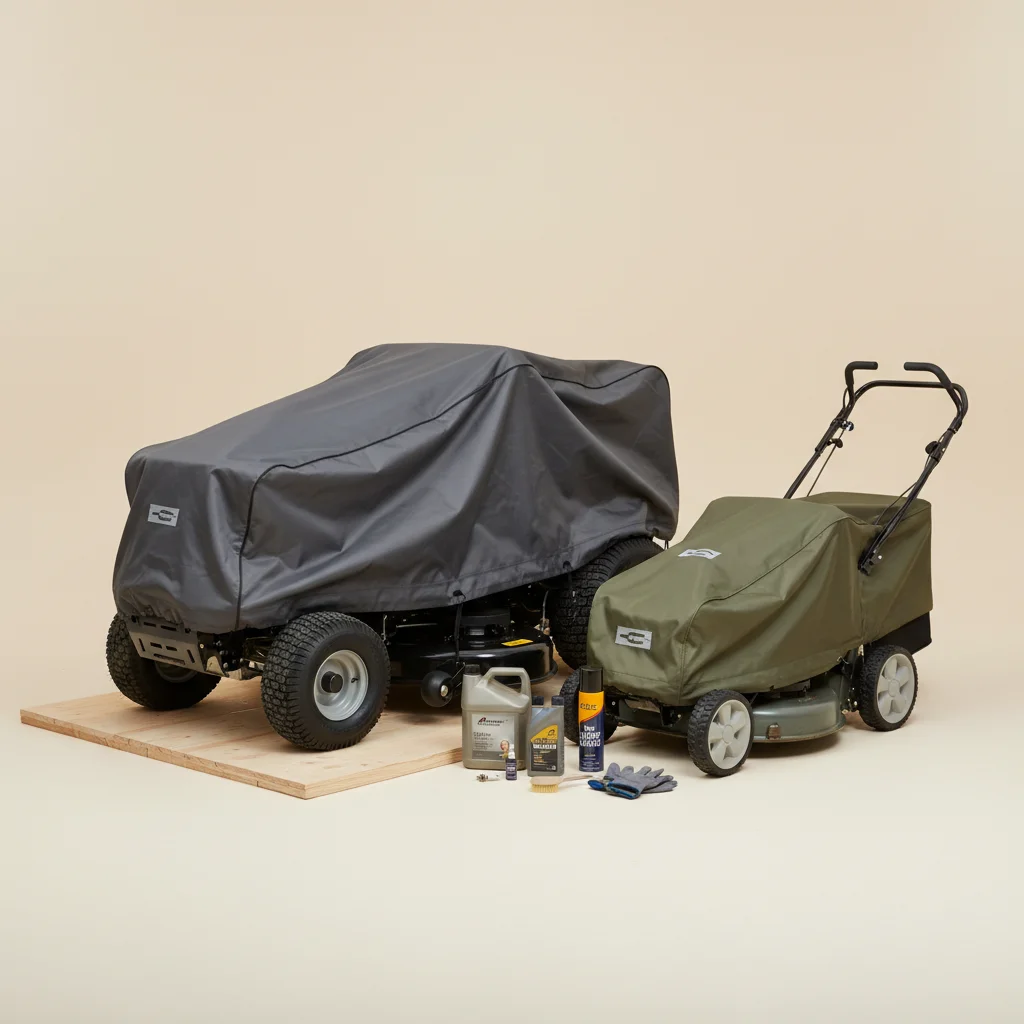
Proper lawn mower storage is crucial for extending the life of your equipment and ensuring it’s ready for the next mowing season. There are seven essential tips to follow for off-season care, covering everything from cleaning to fuel stabilization, which will prevent common issues and costly repairs.
Clean Your Mower Thoroughly
Before storing your lawn mower, give it a comprehensive cleaning. Remove all grass clippings, dirt, and debris from the deck, wheels, and engine housing. A pressure washer can be effective for the underside of the deck, but be careful not to spray directly into engine components or electrical parts. Use a stiff brush and scraper for stubborn grime. This prevents rust, corrosion, and the buildup of organic matter that can attract pests.
Stabilize or Drain Fuel
Fuel can degrade over time, leading to carburetor issues and starting problems. For gasoline mowers, you have two main options: either drain the fuel tank completely or add a fuel stabilizer. If you choose to drain, run the engine until it sputters and dies, ensuring all fuel is out of the carburetor. If stabilizing, add the recommended amount of stabilizer to a full tank of fresh fuel and run the engine for a few minutes to circulate it through the system. For electric mowers, this step is not applicable.
Change the Oil and Filter
Changing the oil before storage is a critical maintenance step. Old oil can contain contaminants and acids that can corrode engine components over time. Refer to your owner’s manual for the correct oil type and capacity. While you’re at it, replace the oil filter if your model has one. This ensures that fresh, clean oil protects the engine during its dormant period.
Remove and Clean the Spark Plug
|
Our Picks for the Best Lawn Mower in 2026
As an Amazon Associate I earn from qualifying purchases.
|
||
| Num | Product | Action |
|---|---|---|
| 1 | Greenworks 24V 13" Brushless (Push) Cordless Lawn Mower, 4.0Ah Battery and Charger |

|
| 2 | CRAFTSMAN Electric Push Lawn Mower, 20-Inch Deck, Corded, Powerful 13-AMP Motor, 6 Setting Height Adjustment, Winged Blades, 3 in 1 Bagging, Mulching and Discharge (CMEMW213) |
|
| 3 | Litheli Electric Lawn Mower Cordless,Grass Cutter Machine for 1300 Sq.Ft.Lawnmower with Motor,13.2 in Cutting Width,8 Gallon Capacity,Cutting Height from 1 to 2.5 in with 4.0A Battery |
|
| 4 | American Lawn Mower Company 50514 14" 11-Amp Corded Electric Lawn Mower, Black |
|
| 5 | Litheli 20V 13" Cordless Lawn Mower, Electric Lawn Mowers for Garden, Yard and Farm, 5 Heights, with Brushless Motor, 4.0Ah Battery & Charger Included |
|
| 6 | LawnMaster MEB1114K Electric Corded Lawn Mower 15-Inch 11AMP |
|
| 7 | Litheli 13.4inch Electric Lawn Mower Cordless,Grass Cutter Machine for 2600 Sq.Ft.Lawnmower with Brushless Motor, 8 Gallon Capacity, Cutting Height from 1 to 2.5 in, Includes 2X4.0 Ah Battery. |
|
| 8 | VEVOR Push Lawn Sweeper, 21inch Leaf & Grass Collector, Heavy Duty Thickened Steel Durable to Use with Large Capacity 3.5 cu. ft. Mesh Collection Hopper Bag, 2 Spinning Brushes |
|
| 9 | Litheli 40V (2 x 20V) 16" Electric Lawn Mower Cordless, Brushless Lawnmower with 6-Height Adjust, Portable & Lightweight Push Battery Powered Lawn Mower (2 * 4.0AH Batteries Included) |
|
| 10 | LawnMaster MEB1216K Electric Lawn Mower 16-Inch 12AMP |
|
Remove the spark plug and inspect it for wear or carbon buildup. Clean it with a wire brush or replace it if necessary. Before reinstalling, add a small amount of engine oil (about a teaspoon) into the spark plug hole. Slowly pull the starter cord a few times to distribute the oil, which helps to lubricate the cylinder walls and prevent rust during storage. Reinstall the spark plug, but do not overtighten.
Inspect and Sharpen Blades
Take this opportunity to inspect your lawn mower blades. Look for any nicks, bends, or dull edges. Sharpen them if needed, or replace them if they are severely damaged. Properly sharpened blades ensure a clean cut and reduce strain on the engine. Always wear gloves when handling blades.
Store in a Dry, Protected Location
The ideal storage location is a dry, protected area like a garage or shed. Avoid storing your mower outdoors, even under a tarp, as moisture can lead to rust and damage. If storing in an unheated area, ensure the fuel is properly handled to prevent issues with freezing or condensation. For battery-powered mowers, remove the battery and store it in a cool, dry place indoors, away from extreme temperatures.
Check and Inflate Tires (Riding Mowers)
For riding lawn mowers, check the tire pressure before storage. Inflate them to the manufacturer’s recommended PSI. This helps prevent flat spots from forming on the tires during prolonged periods of inactivity. If possible, elevate the mower slightly to take pressure off the tires and suspension.
- Clean the mower deck thoroughly to prevent rust.
- Stabilize fuel or drain the tank completely.
- Change engine oil and filter for fresh lubrication.
- Remove and clean the spark plug, adding oil to the cylinder.
- Inspect and sharpen or replace dull blades.
Get our weekly buyer guide
Practical specs, not advice. Unsubscribe anytime.
