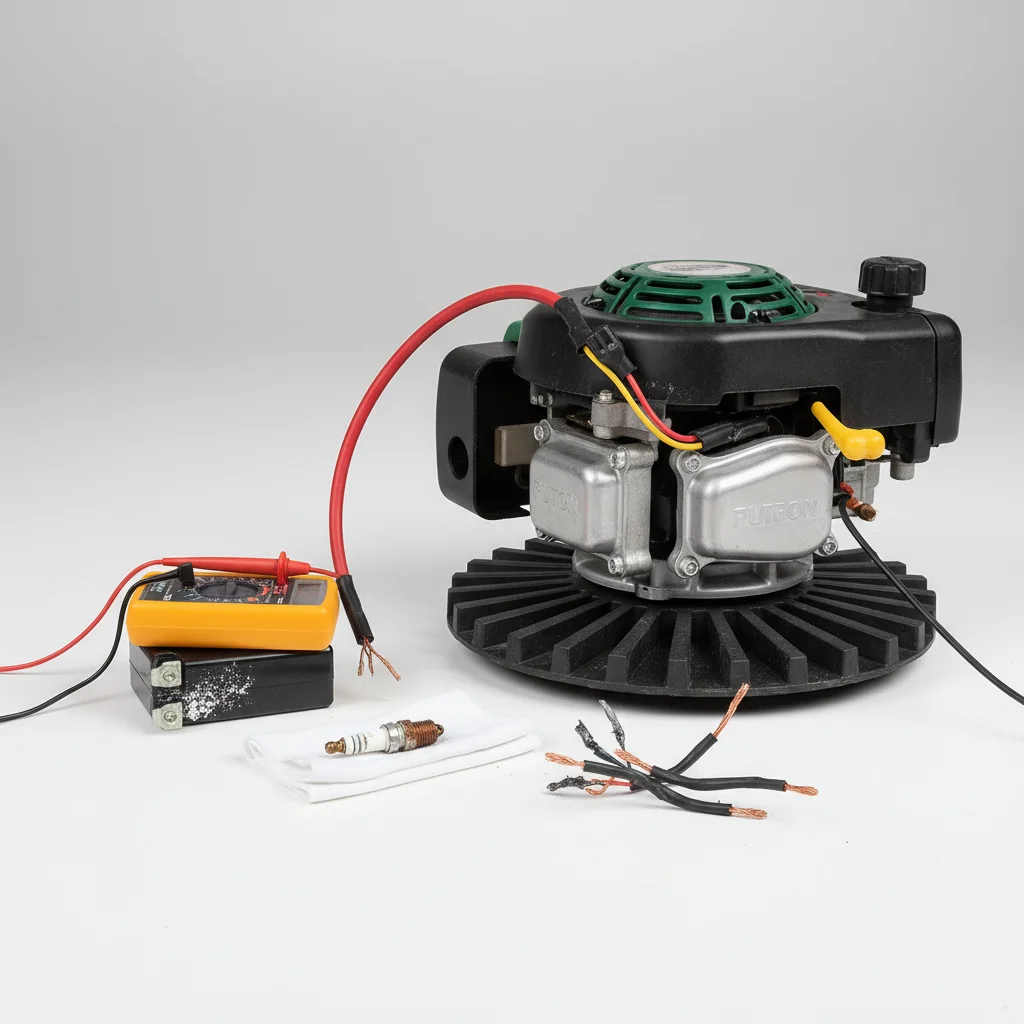
When your lawn mower refuses to start, it can be frustrating. Often, the culprit lies within the electrical system. There are five common electrical issues that prevent a lawn mower from starting, ranging from a dead battery to a faulty ignition switch. Understanding these problems can help you diagnose and potentially fix the issue yourself, saving you time and money.
Dead or Weak Battery
A dead or weak battery is a frequent cause of a lawn mower not starting, especially for riding mowers or electric start push mowers. If you hear a clicking sound or nothing at all when you turn the key or push the start button, the battery is likely the problem. You can test the battery voltage with a multimeter; a fully charged 12-volt battery should read around 12.6 volts or higher. If it’s significantly lower, try charging it. If it doesn’t hold a charge, replacement is necessary. For explore our lawn mower reviews on this site.
Faulty Spark Plug
The spark plug is crucial for igniting the fuel-air mixture in the engine. If the spark plug is dirty, fouled with carbon buildup, or damaged, it won’t produce a strong enough spark to start the engine. Remove the spark plug and inspect it. Look for any signs of wear, cracks, or excessive oil/carbon deposits. Clean it with a wire brush or replace it if it looks worn. A simple spark plug tester can confirm if it’s receiving power and sparking correctly.
Corroded or Loose Battery Terminals
|
Our Picks for the Best Lawn Mower in 2026
As an Amazon Associate I earn from qualifying purchases.
|
||
| Num | Product | Action |
|---|---|---|
| 1 | American Lawn Mower Company 50514 14" 11-Amp Corded Electric Lawn Mower, Black |

|
| 2 | Greenworks 24V 13" Brushless (Push) Cordless Lawn Mower, 4.0Ah Battery and Charger |
|
| 3 | Litheli 40V (2 x 20V) 16" Electric Lawn Mower Cordless, Brushless Lawnmower with 6-Height Adjust, Portable & Lightweight Push Battery Powered Lawn Mower (2 * 4.0AH Batteries Included) |
|
| 4 | Litheli 13.4inch Electric Lawn Mower Cordless,Grass Cutter Machine for 2600 Sq.Ft.Lawnmower with Brushless Motor, 8 Gallon Capacity, Cutting Height from 1 to 2.5 in, Includes 2X4.0 Ah Battery. |
|
| 5 | CRAFTSMAN Electric Push Lawn Mower, 20-Inch Deck, Corded, Powerful 13-AMP Motor, 6 Setting Height Adjustment, Winged Blades, 3 in 1 Bagging, Mulching and Discharge (CMEMW213) |
|
| 6 | LawnMaster MEB1114K Electric Corded Lawn Mower 15-Inch 11AMP |
|
| 7 | LawnMaster MEB1216K Electric Lawn Mower 16-Inch 12AMP |
|
| 8 | VEVOR Push Lawn Sweeper, 21inch Leaf & Grass Collector, Heavy Duty Thickened Steel Durable to Use with Large Capacity 3.5 cu. ft. Mesh Collection Hopper Bag, 2 Spinning Brushes |
|
| 9 | Litheli Electric Lawn Mower Cordless,Grass Cutter Machine for 1300 Sq.Ft.Lawnmower with Motor,13.2 in Cutting Width,8 Gallon Capacity,Cutting Height from 1 to 2.5 in with 4.0A Battery |
|
| 10 | Litheli 20V 13" Cordless Lawn Mower, Electric Lawn Mowers for Garden, Yard and Farm, 5 Heights, with Brushless Motor, 4.0Ah Battery & Charger Included |
|
Even with a good battery, corroded or loose battery terminals can prevent the electrical current from reaching the starter. Visually inspect the battery terminals for any white or green powdery buildup. Use a wire brush and a mixture of baking soda and water to clean off any corrosion. Ensure the terminal connections are tight and secure. Loose connections can also cause intermittent starting problems or prevent the mower from charging its battery.
Bad Ignition Switch
The ignition switch acts as the gatekeeper for the electrical system, sending power to the starter and other components when turned. If the ignition switch is faulty, it won’t complete the circuit, and your mower won’t start. Symptoms of a bad ignition switch include no power to the dashboard lights, no clicking sound from the starter solenoid, or the mower starting intermittently. Testing an ignition switch usually requires a multimeter to check for continuity in different positions. Replacement is often the most straightforward solution if it’s determined to be faulty.
Malfunctioning Starter Solenoid
The starter solenoid is an electromagnetic switch that relays a large electrical current from the battery to the starter motor when activated by the ignition switch. If you hear a single click when you try to start the mower but the engine doesn’t turn over, the solenoid might be the issue. You can often test a solenoid by bypassing it with a screwdriver (carefully, and only if you know what you’re doing) to see if the starter motor engages. If the starter motor spins, the solenoid is likely bad and needs replacement.
- Check battery voltage with a multimeter.
- Inspect spark plug for fouling or damage.
- Clean and tighten battery terminals.
- Test ignition switch for continuity.
- Listen for a single click from the starter solenoid.
Addressing these five common electrical issues can often resolve a lawn mower that won’t start. Always ensure safety by disconnecting the spark plug wire before performing any maintenance or inspection to prevent accidental starting.
Get our weekly buyer guide
Practical specs, not advice. Unsubscribe anytime.
