The best self-propelled lawn mowers for effortless hill mowing in 2026 are models like the Honda Nexite 4-in-1 for gas, and the Ego Power+ Select Cut LM2135SP or Greenworks 80V 21″ Brushless Cordless Self-Propelled Lawn Mower for electric options. These mowers feature advanced drive systems, powerful engines (e.g., Honda’s GCV200 or high-voltage electric batteries), and robust traction to significantly reduce the effort required to cut grass on inclines, transforming a challenging chore into a manageable task.
Overview of Lawn Mowers
A lawn mower is a machine designed to cut grass to an even height, transforming unruly lawns into neatly manicured spaces. From the simplest manual tools to sophisticated robotic systems, these devices are indispensable for maintaining property aesthetics and health.
The journey of the lawn mower began in 1830 with Edwin Beard Budding’s invention, a device initially designed for sports grounds and large gardens. Over nearly two centuries, innovation has drastically transformed these machines. Early models were heavy, manual, and labor-intensive, but continuous advancements in engine technology, propulsion systems, and ergonomics have led to the diverse range we see today, including powerful gas, efficient electric, and intelligent robotic options, each tailored for different terrain and user needs.
Classifying Lawn Mowers
Understanding the various types of lawn mowers available is the first step in identifying the perfect tool for your yard, especially when dealing with challenging landscapes like hills.
Push Mowers
Push mowers, or manual mowers, are the most basic type, relying entirely on human power for propulsion. They are lightweight and generally the most affordable option, making them suitable for small, flat yards where maneuverability in tight spaces is paramount. However, their lack of a driven wheel makes them physically demanding, particularly on larger properties or any kind of incline.
Self-Propelled Mowers
Self-propelled lawn mowers are a major upgrade for many homeowners, especially those with medium to large yards or varied terrain. These machines feature a drive system that powers the wheels, significantly reducing the effort required to push them. For lawns with moderate to steep slopes, a self-propelled mower becomes an invaluable asset, allowing the user to guide the machine rather than force it. Many models offer variable speed controls, allowing you to match the mower’s pace to your walking speed and the terrain’s demands.
Riding Mowers
Designed for expansive properties, riding mowers allow the operator to sit and steer, covering large areas quickly and comfortably. This category includes lawn tractors and zero-turn mowers. While excellent for flat or gently sloping grounds, traditional riding mowers can pose a safety risk on steep inclines due to their higher center of gravity, which increases the chance of tipping. However, some advanced zero-turn models come with features like a low center of gravity and all-wheel drive, improving stability on moderate slopes. For extremely hazardous banks, remote-controlled mowers are emerging as a safer alternative.
Robotic Mowers
|
Our Picks for the Best Lawn Mower in 2026
As an Amazon Associate I earn from qualifying purchases.
|
||
| Num | Product | Action |
|---|---|---|
| 1 | LawnMaster MEB1216K Electric Lawn Mower 16-Inch 12AMP |

|
| 2 | VEVOR Push Lawn Sweeper, 21inch Leaf & Grass Collector, Heavy Duty Thickened Steel Durable to Use with Large Capacity 3.5 cu. ft. Mesh Collection Hopper Bag, 2 Spinning Brushes |
|
| 3 | Litheli 40V (2 x 20V) 16" Electric Lawn Mower Cordless, Brushless Lawnmower with 6-Height Adjust, Portable & Lightweight Push Battery Powered Lawn Mower (2 * 4.0AH Batteries Included) |
|
| 4 | Litheli Electric Lawn Mower Cordless,Grass Cutter Machine for 1300 Sq.Ft.Lawnmower with Motor,13.2 in Cutting Width,8 Gallon Capacity,Cutting Height from 1 to 2.5 in with 4.0A Battery |
|
| 5 | Litheli 13.4inch Electric Lawn Mower Cordless,Grass Cutter Machine for 2600 Sq.Ft.Lawnmower with Brushless Motor, 8 Gallon Capacity, Cutting Height from 1 to 2.5 in, Includes 2X4.0 Ah Battery. |
|
| 6 | American Lawn Mower Company 50514 14" 11-Amp Corded Electric Lawn Mower, Black |
|
| 7 | LawnMaster MEB1114K Electric Corded Lawn Mower 15-Inch 11AMP |
|
| 8 | Greenworks 24V 13" Brushless (Push) Cordless Lawn Mower, 4.0Ah Battery and Charger |
|
| 9 | CRAFTSMAN Electric Push Lawn Mower, 20-Inch Deck, Corded, Powerful 13-AMP Motor, 6 Setting Height Adjustment, Winged Blades, 3 in 1 Bagging, Mulching and Discharge (CMEMW213) |
|
| 10 | Litheli 20V 13" Cordless Lawn Mower, Electric Lawn Mowers for Garden, Yard and Farm, 5 Heights, with Brushless Motor, 4.0Ah Battery & Charger Included |
|
Robotic lawn mowers offer hands-free lawn maintenance, navigating your yard autonomously. Modern robotic mowers, especially all-wheel-drive (AWD) variants, are increasingly capable on complex and sloped terrains, thanks to their low center of gravity, sophisticated navigation, and smart traction control. They operate quietly and efficiently, making them an excellent choice for homeowners seeking convenience and consistent lawn care. However, their initial investment can be higher, and some models may still struggle with very steep or highly uneven ground not specifically designed for robotic operation.
Gas-Powered Mowers
Gas-powered mowers have historically been the go-to for their raw power and enduring performance. Equipped with internal combustion engines, they deliver high horsepower and torque, making them exceptionally effective at tackling thick grass, large areas, and challenging terrains like steep hills, even when the ground is wet. While they offer unlimited runtime as long as fuel is available, gas mowers require more maintenance, produce emissions, and operate at higher noise levels.
Electric-Powered Mowers
Electric lawn mowers, primarily battery-powered cordless models, have advanced significantly in recent years, now rivaling gas models in performance for many applications. They are celebrated for their quieter operation, zero direct emissions, and minimal maintenance requirements, as there are no spark plugs, oil changes, or fuel filters to worry about. Electric mowers are also generally lighter and easier to maneuver and store. While earlier models sometimes struggled with runtime or cutting power on large or very dense lawns, current high-voltage battery systems (e.g., 56V, 60V, 80V) offer impressive runtimes and ample power for most residential properties, including those with hills.
Comparing Lawn Mower Types for Hilly Terrains
Choosing the right lawn mower for a hilly terrain hinges on balancing power, safety, and convenience. Here’s a comparison to guide your decision:
| Mower Type | Ideal Terrain | Key Advantages | Considerations for Hills |
|---|---|---|---|
| Push Mower | Small, flat | Lightweight, affordable, easy storage | Not suitable; high physical exertion, poor traction |
| Self-Propelled | Medium to large, moderate to steep slopes | Reduced effort, good control, variable speed | Excellent choice; look for RWD/AWD, sufficient power |
| Riding Mower | Large, flat to gentle slopes | Covers large areas quickly, comfortable | Risky on steep slopes due to high center of gravity |
| Robotic Mower | Medium to large, various inclines | Autonomous, quiet, consistent cut, low maintenance | Specific AWD models needed for steeper hills; may struggle with very uneven terrain |
| Gas-Powered | Large, challenging, thick grass, steep hills | High power/torque, unlimited runtime | Excellent power for steep inclines; more maintenance, noise, emissions |
| Electric-Powered | Small to medium, varied inclines | Quieter, low maintenance, zero emissions, lighter | Capable with powerful batteries, RWD/AWD for hills; runtime limits |
Top Self-Propelled Lawn Mowers for Hills in 2026
When tackling hilly landscapes, a self-propelled mower becomes your most trusted ally. Here are some of the standout models for 2026 that have proven their mettle on inclines, combining power, traction, and user-friendly features.
The Honda Nexite 4-in-1 is a strong contender for the best overall gas self-propelled mower, known for its smooth operation on rugged terrain. Its updated GCV200 engine ensures reliable starts and fuel efficiency, while the exclusive Nexite deck is both rust-proof and dent-resistant. Honda’s Select Drive system allows the mower to intuitively adjust to your walking speed, making ascents more manageable.
For those leaning towards electric, the Ego Power+ Select Cut LM2135SP (and similar models like LM2142SP) consistently ranks as a top choice. This battery-powered machine rivals gas models in performance, offering impressive cutting power and a long runtime, often up to an hour on a single charge. Its self-propelled drive system is excellent for navigating hills and uneven ground, with variable speed control and robust rear-wheel drive providing superior maneuverability. Its vertical storage design is also a significant advantage for space-saving.
Another excellent electric option specifically highlighted for hills is the Wild Badger Power 40V mower. For a powerful and compact electric mower designed for smaller hills, the Greenworks 80V 21″ Brushless Cordless Self-Propelled Lawn Mower delivers commercial-grade features in a user-friendly package, with rear-wheel drive and variable speed for effortless climbing. 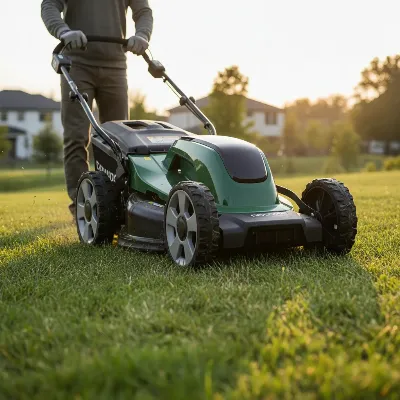 An electric self-propelled lawn mower easily ascending a grassy hill with good traction and a user guiding it.
The Toro Super Recycler 21564 stands out for its “personal pace” drive system, which adapts seamlessly to your walking speed, effectively reducing the physical load when moving uphill. This feature, combined with its large bag capacity and mulching capabilities, makes it a highly efficient choice for sloped yards.
For those requiring substantial power and a robust build, the Milwaukee M18 Fuel 21″ Dual Battery Mower Kit offers professional-grade performance. It boasts a rugged steel deck, variable-speed rear-wheel drive, and a powerful motor designed to provide more torque than many gas equivalents, making it ideal for demanding hilly conditions.
Lastly, the Cub Cadet SC 300 HW is specifically recommended for challenging hills due to its high wheels and reliable rear-drive system, which provide steadfast traction and control on slopes. For gas-powered reliability on hills, the Husqvarna LC221RH also features robust rear-wheel drive, simplifying navigation on inclines.
Essential Features for Mowing Hills
When investing in a self-propelled lawn mower for hilly terrain, certain features elevate performance, safety, and comfort.
Engine Power and Torque
The ability to climb and cut effectively on an incline directly correlates with the mower’s engine power and torque. Gas-powered mowers typically offer higher horsepower (HP), with at least 3 HP recommended for most hills, and even more for steeper gradients. High torque is also critical, as it ensures the wheels can maintain traction and momentum without bogging down. While electric mowers traditionally had less torque, advanced battery and motor technologies in 2026 have enabled many electric self-propelled models to deliver power comparable to their gas counterparts.
Advanced Drive Systems and Traction
For superior grip and control on slopes, the drive system is paramount. Rear-wheel drive (RWD) is highly beneficial because the mower’s weight naturally shifts backward when climbing, pressing the rear drive wheels firmly into the ground for better traction. All-wheel drive (AWD) takes this a step further, offering enhanced stability and grip on damp or highly uneven surfaces. Systems like Toro’s “Personal Pace” or Honda’s “Select Drive” automatically adjust the mower’s speed to your walking pace, providing seamless assistance uphill and preventing runaway situations downhill. Look for models with sturdy, wide wheels featuring aggressive tread patterns for optimal ground contact.
Optimal Weight and Balance
A mower that is too heavy can be cumbersome and difficult to maneuver on hills, potentially leading to a loss of control. Conversely, a mower that is too light might struggle to maintain traction and could stall. The ideal self-propelled mower for hills strikes a balance, being robust enough to perform yet light enough to handle safely. Electric mowers often have an advantage here, typically being lighter than gas models. A low center of gravity is also a critical design aspect to prevent tipping, enhancing safety and stability on sloped ground.
Durable Construction and Cutting Deck
Hilly terrain can put extra strain on a mower, making durable construction essential. Look for models with rust-proof and dent-resistant decks, such as Honda’s Nexite, to withstand the rigors of frequent use on uneven ground. High-quality materials and solid build contribute to the longevity and consistent performance of the machine. A generous cutting height range is also crucial for adapting to the varying grass lengths often found on slopes, ensuring an even and healthy cut.
Safety Innovations
Safety is non-negotiable when mowing on hills. Modern self-propelled mowers incorporate several features to protect the operator. A blade brake clutch allows you to stop the blades without shutting off the engine, which is useful for clearing obstacles or pausing on an incline. Easy-to-reach controls and comfortable, secure grips enhance operator control. For riding mowers, features like Roll-Over Protection Systems (ROPS) and automatic shutoff are vital. Always prioritize models that emphasize stability, control, and user protection.
Buying Guide: Choosing Your Ideal Self-Propelled Mower for Hills
Selecting the perfect self-propelled lawn mower for a hilly yard involves thoughtful consideration of your specific needs and the machine’s capabilities.
Assessing Your Landscape
Before you start shopping, take a close look at your yard. What is the approximate size of the area you need to mow? How steep are the slopes, and what is the overall gradient? Identify any obstacles like trees, flower beds, or retaining walls that will require maneuverability. Consider the type of grass you have, as thicker, tougher grasses may demand more power. This assessment will help determine the necessary engine power, cutting width, and drive system you’ll need.
Budgeting for Performance
Self-propelled mowers, especially those optimized for hills, represent a significant investment. Establish a realistic budget that accounts for the mower’s upfront cost, potential accessories (like extra batteries for electric models), and long-term maintenance. While it can be tempting to opt for a budget-friendly model, that reliability and performance on challenging terrain are often worth the extra expense. High-quality mowers from reputable brands tend to offer better durability and fewer repair issues over time.
Must-Have Features
For hilly terrains, prioritize these features:
- Engine Power and Torque: Ensure sufficient power (e.g., at least 3 HP for gas, high-voltage systems for electric) to prevent stalling on inclines.
- Drive System: Rear-wheel drive (RWD) is a minimum; all-wheel drive (AWD) is ideal for enhanced traction and stability. Look for variable speed control or adaptive drive systems like “Personal Pace.”
- Wheel Design: Large, sturdy rear wheels with aggressive treads provide superior grip.
- Deck Material: Durable, rust-resistant decks (e.g., steel, Nexite) withstand rough conditions.
- Cutting Height Adjustment: Easy, precise adjustments are crucial for even cuts on varying slopes.
- Comfort Features: Adjustable handles and anti-vibration grips reduce operator fatigue.
- Fuel Type: Decide between gas (unlimited runtime, more power) or electric (quieter, less maintenance, zero emissions, but with runtime limits).
Brand Reputation and Reviews
Research brands known for producing reliable and high-performing self-propelled mowers suitable for hills. Companies like Honda, Toro, Ego, Husqvarna, and Cub Cadet consistently receive positive reviews for their engineering and durability. Reading expert reviews and testimonials from other homeowners with similar yard conditions can provide valuable real-world insights into a mower’s performance and longevity on slopes.
Prioritizing Safety
Safety should always be a top concern. Choose a mower that includes features like a blade brake clutch, easy-to-access controls, and robust wheel traction. Always follow the manufacturer’s guidelines for safe operation on slopes, including mowing across inclines with walk-behind mowers and removing any potential obstacles before you begin.
Mastering Usage and Maintenance on Slopes
Proper usage and diligent maintenance are key to ensuring your self-propelled lawn mower operates safely and effectively on hilly terrains for years to come.
Safe Operation on Hilly Lawns
Mowing on an incline demands extra caution. Always remove obstacles like rocks, sticks, or any debris from the sloped area before you begin, as striking them can lead to loss of control or mower damage. It’s recommended to mow across the slope with walk-behind self-propelled mowers, rather than directly up and down. This technique helps maintain better control and reduces the risk of the mower rolling over. Take your time, moving at a steady, deliberate pace, and avoid rushing. Never mow wet grass on a slope, as it significantly increases the risk of slipping and losing traction. For optimal visibility, avoid mowing in dim light or shadows. Always consult your mower’s owner’s manual for specific safety recommendations.
“Safety on slopes isn’t just about the mower; it’s about the operator’s awareness and adherence to proper techniques. Slow down, plan your path, and never underestimate the terrain.” – Admin, reviewhyeok.com, Lawn Mower Technician.
Essential Maintenance Practices
Regular maintenance is crucial for the longevity and performance of your self-propelled mower, especially when used on hills where components endure extra strain.
- Blade Care: Keep your blades sharp and balanced. Dull blades force the engine to work harder, leading to uneven cuts and greater wear. Inspect blades regularly for damage like bends or cracks, and replace them with OEM parts if necessary. Always wear protective gloves when handling blades.
- Engine Health (Gas Mowers): For gas models, regular oil changes extend engine life. Stabilize fuel if the mower will be stored for more than 30 days to prevent carburetor clogs. Keep the air filter clean and check the spark plug for optimal ignition.
- Battery Care (Electric Mowers): For battery-powered units, follow manufacturer guidelines for charging and storage to maximize battery life. Ensure battery connections are clean and secure.
- Deck Cleaning: Prevent rust and buildup by regularly cleaning grass clippings from the underside of the mower deck.
- Belt and Tire Inspection: Check drive belts for cracks or wear, as worn belts can reduce power to the wheels, impacting performance on hills. Maintain proper tire pressure for a level cut and to reduce strain on the transmission.
- Tighten Fasteners: Routinely check and tighten all nuts, bolts, and screws to ensure the equipment remains in safe working condition.
- Grass Catcher Components: Inspect the grass catcher, discharge cover, and trail shield for wear or damage, replacing them immediately if compromised to prevent exposure to moving parts or thrown objects.
Troubleshooting Common Mower Issues
Even with diligent maintenance, issues can arise. Many common problems with self-propelled mowers can be easily resolved. If your self-propel system isn’t engaging, check if the drive cable is properly connected or if the speed control lever is stuck. For engine-related issues (gas models), verify that you have fresh fuel, correct oil levels, and a clean air filter. If an electric mower isn’t starting, check the battery charge and connections. Sometimes, simply cleaning debris from around the wheels can resolve propulsion problems. If the engine sputters or lacks power, it will directly impact the drive system’s effectiveness on hills. For complex issues, consulting a professional technician is advisable.
Conclusion
Navigating a hilly lawn no longer needs to be an arduous chore. With the right self-propelled lawn mower, you can transform the daunting task of cutting grass on inclines into an efficient and far less strenuous experience. The market in 2026 offers exceptional gas and electric models, each boasting advanced drive systems, powerful engines, and crucial safety features designed to tackle varied terrains with confidence. By carefully assessing your yard’s unique demands, prioritizing key features like strong traction and durable construction, and committing to regular maintenance, you can select a mower that not only meets your needs but exceeds your expectations. Choose wisely, and embrace a smoother, safer, and more enjoyable lawn care routine.
What innovative features do you believe will define the next generation of self-propelled lawn mowers for challenging landscapes?
Frequently Asked Questions
What makes a self-propelled lawn mower ideal for hilly terrains?
Self-propelled mowers are ideal for hills because their driven wheels significantly reduce the physical effort needed to push them uphill or control their descent. Features like powerful engines, advanced rear-wheel or all-wheel drive systems, variable speed control, and robust traction ensure stability and cutting efficiency on inclines, making the task much easier and safer for the operator.
Is a gas or electric self-propelled mower better for steep hills?
For very steep or large, challenging hills, gas self-propelled mowers have traditionally offered superior power and torque, making them highly effective. However, modern electric self-propelled mowers, particularly those with high-voltage battery systems and advanced drive technologies, now rival gas models in performance for most residential hills, offering a quieter, lower-maintenance, and eco-friendlier alternative. The best choice depends on the specific incline, yard size, and your preference for power source.
What key safety features should I look for in a self-propelled mower for slopes?
When buying a self-propelled mower for slopes, prioritize safety features such as a blade brake clutch, which stops the blades without shutting off the engine. Also, look for ergonomic, adjustable handles that provide a secure grip, and robust wheels with aggressive treads for enhanced traction. A low center of gravity in the mower’s design is also crucial to minimize the risk of tipping on uneven ground.
How often should I perform maintenance on my self-propelled mower when using it on hills?
Regular maintenance is vital for mowers used on hills due to increased strain. You should perform basic checks before each use, such as inspecting blades, clearing debris, and verifying tire pressure. More extensive maintenance, including oil changes (for gas), battery checks (for electric), and belt inspections, should follow the manufacturer’s recommendations, typically after a certain number of operating hours or annually.
Can self-propelled mowers handle very wet grass on hills?
While self-propelled mowers are generally robust, it is strongly advised to avoid mowing wet grass on hills. Wet conditions significantly reduce traction, increase the risk of slipping, and can cause the mower to lose control. Wet grass tends to clump, leading to uneven cuts and potential clogging of the mower deck, which places extra strain on the engine.
Frequently Asked Questions
What makes a self-propelled lawn mower ideal for hilly terrains?
Self-propelled mowers are ideal for hills because their driven wheels significantly reduce the physical effort needed to push them uphill or control their descent. Features like powerful engines, advanced rear-wheel or all-wheel drive systems, variable speed control, and robust traction ensure stability and cutting efficiency on inclines, making the task much easier and safer for the operator.
Is a gas or electric self-propelled mower better for steep hills?
For very steep or large, challenging hills, gas self-propelled mowers have traditionally offered superior power and torque, making them highly effective. However, modern electric self-propelled mowers, particularly those with high-voltage battery systems and advanced drive technologies, now rival gas models in performance for most residential hills, offering a quieter, lower-maintenance, and eco-friendlier alternative. The best choice depends on the specific incline, yard size, and your preference for power source.
What key safety features should I look for in a self-propelled mower for slopes?
When buying a self-propelled mower for slopes, prioritize safety features such as a blade brake clutch, which stops the blades without shutting off the engine. Also, look for ergonomic, adjustable handles that provide a secure grip, and robust wheels with aggressive treads for enhanced traction. A low center of gravity in the mower's design is also crucial to minimize the risk of tipping on uneven ground.
How often should I perform maintenance on my self-propelled mower when using it on hills?
Regular maintenance is vital for mowers used on hills due to increased strain. You should perform basic checks before each use, such as inspecting blades, clearing debris, and verifying tire pressure. More extensive maintenance, including oil changes (for gas), battery checks (for electric), and belt inspections, should follow the manufacturer's recommendations, typically after a certain number of operating hours or annually.
Can self-propelled mowers handle very wet grass on hills?
While self-propelled mowers are generally robust, it is strongly advised to avoid mowing wet grass on hills. Wet conditions significantly reduce traction, increase the risk of slipping, and can cause the mower to lose control. Additionally, wet grass tends to clump, leading to uneven cuts and potential clogging of the mower deck, which places extra strain on the engine.
Choosing Your Ideal Self-Propelled Mower for Hills
Selecting the perfect self-propelled lawn mower for a hilly yard involves thoughtful consideration of your specific needs and the machine's capabilities.
Before shopping, examine your yard's size, slope steepness, and obstacles. This assessment helps determine the necessary engine power, cutting width, and drive system for your specific terrain and grass type.
Establish a realistic budget that covers the mower's upfront cost, potential accessories, and long-term maintenance. Prioritize reliability and performance on challenging terrain, as quality mowers often offer better durability and fewer repair issues.
For hilly terrains, ensure the mower has sufficient engine power (e.g., at least 3 HP for gas), rear-wheel or all-wheel drive for traction, and large, sturdy wheels with aggressive treads. Look for durable decks, easy cutting height adjustment, and comfort features like adjustable handles.
Investigate reputable brands known for reliable self-propelled mowers suitable for hills, such as Honda, Toro, or Ego. Reading expert reviews and testimonials from homeowners with similar yard conditions provides valuable real-world insights into a mower's performance and longevity on slopes.
Always choose a mower with essential safety features like a blade brake clutch, easy-to-access controls, and robust wheel traction. Adhere to the manufacturer's guidelines for safe operation on slopes, including mowing across inclines with walk-behind mowers and removing obstacles.
Get our weekly buyer guide
Practical specs, not advice. Unsubscribe anytime.

I finally bit the bullet and got the Ego Power+ Select Cut LM2135SP after struggling with my old push mower on our sloped yard. What a difference! The battery life is fantastic, and it really does make mowing hills feel effortless. Highly recommend for anyone with a challenging incline.
The Greenworks 80V 21″ Brushless Cordless Self-Propelled Mower has been a game-changer for my large, hilly property. It’s powerful and the self-propel feature is a lifesaver. My only minor gripe is that it’s a bit heavier than I expected, but the performance makes up for it.
I picked up the Honda Nexite 4-in-1, and while it’s a solid mower with a powerful GCV200 engine, I’ve had a little trouble with the bagging system on really thick grass. It sometimes clogs up if I’m not careful. Still, it handles the inclines like a champ, which was my main reason for buying it.
This mower is amazing! I used to dread mowing our backyard because of the steep slope, but my new self-propelled model has totally changed that. It just glides right up, and I don’t feel exhausted afterwards. Best investment for my lawn care routine.