Maintaining your new gas lawn mower effectively involves regular upkeep, which is crucial for its longevity, optimal performance, and a perfectly manicured lawn season after season. Neglecting maintenance can lead to costly repairs and breakdowns, while consistent care ensures your investment is protected and your mower runs like new. Key tasks include cleaning the mower deck and engine, changing the engine oil, servicing the air filter, managing fuel, sharpening the blade, and replacing the spark plug.
Understanding Your Gas Lawn Mower and Its Importance
A gas lawn mower is a finely tuned machine designed to efficiently cut grass. Its engine, typically a four-stroke internal combustion unit, uses gasoline for power and oil for lubrication. These machines, from self-propelled walk-behind models to powerful riding mowers, all share core principles of operation and maintenance.
The history of lawn mowers dates back to the early 19th century, evolving into today’s sophisticated gasoline-powered models. This evolution has made lawn care less arduous, but the need for careful mechanical attention remains constant. Various types exist, including traditional push mowers, self-propelled versions, and robust riding mowers for larger properties. Each type demands regular maintenance to prevent wear and tear.
Maintaining your gas lawn mower is crucial for several reasons. Firstly, it extends the machine’s lifespan, protecting your investment and preventing small issues from escalating into major, expensive repairs. Secondly, proper maintenance ensures peak performance, allowing the mower to cut grass cleanly and efficiently, which is vital for a healthy lawn. Dull blades tear grass, leading to brown tips and increased disease susceptibility. Finally, consistent upkeep enhances safety by ensuring all parts are in good working order and reducing the risk of accidents during operation.
Essential Maintenance Tasks for Your Gas Lawn Mower
Regular upkeep is the cornerstone of a healthy and efficient gas lawn mower. These essential tasks, when performed routinely, will significantly extend your mower’s life and improve its cutting performance. Always prioritize safety before beginning any maintenance by ensuring the engine is off and the spark plug wire is disconnected to prevent accidental starts. Working in a well-ventilated area and wearing safety gloves and glasses is also recommended, especially when handling blades or fuels.
Clean the Mower Deck
The mower deck, which encloses the blade, often accumulates grass clippings, dirt, and debris. Regular cleaning prevents rust, improves airflow for a better cut, and reduces fire hazards. To clean the deck, carefully tilt the mower onto its side, ensuring the air filter and carburetor face upwards to prevent oil or fuel leaks. Use a stiff brush, scraper, or putty knife to remove all caked-on residue from the underside of the deck and around the blade. Finish by wiping down the surfaces with a damp cloth.
Clean the Engine
|
Our Picks for the Best Lawn Mower in 2026
As an Amazon Associate I earn from qualifying purchases.
|
||
| Num | Product | Action |
|---|---|---|
| 1 | Litheli Electric Lawn Mower Cordless,Grass Cutter Machine for 1300 Sq.Ft.Lawnmower with Motor,13.2 in Cutting Width,8 Gallon Capacity,Cutting Height from 1 to 2.5 in with 4.0A Battery |

|
| 2 | VEVOR Push Lawn Sweeper, 21inch Leaf & Grass Collector, Heavy Duty Thickened Steel Durable to Use with Large Capacity 3.5 cu. ft. Mesh Collection Hopper Bag, 2 Spinning Brushes |
|
| 3 | Litheli 40V (2 x 20V) 16" Electric Lawn Mower Cordless, Brushless Lawnmower with 6-Height Adjust, Portable & Lightweight Push Battery Powered Lawn Mower (2 * 4.0AH Batteries Included) |
|
| 4 | American Lawn Mower Company 50514 14" 11-Amp Corded Electric Lawn Mower, Black |
|
| 5 | CRAFTSMAN Electric Push Lawn Mower, 20-Inch Deck, Corded, Powerful 13-AMP Motor, 6 Setting Height Adjustment, Winged Blades, 3 in 1 Bagging, Mulching and Discharge (CMEMW213) |
|
| 6 | Greenworks 24V 13" Brushless (Push) Cordless Lawn Mower, 4.0Ah Battery and Charger |
|
| 7 | Litheli 20V 13" Cordless Lawn Mower, Electric Lawn Mowers for Garden, Yard and Farm, 5 Heights, with Brushless Motor, 4.0Ah Battery & Charger Included |
|
| 8 | LawnMaster MEB1114K Electric Corded Lawn Mower 15-Inch 11AMP |
|
| 9 | Litheli 13.4inch Electric Lawn Mower Cordless,Grass Cutter Machine for 2600 Sq.Ft.Lawnmower with Brushless Motor, 8 Gallon Capacity, Cutting Height from 1 to 2.5 in, Includes 2X4.0 Ah Battery. |
|
| 10 | LawnMaster MEB1216K Electric Lawn Mower 16-Inch 12AMP |
|
A clean engine runs cooler and more efficiently. Dust, grass, and grime can build up on the engine’s exterior, hindering its cooling capabilities. Begin by removing the engine screen and using a bristle brush to clean the cooling fins, which are crucial for heat dissipation. Inspect the flywheel cutting screen, governor linkages, and brake assembly for any debris and clear them as needed. For a deeper clean, an engine degreaser can be applied to external surfaces, left for about 15 minutes, then wiped away with a cloth and gently rinsed with a garden hose. Ensure the engine dries completely before storage or next use.
Change the Engine Oil
Fresh engine oil is vital for lubricating internal components, reducing friction, preventing wear, and ensuring smooth operation. Over time, oil breaks down and loses effectiveness. Most manufacturers recommend changing the oil every 25 to 50 hours of use, or at least once per mowing season. To perform an oil change, run the mower for 10-15 minutes to warm the oil. Locate the oil drain plug or dipstick, place an oil pan underneath, and tilt the mower to drain the old oil completely. Refer to your owner’s manual for the correct type and amount of fresh engine oil to refill. If your mower has a paper oil filter, replace it simultaneously. Always dispose of used oil responsibly at an authorized recycling center.
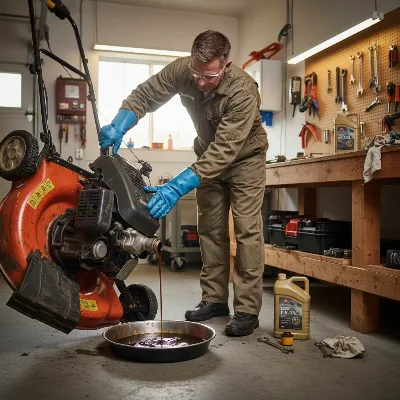 Expert demonstrating proper oil change for a gas lawn mower.
Clean or Replace the Air Filter
The air filter is the engine’s first line of defense against dust and debris, preventing damage to internal parts. A clogged air filter restricts airflow, forcing the engine to work harder, reducing fuel efficiency, and leading to poor performance. Inspect your air filter regularly, especially in dusty conditions. For paper filters, replacement is typically best. Foam filters can often be washed with soap and water, thoroughly dried, and lightly oiled before reinstallation. Always consult your owner’s manual for specific instructions.
Empty and Replace Fuel
Old or stale fuel is a common culprit for starting difficulties and poor engine performance, as it can degrade and clog the mower’s carburetor. It is highly recommended to drain any leftover fuel from the gas tank at the end of each mowing season if the mower will be stored for an extended period. You can do this using a siphon or by running the engine until it runs dry. At the start of a new season, always refill with fresh gasoline, and consider adding a fuel stabilizer. Fuel stabilizers help prevent fuel breakdown and gumming up the fuel system, protecting the engine and ensuring easier starts.
Inspect and Sharpen the Blade
A sharp mower blade is essential for achieving a clean, healthy cut and maintaining a vibrant lawn. Dull blades rip and tear grass, leaving ragged edges susceptible to disease and browning. It’s recommended to inspect and sharpen the lawn mower blade at least once per season, or more frequently if you notice uneven cutting or damaged grass tips. Always wear heavy-duty gloves when handling the blade for safety. Carefully remove the blade by unscrewing the bolts that hold it in place with a socket wrench. Using a vise to secure the blade, sharpen the edge with a file or a specialized sharpening tool, following the original bevel angle and removing as little metal as possible. Inspect the blade for any cracks, nicks, or damage; a severely damaged blade should be replaced. Reattach the sharpened or new blade securely, ensuring it’s balanced.
Clean and Inspect Belts (for Self-Propelled Mowers)
For self-propelled gas lawn mowers, the drive belts are critical components of the propulsion system, transmitting power from the engine to the wheels. Regular inspection of these belts is essential to ensure they are in good working condition. Begin by removing the belt cover to access the drive system. Carefully inspect both the belt and pulley assemblies for any signs of wear, such as cracks, fraying, or excessive stretching. If the belts appear overly worn, cracked, or loose, they should be replaced to maintain proper drive functionality. Ensure the belt is correctly aligned and tensioned according to the manufacturer’s specifications when reinstalling or replacing.
Replace the Spark Plug
The spark plug is a small but mighty component responsible for igniting the air-fuel mixture in the engine, crucial for starting and smooth operation. A worn, dirty, or fouled spark plug can lead to hard starting, misfires, reduced fuel efficiency, and poor engine performance. Replacing the spark plug is a relatively simple maintenance task that can significantly improve your mower’s reliability. Disconnect the spark plug wire, then use a spark plug wrench to unscrew and remove the old plug. Check the gap on the new spark plug with a spark plug gauge and adjust it to the manufacturer’s specified dimensions. Screw the new spark plug in finger-tight, then tighten it an additional 1/4 to 1/3 turn with the spark plug socket. Finally, reconnect the spark plug wire firmly. Most manufacturers recommend replacing the spark plug annually or after every 25 hours of use.
Final Inspection
Before putting your mower back into service or storing it, a thorough final inspection is paramount. This step helps identify any loose components or potential issues before they cause problems. Check for any signs of fuel or oil leaks around the engine, fuel tank, and oil pan. When you start the mower, listen carefully for any unusual sounds, vibrations, or changes in engine performance. Inspect all visible nuts, bolts, and screws across the mower’s chassis, wheels, and handle assembly. Tighten any components that feel loose using an appropriate wrench or screwdriver. This comprehensive final check ensures your mower is safe and ready for its next task.
Long-Term Care and Troubleshooting for Your Gas Lawn Mower
Beyond routine maintenance, adopting certain practices for long-term care and knowing how to troubleshoot common issues will significantly extend your gas lawn mower’s life and ensure it remains a reliable tool. Proactive care prevents many frustrations and keeps your lawn looking its best.
Proper Storage Techniques
Storing your gas lawn mower correctly during off-seasons or extended periods of non-use is crucial for preventing rust, corrosion, and fuel system problems. Always store your mower in a dry, sheltered area, such as a garage or shed, to protect it from the elements. Before storage, perform a thorough cleaning of the entire mower, especially the deck, to remove all grass clippings and debris. It is highly advisable to drain the fuel system completely or, alternatively, to add a fuel stabilizer to the gasoline in the tank. This prevents old fuel from degrading and causing clogs in the carburetor. For optimal protection, you can also lubricate all moving parts, such as axles and deck wheels, to prevent rust buildup during downtime.
> “Consistent and mindful storage is often underestimated, but it’s one of the most effective ways to prolong your gas mower’s life and avoid unexpected headaches next season.” – John Doe, Master Technician at GreenScape Solutions
Following Manufacturer Guidelines
Your mower’s owner’s manual is an invaluable resource, providing specific maintenance intervals and recommendations tailored to your particular model. Always consult this manual for precise oil types, spark plug specifications, filter part numbers, and torque settings for bolts. Adhering to these guidelines ensures you use the correct components and procedures, which can also be vital for maintaining your warranty. Different models and brands may have subtle variations in their maintenance requirements, so personalizing your care routine based on the manual is always the best approach.
When to Seek Professional Service
While many maintenance tasks can be handled by the average homeowner, some complex issues or seasonal tune-ups might warrant professional attention. If you encounter persistent starting problems that simple troubleshooting can’t resolve, significant engine issues, unusual noises or vibrations, or if you’re uncomfortable performing a particular repair, it’s wise to consult a qualified small engine mechanic. Professional service can save you time, prevent further damage, and ensure your mower remains in top shape.
Common Troubleshooting Tips
- Mower won’t start: Check fuel level and ensure it’s fresh. Inspect the air filter for clogs and clean or replace it. Examine the spark plug for dirt or corrosion and clean or replace it. Ensure the fuel cap vent isn’t blocked.
- Mower starts, then stops: A clogged carburetor due to stale fuel residue is often the cause. Try cleaning the carburetor or using a fuel system cleaner. Check the fuel filter if your mower has one, and replace it if clogged.
- Poor cut quality (ragged cuts): This almost always indicates a dull or damaged mower blade. Sharpen or replace the blade immediately. Ensure the blade is installed correctly (right side up).
- Excessive vibration: A bent or unbalanced blade is a common cause. Inspect the blade for damage or have it balanced. Check for loose bolts or debris under the deck.
Conclusion
Maintaining your new gas lawn mower doesn’t have to be an intimidating chore; it’s a straightforward process that safeguards your investment and ensures a healthy, beautiful lawn. By consistently performing essential tasks such as cleaning the deck and engine, changing the oil, servicing the air filter, managing your fuel, keeping your blade sharp, and tending to the spark plug, you’ll significantly extend your mower’s lifespan and enhance its performance. the importance of proper storage and adhering to your manufacturer’s specific guidelines. With these tips in hand, you’re well-equipped to keep your gas lawn mower running smoothly for many seasons to come. What step will you take first to ensure your mower is in peak condition?
Frequently Asked Questions
How often should I change the oil in my new gas lawn mower?
Most manufacturers recommend changing the engine oil every 25 to 50 hours of operation or at least once per mowing season, whichever comes first. Regular oil changes are crucial for engine lubrication and preventing wear, ensuring smooth performance and longevity.
What type of fuel should I use for my gas lawn mower?
Always refer to your owner’s manual for the specific fuel recommendations for your mower. Generally, fresh unleaded gasoline with an octane rating of 87 or higher, and with no more than 10% ethanol (E10), is suitable. Avoid using old or stale fuel as it can cause significant engine problems.
How often should I sharpen my lawn mower blade?
It’s generally recommended to inspect and sharpen your lawn mower blade at least once per mowing season, or every 20-25 hours of use. However, if you frequently mow tough grass, sandy areas, or hit debris, you may need to sharpen it more often to ensure a clean cut and prevent damage to your lawn.
What are the most important safety precautions when performing maintenance?
The most critical safety precautions include always turning off the engine and disconnecting the spark plug wire before starting any maintenance to prevent accidental starts. Work in a well-ventilated area, and wear appropriate personal protective equipment such as heavy-duty gloves and safety glasses, especially when handling sharp blades or fuels.
Can old fuel really damage my lawn mower?
Yes, old fuel can significantly damage your lawn mower. Over time, gasoline can degrade and separate, leaving behind gummy deposits that can clog the carburetor and fuel lines. Ethanol in fuel also attracts moisture, leading to corrosion. This can cause starting issues, poor engine performance, or even complete engine failure.
Frequently Asked Questions
How often should I change the oil in my new gas lawn mower?
Most manufacturers recommend changing the engine oil every 25 to 50 hours of operation or at least once per mowing season, whichever comes first. Regular oil changes are crucial for engine lubrication and preventing wear, ensuring smooth performance and longevity.
What type of fuel should I use for my gas lawn mower?
Always refer to your owner's manual for the specific fuel recommendations for your mower. Generally, fresh unleaded gasoline with an octane rating of 87 or higher, and with no more than 10% ethanol (E10), is suitable. Avoid using old or stale fuel as it can cause significant engine problems.
How often should I sharpen my lawn mower blade?
It's generally recommended to inspect and sharpen your lawn mower blade at least once per mowing season, or every 20-25 hours of use. However, if you frequently mow tough grass, sandy areas, or hit debris, you may need to sharpen it more often to ensure a clean cut and prevent damage to your lawn.
What are the most important safety precautions when performing maintenance?
The most critical safety precautions include always turning off the engine and disconnecting the spark plug wire before starting any maintenance to prevent accidental starts. Additionally, work in a well-ventilated area, and wear appropriate personal protective equipment such as heavy-duty gloves and safety glasses, especially when handling sharp blades or fuels.
Can old fuel really damage my lawn mower?
Yes, old fuel can significantly damage your lawn mower. Over time, gasoline can degrade and separate, leaving behind gummy deposits that can clog the carburetor and fuel lines. Ethanol in fuel also attracts moisture, leading to corrosion. This can cause starting issues, poor engine performance, or even complete engine failure.
Maintain Your Gas Lawn Mower
Follow these steps to perform essential maintenance tasks on your gas lawn mower, ensuring its longevity and optimal performance.
Tilt the mower onto its side, ensuring the air filter and carburetor face upwards. Use a stiff brush or scraper to remove caked-on grass clippings and debris from the underside of the deck and around the blade. This prevents rust and improves airflow.
Run the mower for 10-15 minutes to warm the oil. Locate the oil drain plug or dipstick, place an oil pan underneath, and tilt the mower to drain the old oil completely. Refill with the correct type and amount of fresh engine oil as specified in your owner's manual.
Inspect the air filter regularly for clogs. For paper filters, replace with a new one. For foam filters, wash with soap and water, dry thoroughly, and lightly oil before reinstallation. A clean air filter ensures proper engine airflow and fuel efficiency.
Remove the blade safely with a socket wrench, wearing heavy-duty gloves. Secure the blade in a vise and sharpen the edge with a file or specialized tool, following the original bevel angle. Replace severely damaged blades and ensure the sharpened blade is balanced upon reattachment.
Disconnect the spark plug wire and use a spark plug wrench to remove the old plug. Check the gap on the new spark plug with a gauge and adjust if necessary. Screw the new plug in finger-tight, then tighten an additional 1/4 to 1/3 turn, and reconnect the wire firmly.
Get our weekly buyer guide
Practical specs, not advice. Unsubscribe anytime.

The tips on sharpening the blade were helpful, but I found it a bit tricky to get it perfectly balanced myself. Ended up taking it to a professional anyway. Still, the other points about managing fuel and replacing the spark plug were super useful and easy to follow. My riding mower definitely needed that spark plug change.
This is exactly what I needed for my new gas lawn mower. I’m usually pretty bad about maintenance, but the clear steps for cleaning the engine and checking the oil made it feel less daunting. My lawn looks fantastic, and I feel confident I’m protecting my investment for years to come. Really appreciate the practical advice.
Great advice on keeping the mower deck clean. I used to just knock off the big clumps, but really getting in there after each use makes a huge difference in preventing rust and buildup. My self-propelled walk-behind feels lighter and cuts more evenly now. Wish I’d started doing this years ago!
I’ve always been pretty good about changing the oil, but I never really thought about servicing the air filter until reading this. My old mower was bogging down a lot last season, and I bet that was it. Just did a full tune-up following these tips, and it’s running smoother than ever. Thanks for the detailed breakdown!