Choosing the right lawn mower can transform a dreaded chore into a satisfying experience, and in 2026, the debate between gas and electric models is more relevant than ever. With advancements in battery technology pushing electric options closer to the power of traditional gas engines, many homeowners find themselves at a crossroads. This guide will meticulously break down the nuances of each power source, compare different mower types, explore top brands, and provide a comprehensive buying guide to help you select the perfect lawn mower for your specific needs, ensuring your yard stays pristine and well-maintained.
General Overview of Lawn Mowers
A lawn mower is an essential piece of equipment designed to cut grass to an even height, maintaining the aesthetic appeal and health of a lawn. From simple push models to sophisticated robotic systems, these machines have evolved significantly. While their core function remains the same, the method of achieving that perfect cut varies greatly, primarily driven by their power source and operational design. Understanding these fundamental differences is the first step in making an informed decision.
Classifying Lawn Mowers
Lawn mowers can be broadly categorized by their operational method and power source. Each type offers distinct advantages tailored to different lawn sizes, terrains, and user preferences.
Push Lawn Mowers
These are typically the most basic and affordable lawn mowers, requiring the user to manually push them across the lawn. They are lightweight and easy to maneuver, making them ideal for smaller, flat yards up to a quarter of an acre. While they demand more physical effort, their simplicity means less maintenance and a lower upfront cost. Push mowers are available in gas, corded electric, and battery-powered variants, with manual reel mowers also falling into this category.
Self-Propelled Lawn Mowers
Self-propelled lawn mowers feature a drive system that propels the wheels forward, significantly reducing the effort required to mow. Users simply guide the machine, making them excellent for medium to large lawns or properties with slopes and uneven terrain. These mowers are commonly found with both gas and battery-powered engines, offering a blend of power and convenience that appeals to many homeowners. The adjustable speed settings on many models allow for comfortable operation.
Riding Lawn Mowers
For expansive properties, riding lawn mowers offer the ultimate in efficiency and comfort. Instead of walking, the user sits on the machine, controlling it like a small tractor. This category includes lawn tractors, which are versatile for various yard tasks, and zero-turn mowers, renowned for their exceptional maneuverability and ability to make tight turns around obstacles. While traditionally gas-powered, electric riding mowers are gaining traction for those seeking a quieter, emission-free solution on larger plots.
Robotic Lawn Mowers
The epitome of hands-free lawn care, robotic lawn mowers operate autonomously, trimming the grass according to a pre-set schedule and boundary wires. They are exclusively battery-powered, offering quiet, emission-free operation and are perfect for homeowners desiring minimal involvement in lawn maintenance. Robotic mowers excel at maintaining consistently short grass in small to medium-sized yards, ensuring a perpetually neat appearance without lifting a finger.
Gas-Powered Lawn Mowers
Gas-powered lawn mowers have long been the workhorses of lawn care, known for their raw power and ability to tackle challenging conditions. They run on internal combustion engines, providing robust performance that makes light work of thick, tall, or wet grass.
- Pros: Superior power, longer run times (as long as you have fuel), larger cutting decks (often 22 inches or more), no reliance on battery charging, generally better for very large properties and tough grass.
- Cons: Higher noise levels (85-95 decibels), produce exhaust emissions, require more maintenance (oil changes, spark plugs, fuel filters), heavier, and need fuel storage.
Corded Electric Lawn Mowers
Corded electric lawn mowers offer a lightweight and low-maintenance alternative, powered directly by an electrical outlet. They provide continuous power without the need for refueling or battery charging, making them a cost-effective choice.
- Pros: Very lightweight, quiet operation, zero emissions during use, minimal maintenance, lower upfront cost, no battery degradation issues.
- Cons: Limited by the length of the power cord, unsuitable for large yards or areas without easy access to an outlet, less powerful than gas models in tough conditions.
Battery-Powered Lawn Mowers
Battery-powered (cordless electric) lawn mowers combine the eco-friendliness of electric models with the freedom of movement found in gas mowers. Utilizing rechargeable lithium-ion batteries, these mowers are increasingly powerful and efficient.
- Pros: Quiet operation (60-75 decibels), zero emissions, lightweight and easy to maneuver, minimal maintenance, cordless freedom, convenient push-button start.
- Cons: Limited runtime (30-70 minutes per charge), require charging time (60-120 minutes), battery degradation over 3-5 years (replacement cost), may struggle with very thick or wet grass compared to high-end gas models, generally higher upfront cost for powerful models with multiple batteries.
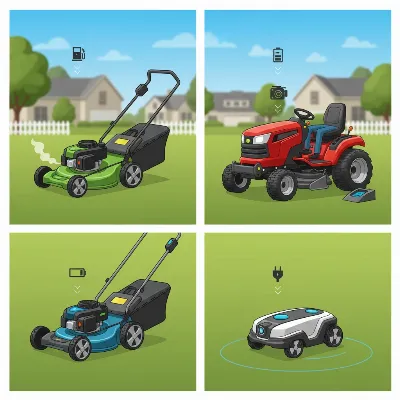 Illustration of various lawn mower types including gas, electric, and robotic models.
Comparison Table of Lawn Mowers
Choosing the ideal lawn mower involves weighing various factors against your specific needs. This table provides a quick overview of how different lawn mower types, influenced by their power source, compare across key criteria.
| Feature | Push Mower (Gas/Electric) | Self-Propelled Mower (Gas/Battery) | Riding Mower (Gas/Electric) | Robotic Mower (Battery) |
|---|---|---|---|---|
| Lawn Size Suitability | Small (up to 0.25 acre) | Medium to Large (0.25 to 1 acre) | Large to Very Large (1+ acres) | Small to Medium (up to 1 acre) |
| Power & Performance | Moderate (can struggle with thick grass) | Good (handles varied conditions well) | Excellent (high power for dense grass) | Consistent (best for routine trimming) |
| Noise Level | Medium to High (Gas), Low (Electric) | Medium to High (Gas), Low (Battery) | High (Gas), Low (Electric) | Very Low (almost silent) |
| Maintenance | Low (Electric), Medium (Gas) | Medium (Battery), High (Gas) | High (Gas), Medium (Electric) | Low (blade cleaning, software updates) |
| Emissions | High (Gas), Zero (Electric) | High (Gas), Zero (Battery) | High (Gas), Zero (Electric) | Zero |
| Cost (Upfront) | Low to Medium | Medium to High | High | High |
| Effort Required | High (manual pushing) | Low (guides itself) | Very Low (you sit and drive) | None (fully autonomous) |
| Maneuverability | High (small size) | Good (self-propel assists) | Varies (Zero-turn excellent, Tractors good) | High (navigates programmed zones) |
Reputable Lawn Mower Brands
The market offers a diverse range of reputable lawn mower brands, each with its strengths in design, performance, and durability. Here are some of the most highly regarded:
- Honda: Renowned for reliable, powerful gas engines and durable walk-behind mowers. Many models feature easy starting and excellent mulching capabilities.
- Husqvarna: A leader in outdoor power equipment, offering a wide array of high-performance gas and battery-powered mowers, including robust riding and robotic options.
- Toro: Known for innovative features like the Personal Pace self-propel system and SmartStow for easy storage. Toro offers strong gas and increasingly capable electric models.
- Ego Power+: A frontrunner in battery-powered technology, Ego delivers impressive power and runtime that often rivals gas models, especially with their 56-volt systems.
- Ryobi: Offers a strong lineup of affordable and efficient battery-powered lawn mowers, often praised for their value and versatility with their 40V platform.
- Greenworks: Specializes in battery-powered outdoor equipment, providing a broad range of electric lawn mowers with varying battery voltages for different yard sizes.
- Bosch: A well-known brand globally, Bosch offers reliable corded and battery electric lawn mowers, often focusing on user-friendly designs and efficient cutting.
- Stihl: While perhaps more known for chainsaws, Stihl also produces high-quality battery-powered lawn mowers known for their robust construction and professional-grade performance.
- Cub Cadet: Particularly strong in riding mowers, including lawn tractors and zero-turn models, offering durability and advanced features for large properties.
- Craftsman: Provides a range of gas and electric mowers that balance performance with affordability, often a go-to for budget-conscious homeowners.
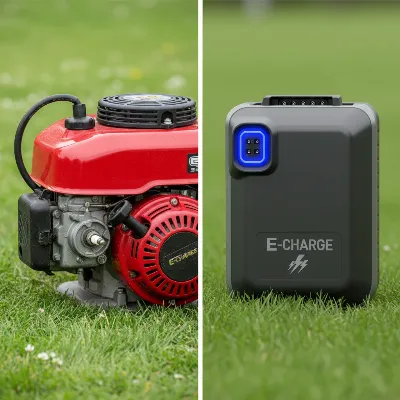 Close-up comparison of a gas lawn mower engine and an electric lawn mower battery.
How to Choose the Right Lawn Mower (Buying Guide)
Selecting the best lawn mower requires careful consideration of several factors unique to your lawn, lifestyle, and budget.
Determine Your Usage Needs
Start by evaluating your lawn’s characteristics.
- Lawn Size: For small lawns (under 0.25 acre), a push mower (corded or battery electric) is often sufficient. Medium lawns (0.25 to 0.5 acre) benefit from self-propelled battery or lighter gas models. Large lawns (0.5 to 1 acre) typically require powerful self-propelled gas or high-capacity battery mowers. Very large properties (over 1 acre) are best handled by riding mowers.
- Terrain and Obstacles: Flat lawns are suitable for most mowers. Hilly or uneven terrain often calls for self-propelled or riding mowers with good traction. Lawns with many trees, flowerbeds, or other obstacles will benefit from highly maneuverable walk-behind or zero-turn mowers.
- Grass Type and Condition: If you frequently mow thick, tall, or wet grass, a gas mower’s raw power might be more effective. Electric mowers, especially higher-end battery models, are increasingly capable but might still struggle with extreme conditions.
Budget Expectations
Consider both the initial purchase price and long-term ownership costs.
- Upfront Cost: Gas push mowers often have the lowest entry price, while advanced battery-powered self-propelled models, riding mowers, and robotic mowers typically represent a higher initial investment.
- Long-Term Costs: Gas mowers incur ongoing fuel and oil expenses, plus more frequent maintenance costs. Electric mowers have lower operating costs (electricity is cheaper than gas) but may require battery replacements after several years, which can be a significant expense.
Essential Features
Modern lawn mowers come with various features that enhance performance and convenience.
- Cutting Width: A wider cutting deck covers more ground faster, ideal for larger lawns. Smaller decks are better for navigating tight spaces.
- Adjustable Cutting Height: Look for easy-to-use height adjustment levers to customize your grass length based on season or preference.
- Grass Clipping Options: Most mowers offer “3-in-1” capabilities: bagging (collects clippings), mulching (chops clippings finely to return nutrients to the lawn), and side discharge (expels clippings from the side).
- Self-Propulsion: A must-have for larger lawns or sloped terrain to reduce physical strain.
- Starting Mechanism: Gas mowers can have pull cords or electric starts. Electric mowers typically feature a convenient push-button start.
Durability and Maintenance
The construction quality and ease of maintenance impact a mower’s lifespan and overall value. Gas mowers, with their complex engines, demand more rigorous and frequent maintenance to ensure longevity. Electric mowers, having fewer moving parts, are generally simpler to maintain but still benefit from regular care. Considering the warranty offered by the manufacturer is also a smart move.
Brand Reputation and User Reviews
Researching reputable brands and reading user reviews can provide real-world insights into a mower’s performance, reliability, and customer satisfaction. Brands known for quality often offer better support and parts availability.
Safety Considerations
Always prioritize safety. Look for features like blade brakes (stops the blade when you release the handle), sturdy construction, and clear safety instructions. Understand how to operate the mower safely before your first use.
Usage and Maintenance Guide for Lawn Mowers
Proper usage and regular maintenance are crucial for extending the life of your lawn mower, ensuring optimal performance, and keeping you safe.
How to Use Your Lawn Mower Safely
Safety should always be your top priority when operating a lawn mower.
- Read the Manual: Always familiarize yourself with your specific mower’s operating instructions.
- Clear the Area: Before mowing, remove any debris like rocks, sticks, or toys that could be thrown by the blades.
- Wear Protective Gear: Use eye protection, sturdy shoes, and hearing protection (especially for gas mowers).
- Never Mow Wet Grass: Wet grass can clog the deck, reduce cutting efficiency, and make surfaces slippery, increasing the risk of accidents. For electric mowers, it’s particularly important to avoid moisture to prevent damage to electrical components.
- Disconnect Power: Always remove the spark plug wire (gas mowers) or battery (electric mowers) before inspecting, cleaning, or performing any maintenance on the blades or undercarriage.
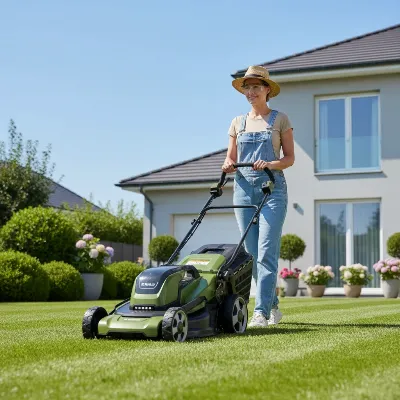 A person effortlessly mowing a lush green lawn with a quiet, modern battery-powered electric lawn mower.
Regular Maintenance Steps
Consistent maintenance prevents breakdowns and maintains cutting quality.
For Gas-Powered Lawn Mowers:
- Oil Changes: Change the engine oil at least once per mowing season or every 25-50 hours of use. Fresh oil keeps the engine lubricated and running smoothly.
- Fuel Management: Use fresh gasoline and consider a fuel stabilizer, especially if storing the mower for long periods, to prevent fuel breakdown and carburetor clogging.
- Spark Plug Replacement: Inspect and replace the spark plug annually or every two years to ensure reliable starts and efficient engine performance.
- Air and Fuel Filter Replacement: Check and replace these filters as needed to maintain proper airflow and fuel efficiency.
- Blade Sharpening and Balancing: Sharpen the blades once or twice a season to ensure a clean cut, which promotes healthier grass. Unbalanced blades can cause excessive vibration and an uneven cut.
- Cleaning the Deck: Remove grass clippings and debris from under the mower deck after each use to prevent rust and maintain airflow.
For Electric and Battery-Powered Lawn Mowers:
- Cord and Connection Inspection (Corded): Regularly check power cords for damage or fraying and replace them immediately if any issues are found to prevent electrical hazards.
- Battery Care (Battery-Powered): Keep batteries clean and fully charged. Store them indoors in a cool, dry place when not in use, and avoid overcharging.
- Avoid Moisture: Never expose electric mowers or their batteries to rain or wet conditions, as moisture can damage internal electronics and shorten battery life.
- Blade Sharpening and Balancing: Just like gas mowers, electric mower blades need to be sharpened annually for a clean, healthy cut.
- Cleaning the Deck: Regularly remove grass clippings and buildup from the deck and motor housing to prevent blockages and overheating.
Troubleshooting Common Issues
Many common lawn mower problems can be avoided with diligent maintenance. For instance, difficulty starting a gas mower often points to old fuel, a dirty spark plug, or a clogged air filter. An uneven cut, regardless of power type, typically indicates dull or unbalanced blades. By adhering to the maintenance schedule, you can minimize these frustrations and keep your lawn mower running smoothly.
 A person operating a powerful gas-powered lawn mower on a large, slightly overgrown lawn, demonstrating its capability.
Conclusion
The choice between a gas and electric lawn mower in 2026 ultimately depends on your specific needs, lawn characteristics, and personal preferences. Gas mowers still offer unmatched power and endurance for large properties and tough cutting conditions, albeit with higher noise levels and maintenance requirements. Electric mowers, particularly battery-powered models, have made significant strides, providing a quieter, cleaner, and more convenient mowing experience perfect for smaller to medium-sized yards and environmentally conscious homeowners.
Consider your lawn size, terrain, desired level of maintenance, and budget carefully. By weighing the pros and cons of each type, you can confidently select a lawn mower that will keep your yard looking its best for years to come. What kind of lawn mower will make your mowing experience a breeze this season?
Frequently Asked Questions
Do electric lawn mowers provide as much power as gas mowers?
Generally, high-end gas mowers still offer more raw power and torque, especially for tackling very thick, tall, or wet grass. However, advanced battery-powered electric mowers are significantly narrowing this gap and are more than capable for most routine mowing tasks on well-maintained lawns.
How often do I need to maintain a gasoline lawn mower compared to an electric one?
Gasoline lawn mowers require more frequent and varied maintenance, including regular oil changes, spark plug replacements, and air/fuel filter checks, typically once per season or every 25-50 hours of use. Electric mowers have minimal maintenance, mainly focusing on blade sharpening, deck cleaning, and battery care (for cordless models).
Are electric lawn mowers better for the environment?
Yes, electric lawn mowers produce zero direct emissions during operation, making them a more environmentally friendly choice compared to gas mowers, which release greenhouse gases and pollutants. Their quieter operation also contributes to reduced noise pollution.
Is the battery life of an electric mower sufficient for large lawns?
For very large lawns (over 0.5-1 acre), a single battery charge might not be sufficient for many electric mowers. However, many manufacturers now offer higher capacity batteries or include multiple batteries with a purchase, allowing for extended runtimes or quick swaps to cover larger areas. Riding electric mowers are also an option for extensive properties.
What is the average lifespan of a lawn mower battery?
The lithium-ion batteries in most modern electric lawn mowers typically last between 3 to 5 years with proper care before their capacity starts to significantly diminish. Replacement costs for these batteries should be factored into the long-term ownership expense.
Are electric lawn mowers generally more expensive upfront than gas models?
Often, powerful battery-powered electric lawn mowers, especially self-propelled models with higher voltage systems and multiple batteries, can have a higher upfront purchase price than comparable entry to mid-range gas mowers. However, their lower operating and maintenance costs can lead to lower total ownership costs over time.
Get our weekly buyer guide
Practical specs, not advice. Unsubscribe anytime.
