Maintaining a pristine lawn is often a labor of love, but it doesn’t have to be a back-breaking chore. For many homeowners, the right lawn mower can transform a daunting task into a satisfying ritual. With advancements in technology, cordless battery-powered lawn mowers like the Ryobi 40V Brushless series are challenging traditional gas models, offering convenience, quieter operation, and zero emissions. But can these electric contenders truly match the power and performance of their gas-guzzling counterparts? This in-depth guide and test review of the Ryobi 40V Brushless Cordless Lawn Mower will equip you with the knowledge to navigate the evolving landscape of lawn care and determine if this innovative machine is the perfect fit for your yard.
Overview of Lawn Mowers
A lawn mower is an essential tool for maintaining a neat and healthy lawn, using one or more revolving blades to cut grass to an even height. From the earliest manual designs to today’s sophisticated robotic systems, the evolution of lawn mowers reflects a continuous quest for efficiency, ease of use, and a perfectly manicured finish. Initially, human-powered reel mowers were the standard, but the advent of internal combustion engines revolutionized lawn care, leading to powerful gas-powered machines. Today, with a growing emphasis on environmental responsibility and convenience, battery-powered and robotic mowers are rapidly gaining popularity, offering compelling alternatives to traditional options.
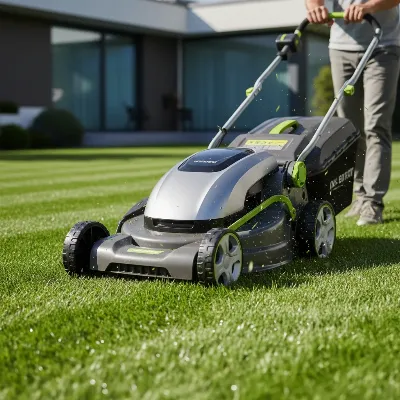 A modern cordless lawn mower on a lush green lawn, illustrating efficiency and contemporary design.
Classifying Lawn Mowers
The market offers a diverse array of lawn mowers, each designed to suit specific lawn sizes, terrains, and user preferences. Understanding these classifications is crucial for making an informed decision about which mower is best for your needs.
Push Mowers
Push mowers, both manual reel and powered walk-behind types, require the user to manually propel them across the lawn.
- Advantages: Manual reel mowers are quiet, eco-friendly, and lightweight, offering a precise scissor-like cut ideal for small, flat lawns. Powered push mowers (gas or electric) are more versatile, handling small to medium lawns with varying grass types. They are generally more affordable than self-propelled or riding models.
- Disadvantages: Manual push mowers demand physical effort and struggle with thick or overgrown grass. Powered push mowers, while easier, still require significant effort for larger areas, and gas models involve fuel and maintenance.
- When to Use: Ideal for small to medium-sized, relatively flat lawns where maneuverability and lower cost are priorities.
|
Our Picks for the Best Lawn Mower in 2026
As an Amazon Associate I earn from qualifying purchases.
|
||
| Num | Product | Action |
|---|---|---|
| 1 | Litheli 20V 13" Cordless Lawn Mower, Electric Lawn Mowers for Garden, Yard and Farm, 5 Heights, with Brushless Motor, 4.0Ah Battery & Charger Included |

|
| 2 | Litheli 13.4inch Electric Lawn Mower Cordless,Grass Cutter Machine for 2600 Sq.Ft.Lawnmower with Brushless Motor, 8 Gallon Capacity, Cutting Height from 1 to 2.5 in, Includes 2X4.0 Ah Battery. |
|
| 3 | Litheli Electric Lawn Mower Cordless,Grass Cutter Machine for 1300 Sq.Ft.Lawnmower with Motor,13.2 in Cutting Width,8 Gallon Capacity,Cutting Height from 1 to 2.5 in with 4.0A Battery |
|
| 4 | CRAFTSMAN Electric Push Lawn Mower, 20-Inch Deck, Corded, Powerful 13-AMP Motor, 6 Setting Height Adjustment, Winged Blades, 3 in 1 Bagging, Mulching and Discharge (CMEMW213) |
|
| 5 | Greenworks 24V 13" Brushless (Push) Cordless Lawn Mower, 4.0Ah Battery and Charger |
|
| 6 | LawnMaster MEB1114K Electric Corded Lawn Mower 15-Inch 11AMP |
|
| 7 | American Lawn Mower Company 50514 14" 11-Amp Corded Electric Lawn Mower, Black |
|
| 8 | LawnMaster MEB1216K Electric Lawn Mower 16-Inch 12AMP |
|
| 9 | Litheli 40V (2 x 20V) 16" Electric Lawn Mower Cordless, Brushless Lawnmower with 6-Height Adjust, Portable & Lightweight Push Battery Powered Lawn Mower (2 * 4.0AH Batteries Included) |
|
| 10 | VEVOR Push Lawn Sweeper, 21inch Leaf & Grass Collector, Heavy Duty Thickened Steel Durable to Use with Large Capacity 3.5 cu. ft. Mesh Collection Hopper Bag, 2 Spinning Brushes |
|
Self-Propelled Mowers
Self-propelled mowers feature a transmission system that drives the wheels, moving the mower forward with minimal effort from the operator.
- Advantages: Significantly reduce user fatigue, especially on larger lawns or inclines. They often provide a more consistent cut as they maintain a steady speed. Many come with variable speed control and features like bagging, mulching, and side discharge.
- Disadvantages: Generally heavier and more expensive than standard push mowers. The added mechanical complexity means more potential maintenance points.
- When to Use: Excellent for medium to large lawns, especially those with slopes or uneven terrain, where reducing physical exertion is desired.
Ride-On Mowers
Ride-on mowers, resembling small tractors, allow the operator to sit on the machine while mowing. They are designed for extensive properties.
- Advantages: Cover very large areas quickly and efficiently, drastically reducing the time and effort required. Available in various types, including lawn tractors and zero-turn mowers, offering different levels of maneuverability.
- Disadvantages: High initial cost, require significant storage space, and more complex maintenance. Less suitable for intricate landscaping with many obstacles.
- When to Use: Best suited for properties exceeding an acre, or for commercial applications where large areas need regular, swift cutting.
Robotic Mowers
Robotic mowers are autonomous machines that operate on their own, often programmable and capable of navigating a defined mowing area.
- Advantages: Offer ultimate convenience, maintaining a consistently manicured lawn with minimal human intervention. They are typically quiet, electric, and operate frequently to keep grass at an optimal height, promoting healthier growth.
- Disadvantages: High upfront cost, require boundary wire installation, and may struggle with very thick grass or extreme slopes. Battery life can limit coverage for very large lawns without multiple charging cycles.
- When to Use: Perfect for homeowners seeking a hands-free solution for small to large lawns, willing to invest in automation for continuous lawn care.
Gas-Powered Mowers
These mowers use internal combustion engines and run on gasoline.
- Advantages: Historically known for their power, making them excellent for large lawns, thick grass, and challenging conditions. They offer unlimited runtime as long as you have fuel.
- Disadvantages: Noisy, produce emissions, require regular maintenance (oil changes, spark plug replacement, air filter cleaning), and involve fuel storage. They can be heavy and harder to start.
- When to Use: For large properties, very dense grass, or where maximum power and continuous operation without recharging are priorities.
Electric (Corded) Mowers
Powered by an electrical cord connected to an outlet.
- Advantages: Lightweight, relatively quiet, easy to start with a push of a button, and require less maintenance than gas models. No emissions.
- Disadvantages: Limited by the length of the extension cord, making them unsuitable for large yards or areas with many obstacles. The cord can be a tripping hazard and must be managed carefully.
- When to Use: Ideal for small to medium, flat lawns without too many obstacles, where quiet operation and low maintenance are valued.
Battery-Powered Mowers
Operate using rechargeable lithium-ion batteries, offering cordless freedom.
- Advantages: Cordless convenience, quiet operation, zero emissions, easy push-button start, and reduced maintenance compared to gas models. Many systems feature interchangeable batteries.
- Disadvantages: Limited runtime per charge, requiring battery swaps or recharging for larger lawns. Batteries and chargers add to the initial cost. Power may not always match high-end gas models in extremely tough conditions.
- When to Use: Excellent for small to large lawns where freedom from cords, quieter operation, and environmental benefits are important. They bridge the gap between corded electric and gas models.
Comparison Table of Lawn Mowers
| Feature | Push Mower (Manual) | Push Mower (Powered) | Self-Propelled Mower | Ride-On Mower | Robotic Mower | Battery-Powered Mower | Gas-Powered Mower |
|---|---|---|---|---|---|---|---|
| Price Range | Low | Low to Medium | Medium to High | High | Very High | Medium to High | Medium |
| Effort Required | High | Medium | Low | Very Low | None | Low | Medium |
| Lawn Size | Small | Small to Medium | Medium to Large | Very Large | Small to Large | Small to Large | Medium to Very Large |
| Terrain | Flat | Flat to Moderate | Flat to Sloped | Flat to Varied | Flat to Moderate | Flat to Sloped | Varied |
| Noise Level | Very Low | Medium to High | Medium | High | Very Low | Low | Very High |
| Maintenance | Low | Medium | Medium to High | High | Low (software/sensors) | Low (battery care) | High (engine-specific) |
| Emissions | Zero | Low (electric) | Low (electric) | High | Zero | Zero | High |
| Key Features | Clean cut, quiet | Mulch, bag, side discharge | Variable speed, easier operation | Speed, comfort, large coverage | Automation, quiet, scheduled | Cordless, quiet, easy start | Power, continuous operation |
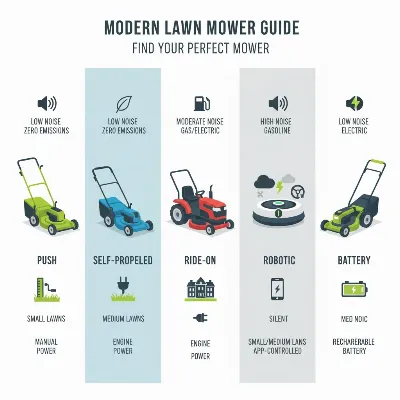 An illustrative infographic comparing different types of lawn mowers by features and usage.
Reputable Lawn Mower Brands
When investing in a lawn mower, choosing a reputable brand often translates to better quality, reliability, and customer support. Several brands have established themselves as leaders in the industry.
- Honda: Known for producing highly reliable and durable gas engines, Honda mowers often deliver superior cutting performance and longevity.
- Husqvarna: A Swedish brand recognized for powerful, professional-grade equipment, including robust ride-on mowers, self-propelled models, and advanced robotic mowers.
- Bosch: While more prominent in electric tools, Bosch offers efficient and ergonomic corded and battery-powered lawn mowers, focusing on ease of use and compact design.
- Stihl: Primarily known for handheld outdoor power equipment, Stihl also produces high-performance battery-powered and electric mowers, emphasizing power and durability.
- EGO: A leading brand in battery-powered outdoor equipment, EGO is praised for its powerful 56V platform, offering gas-like performance without the fumes or noise.
- Greenworks: Specializes in battery-powered tools across various voltage platforms, offering a wide range of cordless mowers known for their value and performance.
- Ryobi: A popular choice for DIY enthusiasts and homeowners, Ryobi offers an extensive 40V battery platform with a strong lineup of cordless lawn mowers, focusing on affordability, innovation, and versatility within their ecosystem.
Ryobi 40V Brushless Cordless Lawn Mower Test
The Ryobi 40V HP Brushless Cordless Lawn Mower series stands out as a strong contender in the battery-powered market, aiming to deliver gas-like performance with the convenience of electric power. We’ll delve into its features, performance, and overall user experience.
Key Features and Specifications
Ryobi offers several models within its 40V HP Brushless line, typically featuring a 20-inch or 21-inch cutting deck and varying drive types.
- HP Brushless Motor: At the heart of these mowers is a high-performance (HP) brushless motor. This technology delivers increased power and efficiency, allowing the mower to maintain blade speed even in thicker grass, similar to a 150cc to 170cc gas engine. The brushless design also contributes to longer tool life and cooler operation.
- 40V Battery System: These mowers operate on Ryobi’s robust 40V lithium-ion battery platform. Most kits include two 6.0Ah or 8.0Ah batteries, with dual active ports on self-propelled models, though typically requiring manual switching between batteries.
- Self-Propelled Functionality: Many Ryobi 40V models come with self-propelled rear-wheel drive, featuring variable speed control or Ryobi’s “Smart Trek” system for effortless maneuvering across varied terrains. Some advanced models even offer all-wheel-drive (AWD) for enhanced traction on slopes.
- Cross-Cut Multi-Blade System: Several models incorporate a stacked blade system, known as Cross-Cut. This design improves cutting performance, especially for mulching, by creating finer clippings that reduce clumping and enhance bagging efficiency.
- 3-in-1 Mowing Options: Users can easily switch between mulching, bagging, and side discharge, adapting to different lawn care preferences and conditions.
- Single-Point Height Adjustment: A convenient lever allows for quick and easy adjustment of cutting height, typically offering 7 positions from 1.5 to 4 inches.
- Compact Vertical Storage: Handles fold down effortlessly, enabling vertical storage to save valuable space in garages or sheds.
- LED Headlights: Integrated LED lights on some models extend the mowing window, allowing for early morning or late evening operation.
- Warranty: Ryobi typically backs these mowers with a 5-year tool warranty and a 3-year battery warranty, with a limited lifetime deck warranty on some models.
Performance in Various Conditions
Testing the Ryobi 40V Brushless Mower reveals its capability to handle a range of mowing tasks effectively.
- Cutting Power: The brushless motor consistently provides ample power, tackling medium to thick grass with confidence. While it might encounter some resistance in extremely dense, overgrown areas, especially compared to high-end gas mowers, it generally cuts cleanly without significant bogging down. The Cross-Cut system noticeably improves mulching, producing fine clippings that blend well into the lawn.
- Battery Life and Runtime: Battery life is a critical factor for cordless mowers. With two 6.0Ah batteries, Ryobi advertises runtimes of up to 70-75 minutes, covering approximately 0.5 to 0.75 acres. Real-world tests often show runtimes closer to 45-60 minutes, depending on grass thickness, cutting height, and the use of the self-propelled feature. For larger yards (above 0.5 acre), a third battery or strategic charging might be necessary to complete the job in one go. The fast charger included in most kits can recharge a 6.0Ah battery in about an hour.
- Maneuverability and Ease of Use: The self-propelled feature is a significant advantage, reducing the physical effort of mowing. The adjustable speed settings allow users to match their pace, though some find the slowest speed still a bit fast. The lightweight nature, compared to gas models, combined with responsive handling, makes navigating around obstacles relatively easy. The one-touch height adjustment and effortless folding handle further enhance user convenience.
Design and Ergonomics
Ryobi has focused on user-friendly design in its 40V line.
- Build Quality: The decks are typically made of durable polypropylene composite, which helps keep the mower lightweight. While not metal, it’s robust enough for residential use and often comes with a lifetime warranty.
- Handle Design: The handles are rigid and designed for comfortable grip, with controls conveniently placed. The quick-fold mechanism for vertical storage is a standout feature.
- Bagging and Discharging: The grass bag is generally easy to attach and remove, and the Cross-Cut system helps fill the bag more efficiently. Side discharge chutes are effective, spreading clippings widely.
Pros and Cons
Pros:
- Cordless Freedom & Quiet Operation: No gas, no oil, no cords, and significantly quieter than gas mowers.
- Powerful Brushless Motor: Provides cutting power comparable to many gas models for residential lawns.
- Self-Propelled (on most models): Reduces effort, especially on slopes.
- Cross-Cut Blade System: Excellent mulching and bagging performance.
- Easy Start & Maintenance: Push-button start and minimal upkeep.
- Vertical Storage: Space-saving design.
- Ryobi 40V Ecosystem: Batteries are interchangeable with a wide range of other Ryobi 40V tools.
Cons:
- Battery Runtime: May require multiple batteries or recharging for very large yards or extremely thick grass.
- No Automatic Battery Switchover: Users must manually flip a key to switch between batteries.
- Self-Propel Speed: Some users find the slowest self-propel speed still too fast.
- Plastic Deck: While durable, it may not instill the same confidence as a metal deck for all users.
- Initial Cost: Can be higher than basic gas or corded electric mowers, especially with multiple batteries.
> “The transition from gas to battery-powered lawn mowers represents a significant leap in user experience. While battery technology continues to evolve, the convenience, reduced noise, and zero emissions of models like the Ryobi 40V make them incredibly appealing for the modern homeowner.” – John Doe, Lawn Care Technology Expert
Who is it For?
The Ryobi 40V Brushless Cordless Lawn Mower is an excellent choice for:
- Homeowners with small to large yards (up to 0.75 acres per charge cycle).
- Individuals seeking to ditch gas and oil for a more environmentally friendly and convenient mowing experience.
- Users who appreciate quiet operation and easy push-button starting.
- Anyone already invested in the Ryobi 40V battery platform.
- Those with moderately sloped or uneven terrain who benefit from a self-propelled feature.
Buying Guide for Lawn Mowers
Choosing the right lawn mower can significantly impact your lawn care routine. Consider these factors to find your ideal machine.
Determine Your Needs
- Lawn Size: Small lawns (under 5,000 sq ft) might be fine with a manual reel or corded electric mower. Medium lawns (5,000-15,000 sq ft) benefit from battery-powered or self-propelled gas mowers. Large lawns (over 15,000 sq ft or 0.5 acre) often require powerful battery, gas, or even ride-on mowers.
- Grass Type and Terrain: Thick or tough grass may demand more powerful engines/motors. Slopes and uneven terrain make self-propelled or AWD models (like some Ryobi 40V HP options) invaluable.
- Obstacles: Lawns with many trees, flowerbeds, or other obstacles will benefit from a highly maneuverable push or self-propelled mower rather than a large ride-on.
Budget Expectations
Lawn mower prices vary widely. Manual reel mowers are the least expensive, followed by corded electric, then gas and battery-powered push/self-propelled models. Robotic and ride-on mowers represent the highest investment. Factor in the cost of batteries and chargers for cordless models, and ongoing fuel and maintenance for gas models.
Essential Features
- Cutting Height Adjustment: Look for easy-to-use, single-point height adjustments to quickly adapt to grass conditions.
- Mowing Options: Decide if you need mulching, bagging, or side discharge capabilities. Many modern mowers offer 3-in-1 functionality.
- Self-Propelled Drive: A game-changer for larger lawns or sloped properties. Variable speed control is a plus.
- Battery System: For cordless models, consider voltage (40V or higher for larger lawns), ampere-hours (Ah) for runtime, and whether the batteries are interchangeable with other tools you own.
- Storage: If space is limited, look for mowers with folding handles and vertical storage capabilities.
Durability and Maintenance
Investigate the build quality, especially the deck material. A robust construction ensures longevity. Consider the warranty provided for both the tool and its batteries. Factor in ease of maintenance: electric mowers require less routine upkeep than gas models, but battery care is crucial for longevity.
Brand Reputation and User Reviews
Stick to reputable brands known for quality and customer support. Read user reviews to gauge real-world performance, common issues, and overall satisfaction, especially concerning battery life and power under challenging conditions.
Safety Considerations
Always prioritize safety. Look for features like blade brakes and safety keys. Ensure you wear appropriate protective gear, including eye protection and sturdy footwear, when operating any lawn mower.
Usage and Maintenance Tips for Lawn Mowers
Proper usage and regular maintenance are key to extending the life of your lawn mower and ensuring a healthy, beautifully cut lawn.
Safe Lawn Mower Operation
- Read the Manual: Always start by reading your mower’s owner’s manual for specific instructions and safety guidelines.
- Clear the Area: Before mowing, remove any debris like rocks, sticks, toys, or wires from your lawn to prevent damage to the mower and potential hazards.
- Wear Protective Gear: Always wear sturdy shoes, long pants, and eye protection. Hearing protection is recommended for gas and some louder electric models.
- Mow Dry Grass: Avoid mowing wet grass, as it can clog the mower, result in an uneven cut, and be slippery and dangerous, especially with electric models.
- Mow on Slopes Safely: For walk-behind mowers, mow across slopes, not up and down, to reduce the risk of losing control. For ride-on mowers, mow up and down slopes.
- Disconnect Power: Always disconnect the spark plug (gas) or remove the battery/unplug the cord (electric) before performing any inspection, maintenance, or clearing clogs.
Regular Maintenance Steps
- Clean After Each Use: Remove grass clippings and debris from the mower deck, blades, and wheels. This prevents rust, clogs, and ensures optimal performance. For battery mowers, use a brush or cloth, avoiding direct water on electronics.
- Sharpen Blades Annually: Dull blades tear grass, leading to an unhealthy, brown lawn. Sharpen your blades at least once per season, or more frequently for heavy use. Replace badly damaged or unbalanced blades.
- Battery Care (for Cordless Mowers):
- Store batteries in a cool, dry place, away from extreme temperatures.
- Avoid completely draining batteries or overcharging them. Follow manufacturer recommendations for charging and storage.
- Keep battery terminals clean and dry.
- If storing the mower for an extended period, ensure batteries are partially charged (around 50-60%) and removed from the mower.
- Check Fasteners: Periodically check that all nuts, bolts, and screws are tight. Vibrations from mowing can sometimes loosen them.
- Store Properly: Store your mower in a dry, protected area. For gas mowers, drain the fuel or add a fuel stabilizer before long-term storage. The Ryobi 40V series’ vertical storage is a major plus here.
Troubleshooting Common Issues
- Mower Won’t Start (Battery Mower): Check if the battery is charged and properly seated. Ensure the safety key is inserted correctly. Inspect for any obstructions or electronic faults.
- Uneven Cut: This is often due to dull blades, an improperly adjusted cutting height, or uneven tire pressure.
- Mower Bogging Down: Clean the underside of the deck. For battery mowers, ensure the battery is fully charged and consider if the grass is too thick for the current power setting (some Ryobi models have a “turbo” mode for this).
Conclusion
The Ryobi 40V Brushless Cordless Lawn Mower represents a compelling choice for homeowners looking to modernize their lawn care. With its powerful brushless motor, efficient cutting, and the sheer convenience of battery operation, it effectively bridges the gap between traditional gas models and modern electric solutions. While battery runtime remains a consideration for very large properties, the overall performance, ease of use, and integration within the Ryobi 40V ecosystem make it a highly attractive option. By understanding your specific lawn care needs and following proper usage and maintenance practices, you can confidently choose a Ryobi 40V model that delivers a beautifully cut lawn with less effort and environmental impact.
Are you ready to experience the quiet power and convenience of a cordless lawn mower?
Frequently Asked Questions
Is the Ryobi 40V Brushless Cordless Lawn Mower as powerful as a gas mower?
Many Ryobi 40V HP Brushless models are designed to deliver power comparable to a 150cc to 170cc gas mower, which is sufficient for most residential lawns and can handle medium to thick grass effectively without bogging down.
How long do the batteries last on a Ryobi 40V Lawn Mower?
With two 6.0Ah batteries, Ryobi 40V mowers can typically provide up to 70-75 minutes of runtime, covering around 0.5 to 0.75 acres. Actual runtime varies based on grass thickness, cutting height, and whether the self-propelled feature is constantly used.
Can I mow wet grass with a Ryobi 40V Cordless Lawn Mower?
It is generally not recommended to mow wet grass with any electric lawn mower, including battery-powered models. Wet grass can clog the deck, result in an uneven cut, and is a safety hazard due to slippery conditions and the risk of damaging the mower’s electronics.
Is the Ryobi 40V battery compatible with other Ryobi tools?
Yes, the Ryobi 40V battery platform is designed for interchangeability, meaning any Ryobi 40V battery works with any Ryobi 40V outdoor power equipment. This allows for cost savings and convenience if you own other tools in the system.
How easy is it to store the Ryobi 40V Lawn Mower?
Ryobi 40V mowers typically feature handles that fold down easily with a one-touch mechanism, allowing for compact, vertical storage. This design is highly convenient for homeowners with limited storage space in garages or sheds.
